Physiotherapy & Rehabilitation in Bahria Town, Lahore

Speech Therapy in Lahore for Children and Adults

Speech therapy helps children and adults who have difficulty producing speech sounds, understanding or using language, speaking fluently, using their voice, communicating socially, or communicating after a neurological condition such as stroke. The treatment is also called speech and language therapy, while the professional may be described as a speech therapist, speech-language therapist, or speech-language pathologist depending on the country and qualification system.

Female speech therapist assessing a patient at WHPT Pakistan in Bahria Town, Lahore
COMMUNICATION AND SWALLOWING SUPPORT

Individual Speech Therapy Guided by Assessment

Speech therapy begins by understanding the person’s communication, language, voice or swallowing needs in context. WHPT Pakistan provides an individualized pathway for children and adults, with clear goals and appropriate family involvement.

When Physiotherapy May Help

  • Speech or language development is delayed
  • Communication changed after illness or injury
  • Voice problems affect daily life
  • Swallowing feels difficult or unsafe
  • Family members need practical guidance
QUICK SUMMARY

Speech Therapy in Lahore for Children and Adults in Brief

Speech therapy helps children and adults who have difficulty producing speech sounds, understanding or using language, speaking fluently, using their voice, communicating socially, or communicating after a neurological condition such as stroke. The treatment is also called speech and language therapy, while the professional may be described as a speech therapist, speech-language therapist, or speech-language pathologist depending on the country and qualification system.

IMPORTANT NOTE

A patient does not need to fit neatly into one category. Speech, language, attention, hearing, behavior, movement, and learning can interact, so referral to another professional may be recommended when necessary.

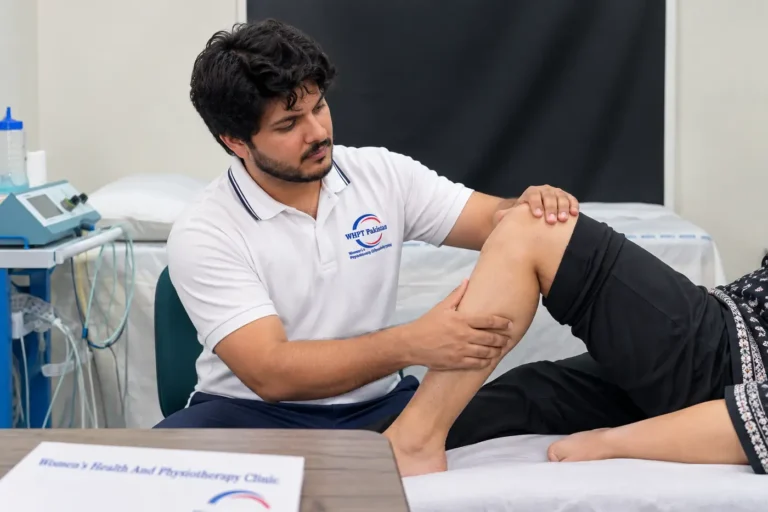
Male therapist supporting a male patient during speech therapy for children and adults strength and mobility training at WHPT Pakistan in Bahria Town, Lahore
UNDERSTANDING SPEECH THERAPY

What Is Speech Therapy?

Speech therapy is a clinical service that assesses and treats communication difficulties. Depending on the patient, therapy may focus on producing speech sounds, combining words, understanding instructions, forming sentences, communicating needs, speaking more fluently, using the voice safely, or regaining communication after stroke or brain injury.

Speech and language are related but different. Speech refers to how sounds and words are physically produced. Language refers to understanding and using words, sentences, grammar, and meaning. Communication also includes gestures, facial expression, turn-taking, social use of language, reading, writing, and alternative methods of expressing a message.

The American Speech-Language-Hearing Association explains that speech-language pathologists work with speech, language, social communication, cognitive-communication, and swallowing difficulties in children and adults. This broad scope is why an assessment should identify the actual communication domain involved rather than labeling every concern as “speech delay.”

For a broader explanation of the profession and its clinical scope, visit the American Speech-Language-Hearing Association overview of speech-language pathology.

SPEECH, LANGUAGE, FLUENCY, VOICE AND

Speech, Language, Fluency, Voice and Communication: What Is the Difference?

AreaWhat It MeansExamples of Difficulty
Speech soundsHow sounds are produced and organized in wordsUnclear pronunciation, substituting sounds, omitting sounds, or reduced intelligibility
Receptive languageUnderstanding words, questions, directions, and meaningDifficulty following instructions, understanding concepts, or answering questions
Expressive languageUsing words and sentences to express ideasLimited vocabulary, short sentences, grammar difficulty, or difficulty telling a story
FluencyThe flow, rhythm, and ease of speechSound repetitions, blocks, prolongations, visible struggle, or avoidance
VoicePitch, loudness, quality, and efficient voice useHoarseness, strain, weak voice, or rapid vocal fatigue
Social communicationUsing language appropriately with other peopleDifficulty taking turns, adjusting language, understanding implied meaning, or maintaining conversation
Motor speechPlanning and controlling the movements required for speechInconsistent errors, slow or slurred speech, reduced coordination, or effortful speech
Cognitive-communicationCommunication influenced by attention, memory, reasoning, or executive functionLosing track of conversation, disorganized expression, or reduced problem-solving after brain injury
WHO IT MAY HELP

Who Can Benefit from Speech Therapy?

Speech therapy may be appropriate when communication difficulty affects learning, relationships, confidence, independence, work, safety, or participation.

  • Toddlers who are not using expected words or combinations and need a developmental communication assessment
  • Children who understand less than expected for their age
  • Children whose speech is difficult for family members, teachers, or unfamiliar listeners to understand
  • Children who repeat sounds, become stuck, or show tension while speaking
  • Children with autism who need support with functional communication, comprehension, social interaction, or alternative communication
  • Children with suspected childhood apraxia of speech or other motor-speech difficulty
  • School-age children who struggle with vocabulary, grammar, storytelling, classroom instructions, reading-related language, or social communication
  • Adults with communication changes after stroke, traumatic brain injury, Parkinson’s disease, or another neurological condition
  • Adults with slurred, weak, effortful, or poorly coordinated speech
  • People with persistent voice problems after appropriate medical assessment

IMPORTANT NOTE

A patient does not need to fit neatly into one category. Speech, language, attention, hearing, behavior, movement, and learning can interact, so referral to another professional may be recommended when necessary.

SPEECH THERAPY FOR KIDS AND

Speech Therapy for Kids and Toddlers

Pediatric speech therapy supports children whose communication is developing differently or whose speech and language difficulties affect daily participation. Therapy should be engaging, but it is not simply playtime. Activities are selected to create repeated opportunities for the child to understand, attempt, practice, and use communication.

For toddlers and young children, parent involvement is essential. A child may spend one or two sessions per week with a therapist but many hours communicating with family. The therapist therefore teaches parents how to respond, model language, create communication opportunities, expand the child’s attempts, and practice goals during ordinary routines.

  • Limited use of gestures, sounds, words, or sentences compared with developmental expectations
  • Difficulty understanding familiar instructions or questions
  • Loss of previously used words or communication skills
  • Speech that remains difficult to understand beyond what is expected for age
  • Frequent frustration because the child cannot communicate wants or ideas
  • Persistent stuttering, visible tension, avoidance, or distress while speaking
  • Very limited interaction, joint attention, turn-taking, or functional communication
  • Difficulty combining words, using grammar, or telling a simple sequence or story
  • A significant difference between communication at home and in school
  • Parent, teacher, pediatrician, or caregiver concern about speech or language development

IMPORTANT NOTE

One missed milestone does not automatically prove a disorder, and children develop at different rates. However, persistent concern, regression, reduced understanding, or communication difficulty that affects daily life deserves assessment rather than indefinite waiting.

SPEECH DELAY VS LANGUAGE DELAY

Speech Delay vs Language Delay

Parents often use “speech delay” for any communication concern, but the underlying difficulty may be different.

ConcernPossible PatternAssessment Questions
Speech delay or speech-sound difficultyThe child knows what to say but words are unclear or sounds are missing or changedWhich sounds are affected? Are errors age-appropriate? Is speech understood by familiar and unfamiliar listeners?
Expressive language delayThe child uses fewer words, shorter sentences, or less grammar than expectedHow many functions does the child communicate? Can the child combine ideas and tell experiences?
Receptive language difficultyThe child has trouble understanding words, directions, questions, or conceptsDoes the child understand without gestures or routine cues?
Social communication differenceThe child may use words but has difficulty using communication flexibly with othersHow does the child initiate, respond, take turns, repair breakdowns, and understand social meaning?
Motor-speech difficultyThe child may know the word but struggle to plan or coordinate the movements required to say itAre errors inconsistent? Is speech effortful? Does performance change with word length or repetition?
Female therapist supporting a female patient during speech therapy for functional training at WHPT Pakistan in Bahria Town, Lahore
SPEECH SOUND AND ARTICULATION THERAPY

Speech Sound and Articulation Therapy

Speech sound therapy addresses difficulty producing or organizing sounds. A child may substitute one sound for another, omit sounds, simplify sound patterns, or be difficult to understand. Treatment depends on the error pattern, age, stimulability, consistency, oral structure, hearing, and overall language development.

Therapy may progress from listening and sound awareness to producing the target in syllables, words, sentences, conversation, and real-life communication. Practicing one sound successfully in the clinic is not the final goal; the child must learn to use it automatically in everyday speech.

Generic tongue exercises, blowing activities, or repeating long word lists are not appropriate for every speech-sound problem. Activities should be connected to the diagnosed speech goal and the child’s ability to carry the skill into communication.

Male therapist supporting a male patient during speech therapy for children and adults progressive exercise at WHPT Pakistan in Bahria Town, Lahore
SPEECH THERAPY FOR STUTTERING AND

Speech Therapy for Stuttering and Fluency

Stuttering may involve sound or word repetitions, prolongations, blocks, physical tension, avoidance, or fear of speaking. The frequency of disfluency alone does not show the full impact. A child or adult may speak relatively fluently in the clinic yet avoid answering in class, using the phone, introducing themselves, or speaking in groups.

Fluency therapy may include education, speech-management strategies, reduction of struggle and avoidance, communication confidence, parent guidance, and support for participation. The goal should not be presented as forcing perfectly fluent speech at all times.

Female therapist supporting a female patient during speech therapy for children and adults balance and movement training at WHPT Pakistan in Bahria Town, Lahore
SPEECH THERAPY FOR AUTISM

Speech Therapy for Autism

Speech therapy for autism should support communication that is useful to the person. Goals may involve understanding language, requesting, rejecting, commenting, asking for help, sharing attention, taking turns, participating in routines, handling communication breakdowns, or using social language more effectively.

Some autistic children speak in sentences but still need support with comprehension, flexible language, conversation, or functional use of communication. Others may benefit from gestures, pictures, communication boards, or speech-generating systems. Alternative and augmentative communication should not be treated as a failure or used only as a last resort when it can provide an effective way to communicate.

Therapy should respect the child’s sensory needs, interests, regulation, and individual communication style. The purpose is not to remove harmless autistic traits or train a child to appear less autistic. The purpose is to improve access to communication, reduce frustration, and increase meaningful participation.

Male therapist supporting a male patient during speech therapy for children and adults return-to-activity training at WHPT Pakistan in Bahria Town, Lahore
CHILDHOOD APRAXIA OF SPEECH AND

Childhood Apraxia of Speech and Motor-Speech Concerns

Childhood apraxia of speech is a motor-speech disorder in which the child has difficulty planning and programming the movements required for speech. Possible features include inconsistent sound errors, difficulty sequencing sounds, disrupted rhythm or stress, and greater difficulty with longer words.

Not every late-talking child or unclear speaker has apraxia. Diagnosis requires specialized assessment. When motor planning is the main difficulty, treatment usually requires carefully structured speech practice with appropriate cueing and repeated opportunities for successful movement patterns.

SPEECH THERAPY FOR ADULTS

Speech Therapy for Adults

Adults may need speech and language therapy after stroke, traumatic brain injury, brain surgery, Parkinson’s disease, multiple sclerosis, motor-neuron disease, dementia, or another neurological condition. Some adults also seek help for persistent stuttering, voice problems, or longstanding communication difficulty.

Adult therapy should be connected to the person’s real responsibilities: communicating basic needs, participating in family conversation, returning to work, using a phone, reading messages, managing appointments, giving instructions, or speaking clearly enough to be understood.

Therapy may include word retrieval, sentence production, comprehension, reading, writing, conversation, speech clarity, pacing, communication strategies, and caregiver education. Family members may be taught how to allow time, reduce unnecessary correction, confirm meaning, and support successful conversation without speaking for the patient.

Sudden new speech difficulty, facial weakness, arm weakness, confusion, severe headache, or loss of balance can indicate a stroke and requires emergency medical care. Do not wait for a routine speech therapy appointment.

The program should reflect fatigue, medication timing, disease progression, respiratory status, cognition, and the patient’s priorities. Medical and multidisciplinary coordination may be required.

Speech Therapy After Stroke

Stroke can affect language, speech movement, cognition, voice, or swallowing. Aphasia affects understanding or use of language. Dysarthria affects the strength, speed, or coordination of speech muscles. Acquired apraxia of speech affects planning or programming of speech movements. A person may have more than one condition.

Speech Therapy for Parkinson’s Disease and Other Neurological Conditions

Neurological conditions may reduce voice loudness, speech clarity, rate control, facial expression, breath support, word retrieval, or cognitive-communication ability. Treatment may target voice effort, articulation, pacing, functional phrases, conversation, communication devices, and strategies for family members.
Therapist using picture cards with a child while a parent is present
CLINICAL ASSESSMENT

Bilingual and Multilingual Speech-Language Assessment

Many families in Lahore use more than one language, commonly Urdu and English, sometimes alongside Punjabi or another home language. Multilingual exposure does not automatically cause a speech or language disorder.

Assessment should consider the patient’s abilities across all languages rather than judging communication through English alone. A child may know a concept or word in Urdu but not yet use it in English. Vocabulary, sentence use, comprehension, language exposure, and opportunities to practice should be interpreted across the complete language environment.

A true language disorder is usually evident across the languages the child knows, although the pattern may look different in each language. Accent, dialect, code-switching, and normal multilingual development should not be mistaken for impairment. Parents should not be told to stop using the language in which they communicate most naturally and meaningfully with their child unless there is a very specific clinical reason.

CLINICAL ASSESSMENT — NEXT STEP

What Happens During a Speech Therapy Assessment?

The assessment depends on age and concern, but it should move beyond asking the patient to repeat a few words.

  • Review the main concern, developmental or medical history, hearing history, education, languages, previous therapy, and family priorities.
  • Observe spontaneous communication, interaction, comprehension, speech clarity, fluency, voice, and communication strategies.
  • Use age-appropriate formal or informal tasks to examine the relevant speech-language areas.
  • Consider oral structures and movement when clinically relevant, without assuming that every speech problem is caused by weak muscles.
  • Assess functional impact at home, school, work, and in social situations.
  • Identify whether hearing, developmental, neurological, psychological, ENT, dental, feeding, or educational referral is needed.
  • Explain findings in clear language and agree on practical therapy goals.
  • Establish a baseline so progress can be measured rather than described vaguely.
Assessment AreaExamples of What May Be EvaluatedWhy It Matters
Speech productionSound inventory, error patterns, intelligibility, consistency, and motor planningDetermines whether the main issue involves articulation, phonology, or motor speech
LanguageUnderstanding, vocabulary, sentence formation, grammar, questions, and storytellingSeparates speech clarity from broader language difficulty
FluencyRepetitions, blocks, tension, avoidance, and participation impactShows more than the number of stuttered moments
VoiceQuality, pitch, loudness, endurance, and vocal useHelps determine whether ENT or medical review is needed
Social communicationInitiation, response, turn-taking, topic maintenance, inference, and repairConnects language to real interaction
Functional communicationCommunication of needs, choices, safety, work, learning, and relationshipsKeeps therapy focused on meaningful participation
Language backgroundExposure, use, proficiency, and communication partners in each languageReduces misdiagnosis in multilingual patients
THE WHPT SPEECH THERAPY APPROACH

The WHPT Speech Therapy Approach

Treatment is individualized according to the assessment. A child with a speech-sound pattern, an autistic teenager working on functional communication, and an adult with aphasia after stroke require different goals and methods.

  • Clear goals linked to daily communication
  • Structured practice with enough repetition to support learning
  • Activities matched to age, interests, cognition, and communication level
  • Parent, teacher, spouse, or caregiver training when appropriate
  • Practice across words, sentences, conversation, and real situations
  • Visual, verbal, tactile, or written cues selected according to the patient’s needs
  • Home activities that can be completed consistently without overwhelming the family
  • Alternative or augmentative communication when clinically appropriate and available
  • Regular reassessment and modification of goals
  • Referral to hearing, ENT, neurology, pediatrics, psychology, occupational therapy, or other services when required

IMPORTANT NOTE

Games, picture cards, books, toys, mirrors, writing, conversation, apps, or communication devices may be used, but the material is not the therapy by itself. The value comes from how the therapist selects the target, structures practice, gives feedback, and helps the skill transfer into real communication.

Female physiotherapist guiding a female patient during speech therapy in lahore
EXERCISE & LOADING

Speech Therapy Exercises at Home

Home practice is useful when it follows the assessment and therapy goal. Families should not download a large list of random speech therapy exercises and expect them to address every communication difficulty.

Useful home practice may include naming and describing during routines, expanding a child’s short message, practicing selected speech words, reading together, giving choices, allowing extra response time, using communication supports, completing short voice or speech tasks, or practicing functional phrases after stroke.

Practice should be brief enough to complete consistently and accurate enough to reinforce the right skill. Repeated correction, pressure to perform for visitors, or turning every interaction into a test can increase frustration and reduce spontaneous communication.

RECOVERY TIMELINE

How Long Does Speech Therapy Take?

There is no universal number of sessions. Duration depends on the type and severity of difficulty, age, medical or developmental diagnosis, hearing, cognition, consistency of attendance, home practice, family support, and the complexity of the communication goals.

StageTypical FocusHow Progress Is Judged
Assessment and baselineIdentify communication profile and prioritiesClear findings and measurable starting points
Early therapyBuild understanding, participation, accurate attempts, and core strategiesMore successful responses with support
Skill developmentIncrease complexity, consistency, vocabulary, speech accuracy, fluency control, or communication independenceImprovement across structured tasks
GeneralizationUse the skill with different people, places, and situationsCarryover beyond the therapy room
Transition or dischargeIndependent strategies, home plan, school coordination, or periodic reviewGoals achieved or another service becomes more appropriate

Therapy should not continue indefinitely without reassessment. Goals, frequency, and expected outcomes should be reviewed according to progress and changing needs.

BENEFITS & OUTCOMES

Benefits and Limitations of Speech Therapy

Potential BenefitWhat It Can SupportImportant Limitation
Clearer speechBetter intelligibility and reduced communication breakdownImprovement depends on diagnosis, severity, and practice
Stronger language skillsUnderstanding, vocabulary, sentences, and storytellingLanguage development cannot be reduced to memorizing isolated words
Improved fluency managementReduced struggle, avoidance, and communication fearNo ethical therapist should guarantee permanent perfect fluency
Functional communicationMore independent expression of needs, ideas, choices, and safety informationGoals must fit the patient’s cognitive and medical status
Family confidenceBetter support during daily interactionFamily training does not replace skilled assessment
Communication after neurological injuryRecovery, compensation, and participationRecovery varies and may require long-term or multidisciplinary care
RED FLAGS

When Speech Therapy Is Not Enough

Communication difficulties sometimes require medical or multidisciplinary assessment in addition to speech therapy.

  • Sudden speech or language change, facial weakness, arm weakness, confusion, or severe headache: emergency stroke assessment
  • Frequent coughing, choking, wet voice, unexplained weight loss, or breathing difficulty during eating: medical and swallowing assessment
  • Persistent hoarseness, voice loss, throat pain, or suspected vocal-fold problem: ENT review
  • Possible hearing loss, recurrent ear problems, or inconsistent response to sound: hearing assessment
  • Developmental regression or loss of previously acquired skills: pediatric or neurological assessment
  • Seizure, loss of consciousness, new neurological weakness, or rapidly worsening symptoms: urgent medical evaluation
  • Learning, sensory, behavioral, motor, or psychological needs beyond speech-language therapy: appropriate multidisciplinary referral

WHPT’s public speech therapy service should only claim feeding, swallowing, specialized voice, or advanced communication-device services when an appropriately trained professional is available for that scope.

SPEECH THERAPY VS OCCUPATIONAL THERAPY,

Speech Therapy vs Occupational Therapy, ABA, and School Support

ServicePrimary FocusHow It May Work With Speech Therapy
Speech therapySpeech, language, fluency, voice, social communication, and functional communicationLeads communication-specific assessment and treatment
Occupational therapyDaily activities, sensory-motor function, fine motor skills, participation, and regulationMay support participation and access to communication activities
Behavioral interventionBehavior, learning, routines, and skill acquisition depending on approachShould not replace specialist speech-language assessment when communication is the concern
School or special education supportClassroom access, learning, accommodations, and educational goalsHelps communication skills transfer into academic participation
Medical specialistsDiagnosis, hearing, neurological, ENT, developmental, or structural concernsProvide medical investigation or management when required

The services are not interchangeable. Collaboration is useful when each professional remains within their role and goals are coordinated around the patient.

WHY WHPT PAKISTAN

Why Choose WHPT Pakistan for Speech Therapy in Lahore?

WHPT Pakistan ApproachWhy It Matters
Assessment before treatmentThe service identifies the actual communication domain instead of assigning generic activities
Child and adult careCommunication needs may arise during development or after neurological illness and injury
Functional goalsTherapy targets communication that matters at home, school, work, and in the community
Multilingual awarenessUrdu, English, Punjabi, and other language exposure are considered during interpretation
Family and caregiver trainingCommunication practice continues beyond the clinic
Same-gender careFemale patients receive female practitioners and male patients receive male practitioners
Measured progressionGoals are reassessed and adjusted instead of repeated indefinitely
Multidisciplinary referralHearing, ENT, medical, developmental, psychological, and rehabilitation needs are referred when appropriate
Bahria Town locationPatients in Bahria Town and nearby Lahore communities can access a coordinated rehabilitation setting
FREQUENTLY ASKED QUESTIONS

Frequently Asked Questions

What is speech therapy?

Speech therapy assesses and treats speech, language, fluency, voice, social communication, motor-speech, and acquired communication difficulties. The exact focus depends on the patient’s assessment.

A speech therapist evaluates communication, identifies the type and impact of difficulty, sets measurable goals, provides structured treatment, trains families or caregivers, and recommends referral when another service is needed.

A child should be assessed when communication concerns persist, understanding appears reduced, speech is difficult to understand, stuttering causes tension or avoidance, skills regress, or parents and teachers remain concerned. Therapy timing depends on the assessment.

Yes. Toddlers can receive communication assessment and early intervention. Much of the treatment may involve parent coaching and communication practice during play and daily routines.

No. Speech or language delay has many possible explanations and does not by itself diagnose autism. Assessment should consider understanding, interaction, play, social communication, hearing, development, and other clinical findings.

Yes. Speech therapy may support functional communication, understanding, expressive language, social communication, speech production, and augmentative communication according to the child’s needs.

Using more than one language does not automatically cause a disorder. Assessment should consider vocabulary and communication across all languages and distinguish multilingual development from impairment.

Yes. Adults may need therapy after stroke, brain injury, Parkinson’s disease, or another neurological condition, or for stuttering, voice, speech clarity, and other communication concerns.

Speech therapy may address aphasia, dysarthria, apraxia of speech, reading, writing, conversation, and communication strategies. Sudden new stroke symptoms require emergency care.

Duration varies according to diagnosis, severity, age, medical and developmental factors, attendance, practice, and goals. Progress should be reviewed regularly rather than promised within a fixed number of sessions.

The therapist uses structured activities to practice the specific communication goal, provides feedback and cues, measures performance, and teaches strategies for home, school, work, or family use.

Yes, when they are selected for the patient’s assessed goal. Random online exercises may be ineffective or may reinforce the wrong pattern.

Some communication goals can be addressed through telepractice, but suitability depends on age, diagnosis, attention, technology, caregiver support, and therapist availability. Confirm whether WHPT currently offers this option.

Fees depend on the assessment, session plan, therapist, and service required. Contact WHPT Pakistan on WhatsApp for current consultation and therapy charges.

A referral may not always be required for an initial communication assessment, but medical, hearing, neurological, developmental, or ENT review may be recommended depending on the findings.

CONTINUING RECOVERY

Continue Recovery Beyond Rehabilitation

Rehabilitation should not end when symptoms become tolerable. Patients may still need to rebuild walking distance, stair tolerance, balance, hip strength, gym capacity, or confidence in deeper and faster movements.

Where appropriate, WHPT patients can transition to supervised strength, mobility, personal training, or fitness programs through Alpha Fitness & Martial Arts Club after the clinical rehabilitation stage.

CLINICAL INSIGHT FROM WHPT PAKISTAN

Communication Goals Should Be Meaningful Beyond the Clinic

Progress is most useful when it improves participation at home, school, work and in the community—not only performance during a therapy task.

Assessment helps identify the communication or swallowing difficulty, relevant risks and the supports that may help practice continue outside sessions.

The plan should remain individualized, understandable and connected to the person’s real communication needs.

BOOK AN ASSESSMENT

Book Speech Therapy in Bahria Town Lahore

If you are searching for speech therapy near you, pediatric speech therapy, speech therapy for toddlers, autism speech therapy, adult speech therapy, or speech therapy after stroke in Lahore, begin with an assessment.

Please share:

  • Patient’s age and main concern
  • When the concern began
  • Languages used at home, school, or work
  • Developmental, hearing, neurological, or medical history
  • Previous assessment, diagnosis, or therapy
  • Current school, work, and daily communication difficulties
  • Male or female practitioner requirement
WHATSAPP / CALL
+92 334 8205557
VISIT WHPT PAKISTAN
1st Floor, Plaza 82, Block AA Commercial, Bahria Town, Lahore
The goal is not only to produce better answers during therapy. The goal is to communicate more successfully in life.
CLINICAL REVIEW

Author and Clinical Review

Written by
Dr. Salman Sabir PT
  • Consultant Physiotherapist
  • MS Orthopedic Manual Therapy
  • Founder, WHPT Pakistan
Clinically reviewed by
WHPT Pakistan Clinical Team
Last reviewed: July 2026