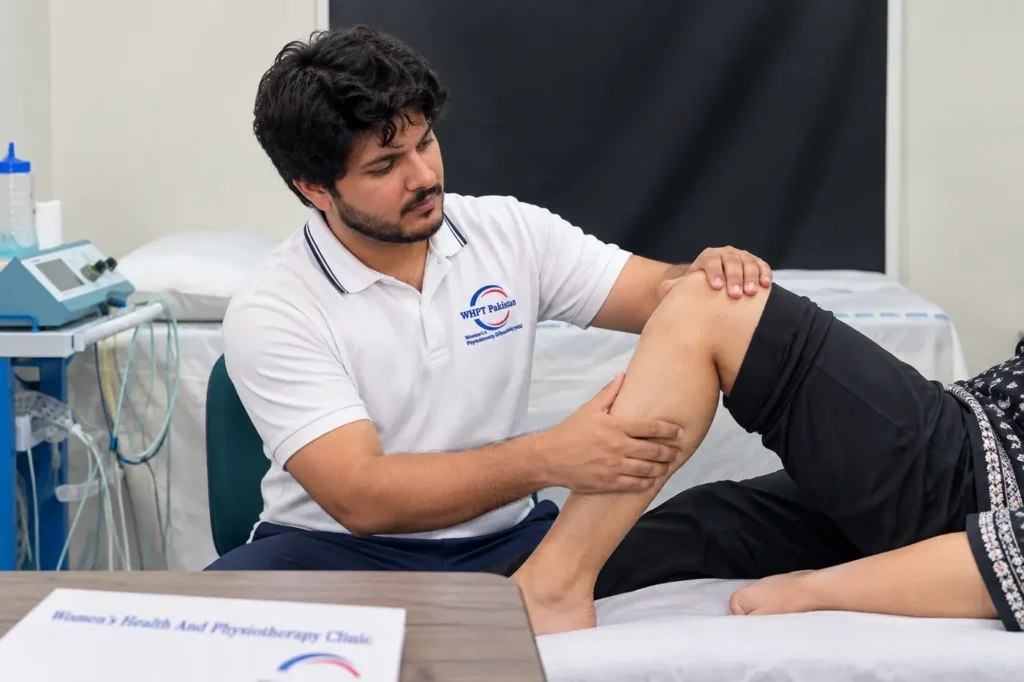
If you have never seen a physiotherapist for knee pain, the first appointment can feel uncertain. Will the therapist just press the painful spot? Will you need an MRI first? Will you be given exercises immediately?
A useful knee assessment is broader than any one test. It starts with the story of the problem, screens for situations that need medical care, examines movement and strength, observes the activities that hurt, and then explains what the findings mean for the next step.
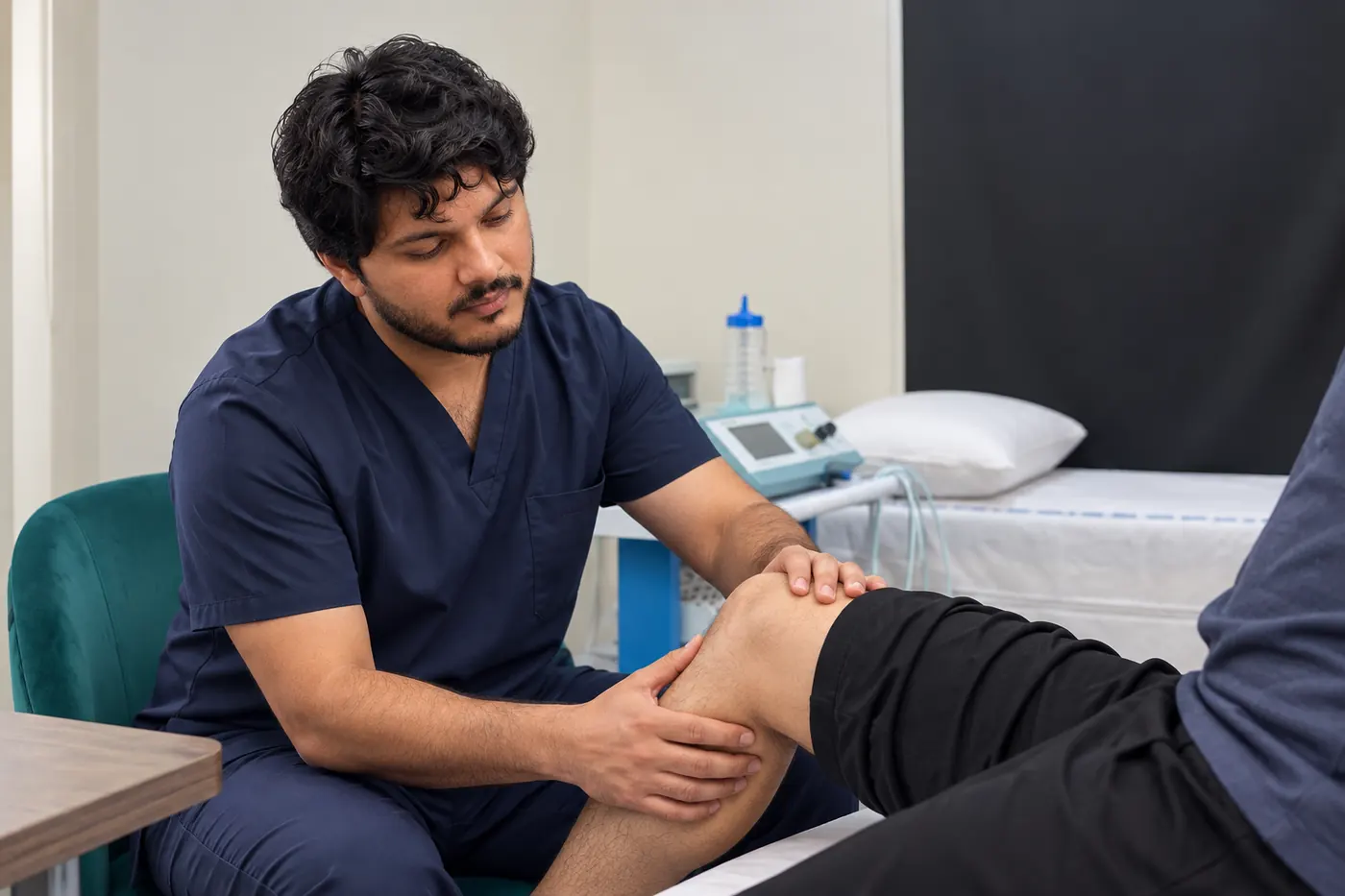
A knee physiotherapy assessment usually begins with questions about how pain started, swelling, injuries, medical history, and the activities you cannot do comfortably. The physiotherapist may then assess knee movement, strength, swelling, walking, balance, stairs, squatting, and selected meniscus or ligament tests when appropriate. The goal is to decide whether physiotherapy is suitable, identify the most likely contributors, establish measurable baselines, and build a personalized rehabilitation plan or referral pathway.
At a Glance
- You do not usually need an MRI before the first physiotherapy assessment.
- The history often provides as much useful information as special tests.
- Red flags and medical context are screened before exercise is prescribed.
- Both knees, nearby joints, strength, gait, and function may be relevant.
- Special tests are interpreted in combination, not as standalone proof.
- The first visit should finish with an explanation, measurable starting point, and next-step plan.
Step 1: The Physiotherapist Listens to the Story
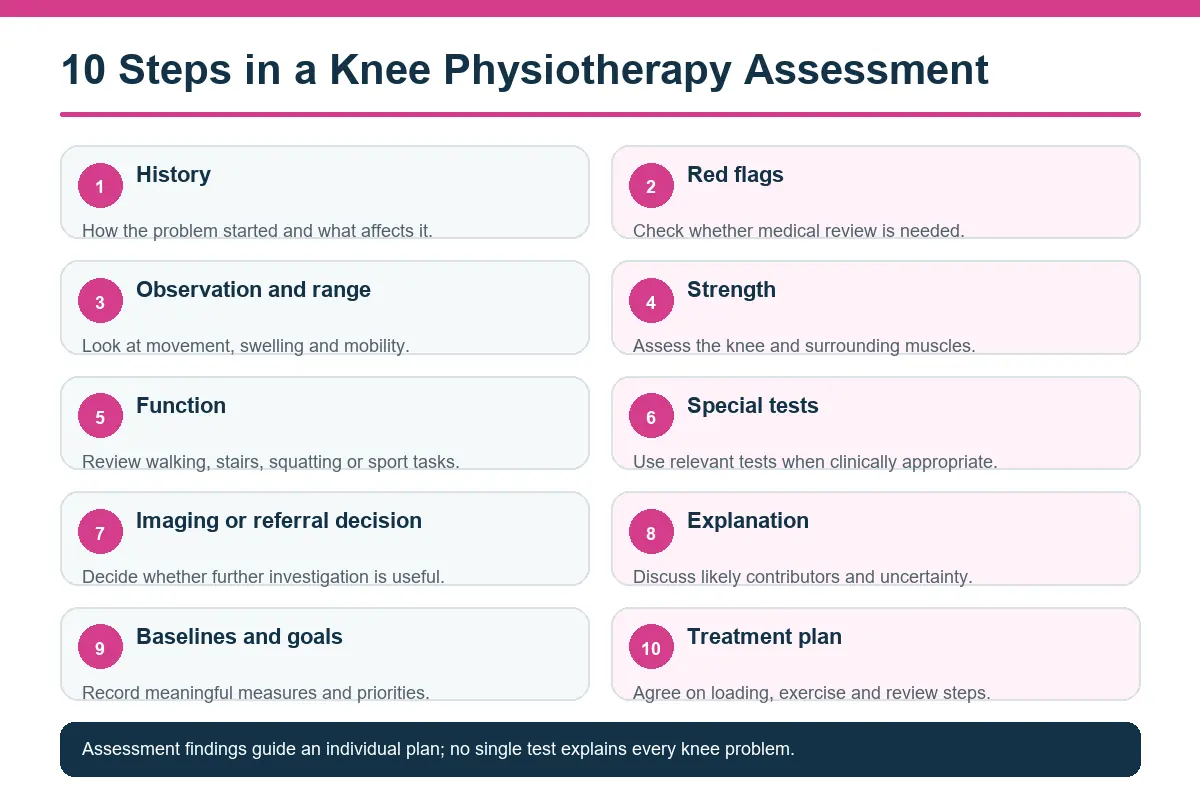
The assessment begins before the knee is touched. The physiotherapist asks where the pain is, how it began, whether there was a twist or fall, how quickly swelling appeared, what makes symptoms better or worse, and whether the problem has happened before.
You may also be asked about work, sport, gym training, walking, stairs, driving, sleep, prayer positions, and any movement you are avoiding. These details help connect the symptom to real function.
WHPT’s broader Comprehensive Physiotherapy Assessment page explains why the same symptom can have different causes and why the history guides which tests are worth doing.
Step 2: Red Flags and Medical Context Are Screened
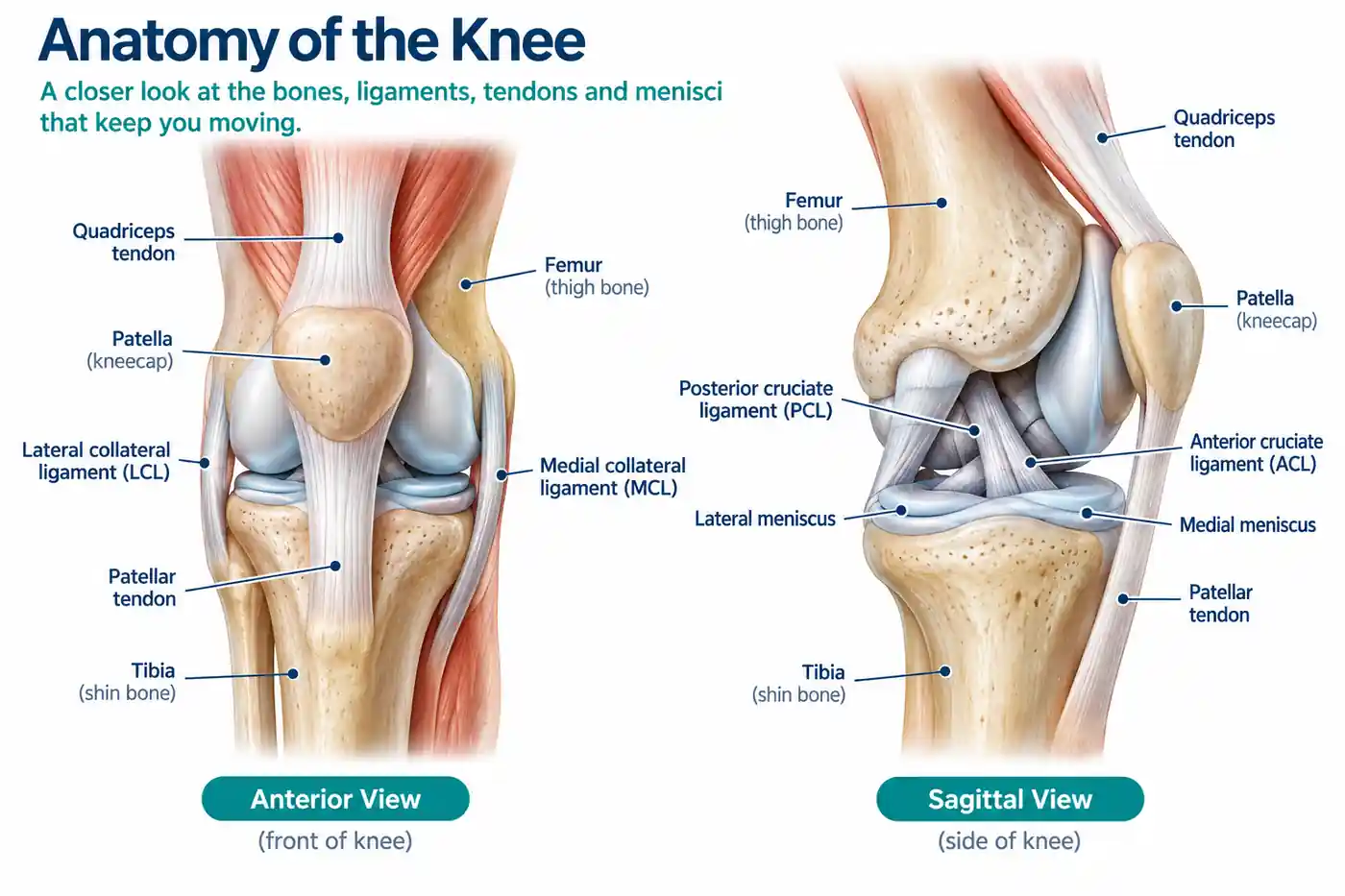
Before progressing into exercise or hands-on testing, the physiotherapist should check whether the knee presentation is appropriate for routine physiotherapy. Major trauma, deformity, a hot red swollen joint with fever, inability to bear weight, significant neurological or vascular symptoms, or possible blood-clot signs require a different level of care.
Medical history also matters. Previous surgery, inflammatory arthritis, diabetes, medication, cancer history, recent infection, and other conditions can change precautions or referral decisions.
Step 3: The Knee Is Observed for Swelling, Position, and Movement
The physiotherapist may compare both knees for swelling, bruising, obvious deformity, muscle loss, and resting position. Range of motion is then assessed: how fully the knee straightens, how far it bends, whether movement is painful, and whether restriction feels stiff, guarded, or mechanically blocked.
The examination is adapted to irritability. A very painful acute knee does not need every possible test on day one. A stable chronic problem can usually tolerate a more complete functional assessment.
Step 4: Strength Is Tested in Context
Quadriceps strength is especially important because pain and swelling can reduce activation. Depending on the presentation, the physiotherapist may also assess hamstrings, hip muscles, calf strength, and the ability to control the leg during functional tasks.
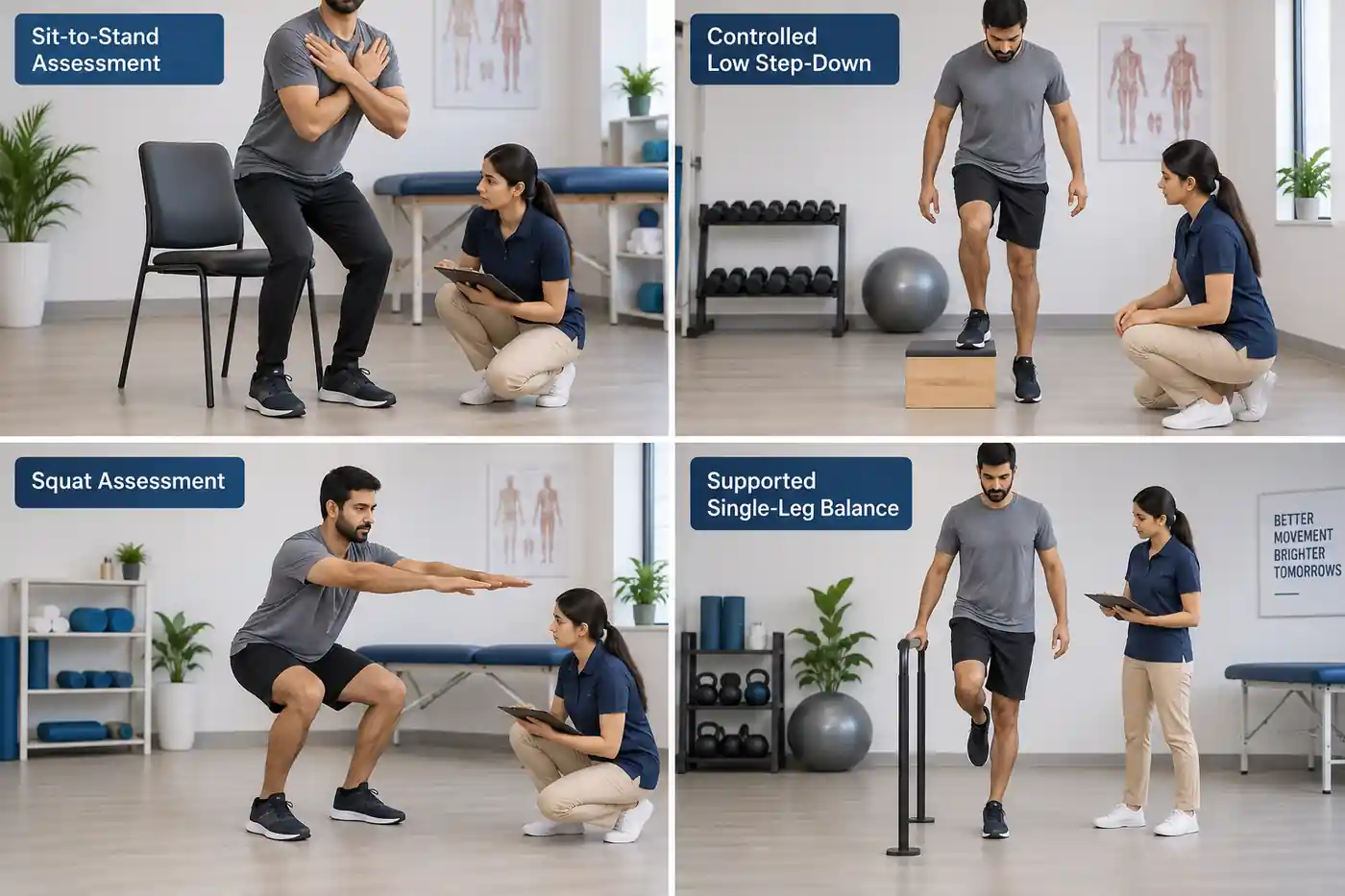
Strength testing can range from simple resisted movements to repetition tests, dynamometry, sit-to-stand performance, or later sport-specific testing. The choice should match the patient and available equipment.
Step 5: Walking, Stairs, Squatting, and Balance May Be Assessed
A knee can look comfortable on a treatment bed and still hurt during the task the patient actually cares about. Functional testing may therefore include walking, sit-to-stand, step-up or step-down, squat depth, balance, or single-leg control.
For a patient whose main limitation is prayer positions, deeper knee-bending tolerance may be relevant when safe. For an athlete, later testing may include running, hopping, landing, or change of direction through Sports Physiotherapy.
Step 6: Special Tests Are Selected, Not Performed as a Checklist
Meniscus and ligament tests can add information when the history suggests those structures. The physiotherapist may use joint-line palpation, selected meniscal maneuvers, ligament stress tests, or patellofemoral examination. But individual tests have limitations.
Reviews of knee examination show that physical tests vary in sensitivity and specificity. A positive test therefore needs to fit the mechanism, swelling, movement, and function. The review of knee physical examination explains why clinicians combine findings rather than relying on one maneuver.
If the history suggests a traumatic meniscus or ACL injury, WHPT’s Meniscus Tear Rehabilitation and ACL Injury Rehabilitation pathways may become relevant after the assessment.
Step 7: The Physiotherapist Decides Whether Imaging or Referral Is Needed
Many knee problems can begin with history and physical examination. Imaging is considered when it is likely to change management—for example after certain acute injuries, suspected fracture, persistent mechanical restriction, unusual symptoms, or when surgery is being considered.
For acute knee trauma, evidence supporting the Ottawa Knee Rule helps clinicians decide when radiography may be appropriate. For meniscus or ligament concerns, MRI can be useful in selected situations. Imaging should answer a clinical question rather than be ordered automatically because the knee hurts.
Step 8: Findings Are Explained in Plain Language
The therapist should summarize what the assessment suggests without pretending uncertainty does not exist. A useful explanation may be: the symptom pattern fits patellofemoral pain; the knee is stable but quadriceps strength and step-down tolerance are reduced; no urgent red flags were found; therefore a graded exercise and load plan is reasonable.
Or the conclusion may be different: significant traumatic swelling and instability suggest the knee needs orthopedic review before progressing. Assessment is valuable partly because it can identify when physiotherapy is not the first priority.
Step 9: Baseline Measures and Goals Are Set
| Assessment area | Example baseline |
|---|---|
| Pain/function | Pain during stairs; ability to walk for a certain duration. |
| Range of motion | Degrees or functional ability to fully straighten and bend the knee. |
| Strength | Quadriceps resistance, repetitions, or measured force. |
| Functional task | Sit-to-stand, step-down, squat depth, balance time. |
| Activity goal | Return to prayer positions, gym, running, football, work, or independent walking. |
A baseline turns rehabilitation into something measurable. The goal is not only “pain better,” but improved movement, strength, walking, stairs, confidence, or sport capacity. WHPT’s Therapeutic Exercise pathway uses these findings to choose and progress exercises.
Step 10: The First Treatment Plan Is Agreed
The plan may include education, temporary activity modification, mobility work, progressive strengthening, balance training, manual therapy when appropriate, and a home program. The exact mix depends on the findings.
A patient with gradual arthritis symptoms may follow the Arthritis Physiotherapy pathway. A post-surgical patient needs procedure-specific precautions through Post-Surgical Rehabilitation. An athlete may need staged return through Physiotherapy for Athletes.
The first session does not need to contain every possible treatment. It should establish the safest useful starting point and what will be reassessed next.
What Should You Bring to a Knee Assessment?
- Relevant MRI, X-ray, surgical reports, prescriptions, or referral notes if available.
- A list of current medications and important medical conditions.
- Information about previous knee injuries or operations.
- Comfortable clothing that allows the knee and lower limb to be examined.
- The shoes, brace, or walking aid you normally use if they are relevant.
- A clear idea of the activities you most want to regain.
You do not need to arrive with a diagnosis. The purpose of the appointment is to help establish the likely pathway.
What Should You Understand Before the First Visit Ends?
A useful assessment should leave you with more than a list of tests. You should understand the working clinical impression in plain language, what findings matter, what is reassuring, what still needs monitoring, and why the proposed next step fits your goals. If certainty is not possible on day one, that uncertainty should be explained rather than hidden behind a confident label.
You should also know what you can safely do now, which activities may need temporary modification, what signs would require medical review, and what the early rehabilitation priorities are. The first visit is therefore both an examination and an education session.
How Reassessment Shows Whether the Plan Is Working
Reassessment is not simply asking whether pain is “better.” The physiotherapist may recheck swelling, knee range, strength, walking, step control, balance, or another task linked to the patient’s goal. Objective change helps decide whether to progress, maintain, modify, or reconsider the plan.
For someone returning to sport, later reassessment may include higher-level strength, hopping, landing, running, or direction-change tasks. For someone whose main goal is ordinary daily function, the relevant measures may be walking, stairs, chair transfers, and comfortable prayer positions. The measures should match the life the patient is trying to return to.
If the findings do not improve as expected, a responsible plan should be revisited. That may mean changing the exercise dose, examining another contributor, requesting medical input, or discussing imaging when it is likely to affect management. Assessment is a process, not a one-time label.
Frequently Asked Questions
Do I need an MRI before seeing a physiotherapist for knee pain?
Usually not. Many knee presentations can be initially assessed clinically. Imaging is considered when it is likely to change management or when specific concerns are present.
Will the physiotherapist diagnose my knee on the first visit?
Often a working diagnosis or clinical pattern can be identified, but responsible clinicians also explain uncertainty and may recommend medical or imaging review when needed.
Will the assessment be painful?
Some movements or tests may reproduce symptoms, but the examination should be adapted to irritability. A highly painful knee does not need aggressive testing to prove that it hurts.
Will I get exercises on the first day?
Often yes when exercise is appropriate, but the number and difficulty should reflect the assessment. Some patients first need referral, protection, or symptom-management guidance.
How long does a knee physiotherapy assessment take?
The exact appointment length depends on the clinic and complexity. What matters is that there is enough time to cover history, screening, relevant examination, explanation, and planning.
Can physiotherapy assess knee arthritis and meniscus problems?
Yes. Physiotherapists can assess many musculoskeletal knee presentations and identify when orthopedic, rheumatology, medical, or imaging input is needed.
How do I book a knee assessment at WHPT Pakistan?
Use the Book a Physiotherapy Appointment page or WhatsApp/call +92 334 8205557. Share the main symptom, how it began, any swelling/instability, and your preferred timing. Appointment times require staff confirmation.
Start With Assessment Before Assumptions
For the wider symptom overview, see WHPT’s Knee Pain Physiotherapy guide. Clinic details are available through WHPT Pakistan, and assessment availability can be checked on the Book a Physiotherapy Appointment page.
A knee assessment should do more than name a painful structure. It should identify what is likely, what needs to be ruled out, what can be measured, and what the patient needs to regain.
WHPT Pakistan provides assessment-led physiotherapy in Bahria Town, Lahore, with plans built around symptoms, function, medical context, and individual goals.
References
- Bronstein, R. D., & Schaffer, J. C. (2017). Physical examination of the knee: Meniscus, cartilage, and patellofemoral conditions. Journal of the American Academy of Orthopaedic Surgeons, 25(5), 365–374. PubMed
- Kasitinon, D., et al. (2021). Physical examination and patellofemoral pain syndrome: an updated review. Current Reviews in Musculoskeletal Medicine, 14(6), 406–412. PubMed
- Ghaffari, S., et al. (2023). Diagnostic accuracy of Ottawa Knee Rule for diagnosis of fracture in patients with knee trauma: a systematic review and meta-analysis. Archives of Academic Emergency Medicine. PubMed
- American Academy of Orthopaedic Surgeons. (2024). Clinical practice guideline for the management of acute isolated meniscal pathology. AAOS guideline
- Willy, R. W., et al. (2019). Patellofemoral pain: Clinical practice guidelines. Journal of Orthopaedic & Sports Physical Therapy, 49(9), CPG1–CPG95. PubMed

About Dr Salman Sabir PT
Dr Salman Sabir PT is a consultant physiotherapist, clinical leader and co-founder of WHPT Pakistan. He holds an MS in Orthopedic Manual Therapy and is undertaking doctoral study in Exercise Physiology. His work focuses on assessment-led rehabilitation, patient education, progressive exercise and long-term recovery.
Need Help Applying This to Your Situation?
General information cannot account for your injury history, strength, movement, medical conditions or personal goals.
BOOK ASSESSMENTCall +92 334 8205557