01 Clinical History
The physiotherapist asks about symptoms, onset, medical conditions, medications, previous treatment, daily activity, work, exercise, and the goals that matter to you.

Move better, manage pain, rebuild capacity, and return to the activities that matter.
Physiotherapy is a healthcare service that helps people restore movement, improve physical function, manage pain, recover after injury or surgery, and remain active with greater confidence. It can support people with musculoskeletal pain, neurological conditions, mobility limitations, sports injuries, women’s health concerns, age-related weakness, and selected respiratory or post-hospital rehabilitation needs.

At WHPT Pakistan, physiotherapy begins with assessment rather than a machine, massage, manipulation, or predetermined package. Your physiotherapist studies the symptoms, movement, strength, medical history, daily demands, functional limitations, and recovery goals before deciding what treatment is appropriate.
Treatment may include therapeutic exercise, progressive strengthening, mobility work, balance training, walking or task practice, manual therapy, education, load management, and selected techniques such as dry needling, electrotherapy, cupping therapy, or spinal manipulation when clinically relevant. These techniques support rehabilitation; they do not replace the active work required for lasting recovery.
WHPT Pakistan provides physiotherapy in Bahria Town, Lahore, with dedicated pathways for Sports Physiotherapy, Women’s Health Physiotherapy, and Home Physiotherapy. Female patients are treated by female physiotherapists, while male patients are treated by male physiotherapists.
Consider a physiotherapy assessment when:
| Feature | Details |
|---|---|
| Service | Assessment-led physiotherapy and physical rehabilitation |
| Location | WHPT Pakistan, Bahria Town, Lahore |
| Suitable for | Pain, injury, surgery, mobility problems, neurological conditions, weakness, balance problems, sports recovery, and selected women's health needs |
| First step | Clinical history, physical examination, functional assessment, and safety screening |
| Possible treatment | Exercise therapy, strengthening, mobility, balance, walking practice, education, manual therapy, and selected adjunct techniques |
| Specialist pathways | Sports Physiotherapy, Women's Health Physiotherapy, and Home Physiotherapy |
| Primary goal | Improve safe movement, function, independence, confidence, and participation |
| Not designed for | Medical emergencies or conditions requiring immediate hospital-level care |
Physiotherapy is more than temporary pain relief. A physiotherapist assesses how a health condition affects movement and daily life, identifies modifiable problems, and develops a plan to improve function. The plan may involve reducing symptoms, restoring mobility, rebuilding strength, improving balance, practicing meaningful tasks, and preparing the patient for work, sport, family responsibilities, or independent living. At WHPT Pakistan, treatment choices are reviewed according to measurable progress rather than repeated automatically.
A clear assessment helps determine whether physiotherapy, medical review, imaging, another rehabilitation service, or a combined plan is most appropriate.
Physiotherapy, also called physical therapy in some countries, is healthcare focused on movement, physical function, activity, participation, and quality of life. Physiotherapists work with people whose movement or function has been affected by pain, injury, surgery, illness, disability, aging, or reduced physical capacity.
World Physiotherapy describes the profession as helping people maximize quality of life while working across health promotion, prevention, treatment, and rehabilitation. This broader definition matters because physiotherapy is not limited to treating pain after it appears. It can also help people maintain function, reduce avoidable decline, and return to meaningful activities after a health problem.
For a broader professional explanation, read World Physiotherapy's overview of physiotherapy.
The exact physiotherapy plan differs from person to person. Two patients with the same diagnosis may have different strength, movement, work demands, confidence, medical conditions, and goals. Effective care therefore requires assessment and progression rather than a standard list of exercises or modalities.
A physiotherapist evaluates how symptoms and health conditions affect movement and function. The assessment may include pain behavior, joint movement, muscle strength, balance, walking, coordination, sensation, posture, activity tolerance, task performance, and relevant medical warning signs.
Depending on the findings, the physiotherapist may:
The physiotherapist’s role is not to keep the patient dependent on treatment. The aim is to improve capacity, self-management, and confidence whenever the condition allows.
Physiotherapy may be appropriate across the lifespan, from children with movement limitations to older adults recovering from illness or trying to maintain independence.
Physiotherapy is not required for every ache. Some symptoms settle with sensible activity modification and time. Assessment becomes more valuable when symptoms persist, recur, cause weakness or instability, limit daily activity, follow significant trauma, or create uncertainty about what is safe.
| Condition Category | Examples | Possible Physiotherapy Goals |
|---|---|---|
| Musculoskeletal pain and injury | Back pain, neck pain, arthritis, frozen shoulder, tendon pain, sprains, strains, sciatica-like symptoms | Reduce limitations, restore movement, improve strength, manage load, and return to activity |
| Post-surgical rehabilitation | Knee replacement, hip replacement, fracture fixation, ligament repair, spinal or shoulder procedures | Follow precautions, restore mobility, rebuild strength, improve walking, and regain independence |
| Neurological rehabilitation | Stroke, Parkinson's disease, spinal cord injury, multiple sclerosis, peripheral nerve injury | Improve movement, balance, walking, coordination, transfers, and daily function |
| Sports injuries | Ankle sprain, muscle strain, tendon injury, knee injury, shoulder overload | Rebuild sport capacity and progress safely toward training and competition |
| Women's health | Pregnancy-related pain, postpartum recovery, pelvic-floor symptoms, diastasis recti, return to exercise | Improve comfort, pressure management, strength, function, and confidence |
| Older-adult rehabilitation | Weakness, falls, arthritis, reduced walking, deconditioning | Improve strength, balance, mobility, confidence, and independence |
| Home rehabilitation needs | Mobility limitation, bedbound care, caregiver training, post-hospital recovery | Practice real home tasks and improve safe daily function |
| Selected respiratory and endurance needs | Deconditioning, breathing-pattern problems, medically guided chest rehabilitation | Improve mobility, breathing strategies, endurance, and safe activity tolerance |
Consider a physiotherapy assessment when:
Early assessment can help clarify what is safe, but urgent symptoms should not wait for a routine physiotherapy appointment.
Seek urgent medical care for symptoms such as:
Physiotherapy may become appropriate after emergency or medical assessment confirms that the patient is stable and rehabilitation can begin.
The main Physiotherapy page explains the broad WHPT service. More specific patient needs are addressed through dedicated pathways so that each page answers a different clinical and search question.
| Service Pathway | Who It Is For | Primary Focus |
|---|---|---|
| General Physiotherapy | Patients with pain, injury, weakness, mobility problems, or functional limitations | Assessment, movement, strength, symptom management, and return to daily activity |
| Sports Physiotherapy | Athletes, gym-goers, runners, martial artists, and active adults | Sports rehabilitation, performance demands, loading, testing, and return to sport |
| Women's Health Physiotherapy | Women with pregnancy, postpartum, pelvic-health, or female-specific rehabilitation needs | Private, female-led assessment and individualized women's health rehabilitation |
| Home Physiotherapy | Patients who cannot travel safely or who need rehabilitation in their actual home environment | Home visits, mobility, transfers, caregiver training, and real-life task practice |
| Speech Therapy - Separate Rehabilitation Service | People with speech, language, communication, voice, or swallowing needs | Assessment and therapy delivered within its own professional scope, not as a physiotherapy treatment |
Some patients need more than one rehabilitation discipline. For example, a person recovering from stroke may require physiotherapy for movement and walking while also needing speech therapy for communication or swallowing. Services should be coordinated without confusing their professional roles.
Your first visit is structured around clinical history, safety, physical and functional assessment, explanation, planning, and reassessment.
| Assessment Area | Examples | Why It Matters |
|---|---|---|
| Symptoms | Pain, stiffness, weakness, numbness, swelling, fatigue | Helps identify severity, behavior, and possible tissue or system involvement |
| Movement | Range of motion, posture, walking, reaching, bending, squatting | Shows how the condition affects function |
| Capacity | Strength, endurance, balance, coordination, control | Identifies what must be rebuilt |
| Daily demands | Work, stairs, lifting, caregiving, exercise, sport | Connects treatment to real goals |
| Medical context | Surgery, medications, diagnoses, imaging, precautions | Guides safety and referral decisions |
| Progress markers | Repetitions, distance, load, assistance, confidence, symptom response | Allows treatment to be reviewed objectively |
| Technique | Possible Role | Important Limitation |
|---|---|---|
| Therapeutic exercise | Build strength, mobility, endurance, control, and confidence | Must be selected and progressed appropriately |
| Manual therapy | Temporarily modify pain or movement in selected patients | Does not replace active capacity building |
| Electrotherapy | Support pain modulation or muscle activation for selected goals | A machine is not a complete rehabilitation plan |
| Dry needling | Address selected myofascial pain or muscle-related symptoms | Not appropriate for every diagnosis or patient |
| Cupping therapy / hijama | Selected symptom management within screened care | Marks or blood volume do not measure treatment success |
| Spinal manipulation / adjustment | Selected short-term pain or mobility effect after screening | Should not be marketed as correcting every spinal problem |
| Taping or bracing | Provide support, feedback, or short-term symptom modification | Should not become a substitute for recovery of function |
| Walking aids and assistive strategies | Improve safety and independence | Require correct selection, fitting, and progression |
Potential physiotherapy benefits depend on the condition and goals. They may include:
Physiotherapy does not guarantee a cure, and not every patient responds at the same rate. Improvement depends on diagnosis, severity, medical health, healing time, adherence, sleep, nutrition, activity demands, and whether the treatment addresses the actual limiting factors.
Physiotherapy can be effective for many movement and rehabilitation problems, but “physiotherapy” is not one treatment. Outcomes depend on the diagnosis, intervention, dose, therapist reasoning, patient participation, and the goal being measured.
A session made up of passive machines may produce a different result from a structured program of education, progressive exercise, task practice, and reassessment. WHPT therefore evaluates whether treatment is producing a meaningful change in pain, movement, strength, balance, walking, independence, or another functional outcome.
When progress is limited, the plan should be reviewed. The patient may need a different exercise dose, further medical investigation, more time for tissue healing, a different rehabilitation discipline, or a revised goal.
| Service | Primary Role | When It May Be Appropriate |
|---|---|---|
| Physiotherapy | Movement assessment, rehabilitation, exercise, function, and physical recovery | Pain, injury, surgery, mobility limitations, weakness, balance problems, and return to activity |
| Medical doctor | Medical diagnosis, medication, investigations, systemic disease management, and medical procedures | Red flags, significant trauma, infection, complex diagnosis, medication needs, or unstable health |
| Orthopedic or other surgeon | Surgical assessment and operative management | Fracture, major structural injury, severe instability, or conditions requiring surgical review |
| Chiropractic / spinal manipulation | Manual treatment commonly focused on musculoskeletal and spinal symptoms | Selected symptoms, provided screening and active rehabilitation are not neglected |
| Massage therapy | Soft-tissue relaxation and symptom relief | Short-term comfort or recovery support, but not a substitute for full rehabilitation |
| Speech therapy | Communication, language, voice, cognitive-communication, and swallowing therapy | Speech or swallowing needs, often alongside other rehabilitation services |
| Fitness training | General or performance-oriented strength and conditioning | After medical or rehabilitation needs are stable and training can be progressed safely |
Clinic-based physiotherapy is usually suitable for patients who can travel safely and benefit from a controlled environment, wider equipment access, or more advanced exercise progression. Home physiotherapy is useful when mobility, surgery, neurological disability, age, caregiver needs, or the home environment makes travel difficult or clinically less relevant.
The best setting depends on the patient. Some begin at home and transition to the clinic as mobility improves. Others start in the clinic and continue independently once they can manage their program safely.
There is no responsible universal answer. A minor recent problem may require assessment, education, and a short progression. A neurological condition, major surgery, fracture, or long-standing disability may require a longer plan.
Session frequency and duration depend on:
WHPT reviews whether skilled physiotherapy is still adding value. Sessions should not continue indefinitely simply because a package has not ended.
Appropriate physiotherapy is generally well tolerated, but treatment can produce temporary soreness, fatigue, stiffness, or symptom fluctuation, particularly when exercise or loading is progressed. Manual techniques, needling, electrotherapy, manipulation, taping, and other modalities have their own precautions and possible side effects.
Risk is reduced through assessment, consent, appropriate dosing, communication, skin or neurological checks where relevant, and modification when the patient responds poorly. Sharp pain, new weakness, major swelling, dizziness, breathing difficulty, loss of sensation, or another unexpected reaction should be reported immediately.
One of the most common misunderstandings we see is that physiotherapy means heat, electrical stimulation, massage, ultrasound, or a spinal “adjustment.” Patients may judge a session by how many machines were used or how strongly they felt a technique.
Those tools can be useful in selected cases, but they are not the profession itself. The real physiotherapy work is identifying what limits function, selecting the safest and most relevant intervention, teaching the patient what to do, and progressing the plan until the person can manage more independently.
A machine may reduce pain for an hour. A manual technique may temporarily improve movement. The clinical question is what happens next: can the patient walk farther, lift with greater control, use the shoulder, climb stairs, return to work, or complete the prescribed exercise with less difficulty? At WHPT Pakistan, treatment is judged by function and progress, not by the number of techniques performed.
| WHPT Pakistan Approach | Why It Matters |
|---|---|
| Assessment before treatment | Care is based on symptoms, function, goals, and safety rather than a standard package |
| Qualified physiotherapists | Treatment is delivered within a professional rehabilitation framework |
| Same-gender care | Female patients are treated by female physiotherapists and male patients by male physiotherapists |
| Active rehabilitation | Exercise, strength, mobility, balance, and functional practice remain central |
| Selective use of techniques | Machines, needling, cupping, manipulation, and manual therapy are used only when clinically relevant |
| Measurable progression | Pain, movement, strength, walking, balance, and function are reassessed |
| Dedicated service pathways | Sports, women's health, and home physiotherapy needs receive focused care |
| Referral when required | Medical, surgical, speech, psychological, nutritional, or other needs are recognized |
| Recovery beyond rehabilitation | Suitable patients can transition to supervised strength and fitness through Alpha Fitness & Martial Arts Club |
| Bahria Town location | Clinic-based rehabilitation is available in Bahria Town, Lahore, with home visits subject to availability |
Physiotherapy is healthcare focused on movement, physical function, activity, pain management, rehabilitation, and participation. It may include exercise, education, manual therapy, balance or walking training, and selected adjunct techniques.
A physiotherapist assesses symptoms, movement, strength, balance, walking, daily tasks, medical history, and recovery goals. The therapist then develops and progresses a rehabilitation plan or recommends referral when required.
Physiotherapy treatment is an individualized rehabilitation plan. It may include therapeutic exercise, strengthening, mobility work, education, manual therapy, walking or task practice, and carefully selected modalities.
It may help with musculoskeletal pain, sports injuries, post-surgical recovery, neurological conditions, weakness, balance problems, mobility limitations, women’s health needs, and return to daily activity.
Physiotherapy identifies factors limiting movement or function and addresses them through education, appropriate exercise, progressive loading, task practice, symptom management, and reassessment.
Many patients can book an assessment directly. Medical referral may be needed when symptoms suggest a serious condition, when surgery or medical precautions are involved, or when local rules or insurance require it.
Some physiotherapists hold a Doctor of Physical Therapy degree and may use the professional title permitted in their setting. A physiotherapist is not the same as a medical physician and does not replace medical diagnosis, medication, or emergency care.
Look for appropriate qualifications, clear assessment, realistic explanations, safety screening, measurable goals, active rehabilitation, and willingness to refer when physiotherapy is not the right first step.
The number depends on the condition, severity, healing stage, baseline function, goals, adherence, and response. An estimate can be discussed after assessment and should be reviewed as progress occurs.
Assessment and exercise can reproduce mild or manageable symptoms, and temporary soreness may occur. Treatment should not involve uncontrolled pain, burning, major worsening, or unexpected neurological symptoms.
It can, but machines are only one possible part of care. Electrotherapy or ultrasound should not replace assessment, exercise, movement practice, and a clear rehabilitation plan.
Physiotherapy may help many people with back or radiating leg symptoms after appropriate assessment. Progressive weakness, loss of bladder or bowel control, saddle numbness, fever, major trauma, or rapidly worsening symptoms require medical care.
Yes. WHPT Pakistan offers home physiotherapy for selected patients according to location, therapist availability, mobility, clinical need, and same-gender care requirements.
Yes. WHPT Pakistan follows a same-gender care policy. Female patients are treated by female physiotherapists, subject to scheduling and service availability.
Fees depend on the assessment, service type, clinic or home setting, and treatment requirements. Contact WHPT Pakistan on WhatsApp for current consultation and session charges.
Rehabilitation is the broader process of improving function after a health condition. Physiotherapy is one rehabilitation profession focused primarily on movement and physical function. Some patients also need speech therapy, occupational therapy, medical care, psychology, nutrition, or other services.
The end of clinical physiotherapy does not always mean the end of physical development. A patient may no longer need treatment but may still benefit from supervised strength, conditioning, flexibility, weight management, or a structured return to exercise.
Where appropriate, WHPT patients can transition to Alpha Fitness & Martial Arts Club for long-term supervised fitness. This transition occurs when the patient is medically and functionally ready, and it does not replace physiotherapy when skilled rehabilitation is still required. Learn more about recovery beyond rehabilitation.
If you are searching for physiotherapy near you, a physiotherapy clinic in Lahore, or a physiotherapist in Bahria Town, begin with an assessment that explains the problem and gives you a clear recovery direction.
Good physiotherapy should leave you with more capacity, more understanding, and less dependence on treatment.
Consultant Physiotherapist
MS Orthopedic Manual Therapy
Founder, WHPT Pakistan
WHPT Resources

Understand upper back pain causes, common movement patterns, and warning signs that should not be ignored.
Read article →
Explore common causes of lower back pain, what symptoms may reveal, and when an assessment can help.
Read article →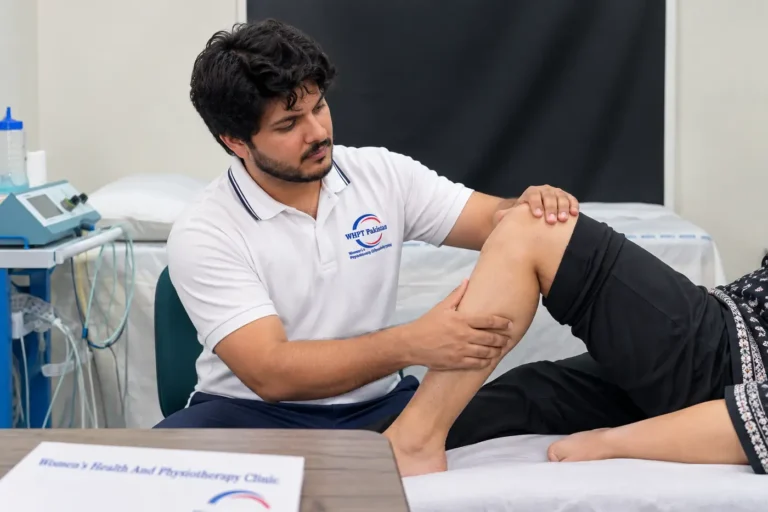
A knee assessment looks beyond pain alone. Learn how movement, strength, function, history, and symptoms guide rehabilitation.
Read article →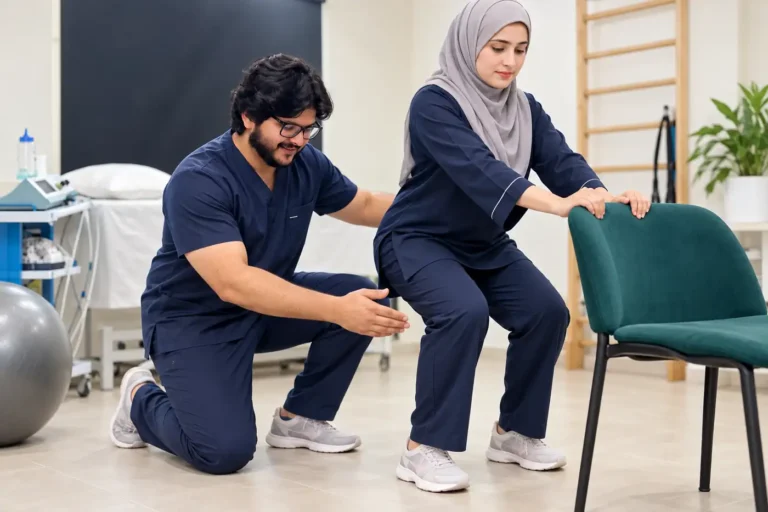
Some exercises may temporarily aggravate an irritated knee. Learn how to modify loading without giving up movement completely.
Read article →
Knee pain can return even after symptoms improve. Learn why recurrence happens and which factors may need more attention.
Read article →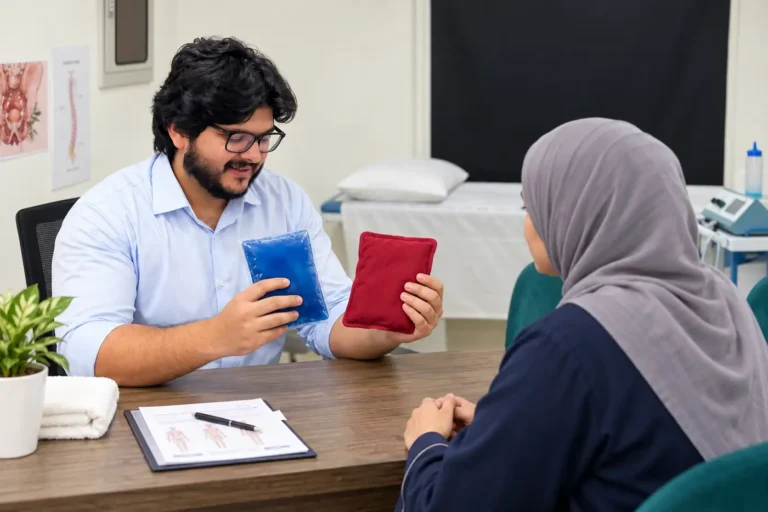
Heat and ice can both help knee symptoms in certain situations. Learn when each option may be useful and what…
Read article →EXCELLENT Based on 19 reviews
 Posted on Google
 MUHAMMAD USMAN SALEEM MUHAMMAD SALEEMIt’s actually the place where Doctors have a right knowledge to treat. Strongly recommend best clinic in LahorePosted on Google
 Nasira ShaheenVery satisfied with the services and care given to my daughter from Dr. Rabail. She wasn't able to speak sentences and many words before and has improved more then that now in her behavior and speech. I am very grateful for Dr. Rabail and WHPT and had no concerns through our sessions with them.Posted on Google
 Mahnoor MughalMy father-in-law experienced severe low back spasms, and WHPT Pakistan's at-home physiotherapy service was a lifesaver. The therapist arrived fully equipped and provided highly effective, personalized care right in the comfort of our home. The treatment not only eased his pain but also gave him exercises to help prevent future episodes. The convenience and quality of care were superb, and we’re very grateful for their compassionate and professional service!Posted on Google
 Noaman Younasgood doctor team coprative doctorPosted on Google
 Ali AghadeerStaff is very professional and humble Great experiencePosted on Google
 Fatima ZahraI was tired of writing “physiotherapy near me” for my neck pain. Luckily, i ended up in WHPT Pakistan, arguably the most trusted physiotherapy clinic in Bahria Town Lahore. Highly recommendedVerified by TrustindexTrustindex verified badge is the Universal Symbol of Trust. Only the greatest companies can get the verified badge who has a review score above 4.5, based on customer reviews over the past 12 months. Read more
WHPT Pakistan
1st Floor, Plaza 82, Block AA Commercial,
Bahria Town, Lahore