Rotator Cuff Injury Physiotherapy in Bahria Town Lahore
Rotator cuff pain can make sleeping, dressing, reaching, lifting and gym training difficult. Some patients have tendinopathy or overload without a tear; others have a partial or full-thickness rotator cuff tear, traumatic injury or postoperative repair. Similar symptoms can also arise from the neck, frozen shoulder, arthritis or another structure, so treatment should begin with assessment rather than assumption.

Rebuild Shoulder Strength for Reaching, Lifting and Sport
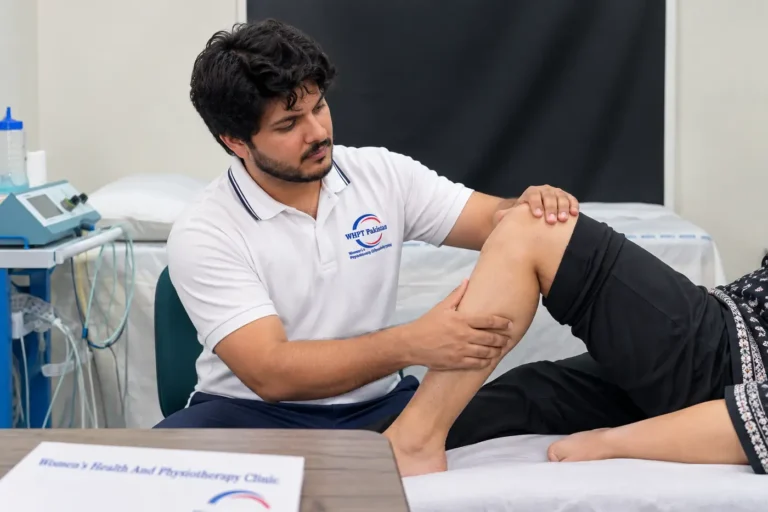
WHPT Pakistan assesses symptoms, movement, strength, medical context and the activities the patient needs to regain before selecting treatment.
When Physiotherapy May Help
- Shoulder pain limits reaching or lifting
- Sleep or dressing is affected
- Gym or overhead activity causes symptoms
- Strength has reduced after injury
- Recovery needs progression after surgery
Rotator Cuff Physiotherapy at a Glance
| Feature | Details |
|---|---|
| Condition | Rotator cuff tendinopathy, strain, partial tear, full-thickness tear or postoperative repair |
| Delivered by | Qualified physiotherapists using assessment-led shoulder rehabilitation |
| Available at | WHPT Pakistan, Bahria Town, Lahore |
| Common symptoms | Shoulder pain, night pain, weakness, painful reaching and reduced overhead function |
| Common priorities | Load management, mobility, rotator cuff strength and shoulder-blade control |
| Often coordinated with | Orthopaedic review, imaging and surgeon-specific repair protocols where required |
| Primary goal | Restore useful shoulder function while respecting tendon irritability or surgical healing |
Rotator Cuff Physiotherapy in Brief
The rotator cuff is a group of four muscles and tendons that help centre and control the shoulder joint. Rotator cuff physiotherapy may help pain, weakness and reduced function caused by tendinopathy, strain, selected tears or postoperative recovery. Treatment usually combines education, graded strengthening, mobility and task-specific loading. At WHPT Pakistan, the plan distinguishes nonoperative rehabilitation from rotator cuff repair rehabilitation and progresses according to symptoms, strength and function rather than a generic exercise sheet.
IMPORTANT NOTE
A sudden inability to lift the arm after trauma, visible deformity, suspected fracture or dislocation, major weakness, progressive numbness, fever, unexplained weight loss or severe unremitting pain requires medical assessment. New chest pain, shortness of breath or pain that may be referred from a non-musculoskeletal condition should not be treated as a routine rotator cuff problem.
Why Patients Choose WHPT Pakistan for Rotator Cuff Rehabilitation
Shoulder pain is often more complex than the location of tenderness. A patient may have a structurally abnormal scan with little pain, while another has significant pain without a large tear. Neck movement, joint stiffness, shoulder-blade mechanics, sleep, workload and fear of lifting can all influence symptoms. Effective rehabilitation identifies which factors are clinically relevant instead of treating an MRI report in isolation.
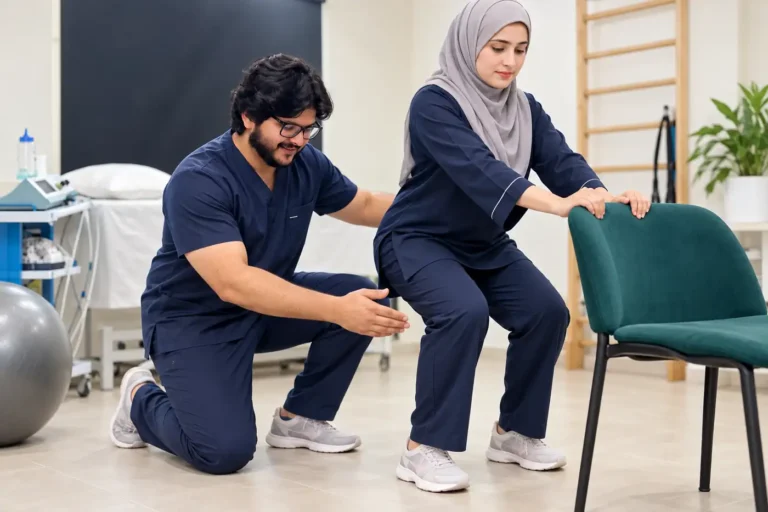
Our team examines the whole shoulder system and the task that matters to the patient. Treatment may reduce an irritable workload at first, but it also rebuilds the tendon and muscle capacity needed for reaching, carrying, serving, bowling or pressing. Progress is measured through movement, strength and task tolerance rather than through pain alone.
WHPT Clinical Principle Diagnose the movement problem. Load the tendon intelligently. Restore the function that matters.
Is Rotator Cuff Physiotherapy Right for You?
A physiotherapy assessment may be useful when shoulder pain, weakness or loss of function appears to involve the rotator cuff. Common reasons patients contact WHPT include:
- Pain when lifting the arm, reaching behind the back or using the hand overhead
- Night pain or difficulty lying on the affected shoulder
- Weakness with carrying, pushing, pulling, bowling or gym exercise
- A painful arc or discomfort when lowering the arm
- Symptoms after a fall, sudden pull or heavy lift
- Rotator cuff tendinopathy, tendinitis or impingement-type symptoms
- A partial or full-thickness rotator cuff tear diagnosed on imaging
- Physiotherapy before planned rotator cuff surgery
- Rehabilitation after rotator cuff repair surgery
- Recurrent shoulder pain despite rest, massage or unsupervised exercises
- Need for a structured return to overhead work, sport or strength training
IMPORTANT NOTE
A sudden inability to lift the arm after trauma, visible deformity, suspected fracture or dislocation, major weakness, progressive numbness, fever, unexplained weight loss or severe unremitting pain requires medical assessment. New chest pain, shortness of breath or pain that may be referred from a non-musculoskeletal condition should not be treated as a routine rotator cuff problem.
What Is the Rotator Cuff?
The rotator cuff is formed by four muscles – supraspinatus, infraspinatus, teres minor and subscapularis – and their tendons. These muscles help rotate the arm and keep the head of the humerus controlled within the shallow shoulder socket during reaching, lifting and overhead movement. The supraspinatus tendon is commonly involved in rotator cuff pain and tears, but the shoulder functions as a coordinated system rather than as one isolated tendon.
Rotator cuff pathology can include tendinopathy, bursitis associated with cuff overload, strain, partial-thickness tearing, full-thickness tearing and a complete rupture. A traumatic tear may occur after a fall or sudden force, while degenerative tears can develop gradually with age and repeated use. The presence of a tear does not automatically determine whether surgery is required; symptoms, strength, tear characteristics, progression and patient goals all matter.
The shoulder has a large range of motion and relies heavily on muscular control. Pain can reduce rotator cuff activation, change shoulder-blade movement and lead the patient to avoid the arm. Prolonged avoidance then reduces capacity, so ordinary tasks become increasingly demanding. At the same time, repeatedly forcing painful overhead work without modifying load can keep the tendon irritable.
Common contributors or rehabilitation barriers include:
- A sudden increase in overhead work, throwing or gym volume
- Reduced rotator cuff and shoulder-blade strength
- Limited shoulder or upper-back mobility
- Pain-related guarding and fear of lifting the arm
- Poor sleep caused by night pain and uncomfortable positions
- Neck symptoms that overlap with shoulder pain
- Diabetes, smoking, age-related tendon change or previous injury
- A tear with significant weakness or loss of active movement
- Postoperative restrictions after rotator cuff repair
IMPORTANT NOTE
Symptoms do not reveal tear size reliably. A person may feel an ache in the upper outer arm, pain at night, weakness or a catching sensation, but those findings can occur in several shoulder conditions. Clinical tests help form a working diagnosis, while ultrasound or MRI may be considered when the result is likely to change management. Pain location diagrams and online self-tests can suggest a pattern, but they cannot reliably separate rotator cuff tendinopathy, bursitis, a supraspinatus tear, frozen shoulder or cervical referral. The clinical value comes from testing the complete pattern and then observing whether the shoulder responds to the selected treatment.
How Does Rotator Cuff Physiotherapy Work?
Rotator cuff rehabilitation aims to improve the shoulder's tolerance for the movements and loads the patient needs. The starting point differs between an irritable tendon, a traumatic tear, a chronic degenerative tear and a surgically repaired tendon.
Restoring Useful Mobility
Progressive Rotator Cuff and Scapular Strengthening
Task-Specific Return
Rotator Cuff Physiotherapy Is One Part of Recovery
Shoulder rehabilitation may be enough for many nontraumatic rotator cuff problems, but treatment decisions are individual. A large acute tear, progressive weakness, failed nonoperative care or a high-demand functional goal may lead to orthopaedic review. Postoperative rehabilitation must follow the surgeon's repair and protection plan.
Your care may be combined with:
- Orthopaedic consultation when a significant tear or loss of function is suspected
- Ultrasound or MRI when imaging is expected to influence management
- Medication or injection decisions made by the appropriate medical clinician
- Workplace or sports-load modification
- Sleep-position and symptom-management advice
- Manual therapy used as an adjunct to exercise where appropriate
- Postoperative sling and movement restrictions after repair
- Long-term strength and conditioning after formal rehabilitation
IMPORTANT NOTE
The aim is not to keep the shoulder permanently protected. It is to establish the safest route toward the required level of function. For some patients that route is nonoperative rehabilitation; for others it is surgery followed by a staged repair protocol. Both pathways still require progressive recovery of movement, strength and confidence. Prehabilitation before torn rotator cuff surgery may maintain comfortable motion, teach sling-related strategies and prepare the patient for the long postoperative process. It does not attempt to fatigue or aggressively strengthen a tendon immediately before repair.
Rotator Cuff Presentations Commonly Managed at WHPT
Rotator cuff symptoms exist on a spectrum. The table below shows how rehabilitation priorities differ according to the presentation.
| Presentation | How physiotherapy may contribute | What else must be considered |
|---|---|---|
| Rotator cuff tendinopathy | Manage load and progressively strengthen the cuff and shoulder blade | Training volume, sleep, diabetes, neck contribution and work demands |
| Rotator cuff strain | Restore comfortable movement and rebuild strength after an acute overload | Trauma severity and whether a tear or fracture is suspected |
| Partial-thickness tear | Improve capacity and function through graded rehabilitation | Tear depth, progression, weakness and response to nonoperative care |
| Full-thickness tear | Support selected nonoperative cases or prepare for surgery | Age, trauma, retraction, muscle quality, weakness and patient goals |
| Supraspinatus tear | Address elevation strength and whole-cuff function | Other tendon involvement and the difference between scan findings and symptoms |
| Rotator cuff-related shoulder pain | Reduce sensitivity and restore movement and loading tolerance | Frozen shoulder, arthritis, cervical pain and other diagnoses |
| Prehabilitation before repair | Maintain permitted motion and optimise general shoulder condition | Surgeon plan, tear characteristics and surgery timing |
| After rotator cuff repair | Protect the repair, restore staged movement and later rebuild strength | Tendon size, tissue quality, fixation and surgeon-specific protocol |
Local demands matter. A person who drives for long periods, works at a computer, teaches, lifts children, bowls in cricket or performs repeated gym pressing needs a different end-stage programme. The diagnosis guides protection; the patient's life determines the capacity that must eventually be rebuilt.
When Physiotherapy Alone May Not Be the Best Option
Prompt orthopaedic assessment may be appropriate after a traumatic event followed by marked weakness, inability to actively raise the arm, a suspected acute full-thickness tear or progressive loss of function. A fracture, dislocation, infection, neurological condition or significant cervical nerve problem also requires management beyond routine rotator cuff physiotherapy.
How We Plan Your Rotator Cuff Rehabilitation
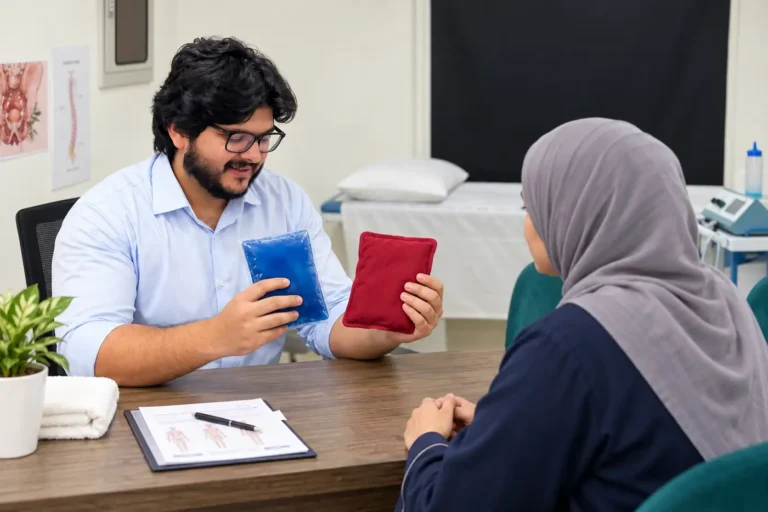
Patients often arrive asking whether they have a tear or which rotator cuff exercise is best. The more useful first question is what type of movement and loading problem is present and whether any finding requires medical referral. Assessment links symptoms to function before a programme is selected.
The assessment may include:
Onset, trauma, night pain and aggravating activities
Active and passive shoulder range of motion
Rotator cuff strength in elevation and rotation
Shoulder-blade control and upper-back movement
Cervical screening and neurological symptoms where relevant
Functional tests such as reaching, lifting or resisted work
Available ultrasound, MRI or surgical information
What to Expect During Rotator Cuff Physiotherapy at WHPT Pakistan
The first session is designed to distinguish a routine rehabilitation presentation from a problem requiring imaging or specialist review. Treatment is then matched to the current stage rather than to a popular online routine.
Step 1: History and Safety Screening
Your physiotherapist reviews the onset, trauma, night symptoms, medical history, previous treatment and any imaging or surgery. Red flags and cervical or neurological contributors are screened.
Step 2: Shoulder Movement and Strength Assessment
Active and passive range, rotator cuff force, shoulder-blade control and relevant tasks are examined. The aim is to identify what reproduces symptoms and what capacity has been lost.
Step 3: Initial Treatment and Exercise Selection
Education, activity adjustment, mobility and graded strengthening are introduced according to irritability. Exercises are chosen for the patient's deficit rather than because they are commonly labelled rotator cuff exercises.
Step 4: Reassessment and Progressive Loading
Movement, pain response and strength are retested. Resistance, range, speed, volume and complexity are advanced when the shoulder tolerates the current dose.
Step 5: Return to Work, Gym or Sport
The programme progresses toward repeated reaching, carrying, pressing, pulling, throwing or overhead sport. The patient learns how to continue strengthening after supervised care ends.
| Stage | What happens | Why it matters |
|---|---|---|
| Screening | Diagnosis, trauma, cervical factors and referral needs are reviewed | Prevents a serious tear or another condition from being missed |
| Symptom control | Load and sleep positions are adjusted while movement is maintained | Creates a tolerable starting point without excessive rest |
| Capacity building | Rotator cuff and shoulder-blade strength are progressed | Improves the shoulder's ability to control and produce force |
| Functional loading | Work, gym and sports patterns are reintroduced | Prepares the shoulder for real demand rather than isolated exercises |
| Self-management | Long-term strengthening and flare planning are established | Reduces dependence and supports continued adaptation |
Your Role in Recovery
Rotator cuff rehabilitation requires regular exposure to the right load. The patient is expected to complete the agreed programme, monitor the response over the following day and communicate changes in night pain, weakness or function. Avoiding every uncomfortable movement may reduce capacity, while repeatedly testing the shoulder with heavy or high-volume activity can keep it irritable. Consistency is more useful than occasional aggressive sessions.
Potential Benefits of Rotator Cuff Physiotherapy
When the diagnosis is suitable and rehabilitation is progressively followed, possible benefits include:
- Reduced rotator cuff pain during daily movement
- Improved sleep and tolerance of side lying
- Greater shoulder elevation and rotation where restricted
- Improved rotator cuff and shoulder-blade strength
- Better tolerance of reaching, carrying, pushing and pulling
- Safer return to gym, throwing or overhead work
- Improved confidence and a clearer plan for managing future flare-ups
| Potential benefit | What it may allow |
|---|---|
| Less pain sensitivity | More comfortable dressing, sleep and daily reaching |
| Improved cuff strength | Better control of lifting and overhead movement |
| Improved shoulder mobility | Easier grooming, reaching behind the back and elevation |
| Greater load tolerance | Return to work, gym and repeated sports activity |
| Better self-management | Appropriate adjustment of training rather than complete rest |
Results vary according to tendon condition, tear characteristics, age, medical health and the required activity level. Exercise cannot guarantee that a structural tear will disappear, but meaningful pain and function can improve without surgery in many appropriate cases. When surgery is performed, rehabilitation supports the repair but cannot shorten biological tendon healing.

Should Rotator Cuff Exercises Hurt?
A small and temporary increase in familiar discomfort may be acceptable during some nonoperative strengthening, provided movement remains controlled and symptoms settle within the agreed period. Tendon rehabilitation is not always completely pain free. The useful dose is one that the shoulder can recover from and repeat consistently.
Sharp pain, major loss of movement, increasing night pain, progressive weakness or a prolonged flare after every session suggests that the load, diagnosis or stage needs review. After rotator cuff repair, exercise must remain within the surgeon's protocol even if the shoulder feels capable of more.
Is Rotator Cuff Physiotherapy Safe?
Rotator cuff physiotherapy is generally safe when serious injury has been excluded and loading is appropriate for the diagnosis. Safety depends on distinguishing a nonoperative tendon problem from a traumatic tear or postoperative repair and on progressing force gradually.
Clinical tests are useful but not perfect. No single rotator cuff injury test confirms every tear. Safety therefore comes from the whole history and examination, response over time and timely use of imaging or orthopaedic referral when the result could change treatment.
Expected Responses and Warning Signs
| Possible response | What to expect | What to do |
|---|---|---|
| Mild exercise soreness | Temporary muscle or tendon discomfort after a new dose | Monitor the 24-hour response and adjust volume if needed |
| Fatigue with rotation or elevation | Common as weak muscles are loaded | Maintain technique and progress gradually |
| Short symptom flare | May occur after an unusual work or sports demand | Reduce aggravating volume and continue the agreed plan |
| Increasing weakness or inability to raise the arm | Not an expected training response | Arrange prompt clinical or orthopaedic review |
| Fever, redness, severe swelling or neurological symptoms | Possible complication or another condition | Seek medical assessment |
Who May Need Additional Precautions or Medical Clearance?
Additional precautions may be needed after rotator cuff repair, a large or massive tear, shoulder fracture or dislocation, revision surgery, infection, significant stiffness, cervical nerve involvement or a recent injection. Diabetes, smoking, inflammatory disease and poor tissue quality may affect symptoms or healing. Postoperative sling, passive-motion and strengthening restrictions must be confirmed from the surgeon's protocol.
Aftercare and Home Guidance
- Complete the prescribed exercises at the agreed frequency and resistance
- Modify overhead volume, pressing, throwing or heavy carrying rather than repeatedly testing pain
- Use the advised sleep positions and support when night pain is prominent
- Monitor next-day pain, weakness and movement rather than judging the session only in the moment
- Do not add aggressive stretching when the shoulder already has full motion
- After surgery, follow the sling and movement restrictions even when pain is low
Rotator Cuff Tendinopathy vs Rotator Cuff Tear
Patients often use the terms tendinitis, tendinopathy and tear interchangeably. They describe different tissue findings, although symptoms can overlap and more than one feature may be present.
| Feature | Rotator cuff tendinopathy | Rotator cuff tear |
|---|---|---|
| Typical development | Often linked to repeated loading and reduced tendon capacity | May be traumatic, degenerative, partial or full thickness |
| Common symptoms | Pain with reaching, night pain and load sensitivity | Similar pain plus possible weakness or loss of active movement |
| Imaging role | Not always required initially | May help when trauma, weakness or surgical decisions are relevant |
| Usual first-line pathway | Education and progressive exercise for many patients | Rehabilitation for selected cases; surgery considered individually |
| Key rehabilitation focus | Build tendon and shoulder capacity | Restore function while respecting tear or repair characteristics |
Neither pain intensity nor one clinical test reliably distinguishes every tear. A traumatic onset with marked weakness raises more concern than gradual load-related pain with preserved function. WHPT uses the pattern of symptoms, examination and response to rehabilitation to decide whether continued physiotherapy, imaging or orthopaedic review is most appropriate. Kinesiology tape or physio tape may provide short-term comfort for some patients, but evidence and response vary. It should not be presented as a cure for rotator cuff damage, and it does not replace progressive strength, movement assessment or surgical review when indicated.
External authority resource: AAOS OrthoInfo — Rotator Cuff Tears

Why Band Exercises Alone Are Rarely the Complete Solution
External-rotation exercises can be useful, but a complete programme may also need mobility, shoulder-blade strength, elevation, carrying, pressing, pulling and task-specific exposure. A patient can become good at one light band movement while remaining unable to lift a bag, sleep comfortably or tolerate repeated overhead work.
The exercise dose also matters. Rotator cuff stretches may be unnecessary when motion is already full, and heavy strengthening may be premature when symptoms are highly irritable or a repair is healing. Treatment is most effective when exercise selection, resistance, volume and range are adjusted to the patient's actual deficit.
A Pattern We Commonly See
A pattern we commonly see is a patient who rests until the shoulder feels better, tests it with the same heavy press or overhead activity, experiences another flare and returns to rest. This cycle does not build capacity. Rehabilitation becomes more successful when the provocative task is broken into measurable components and the shoulder is exposed to progressively greater load before the full activity is repeated.
Rotator-cuff recovery should rebuild useful shoulder capacity—not create permanent fear of lifting the arm.
Why Choose WHPT Pakistan for Rotator Cuff Physiotherapy?
Rotator cuff care should distinguish symptoms that are suitable for progressive rehabilitation from those needing imaging, orthopaedic review or postoperative protection. WHPT uses repeated assessment to keep the programme specific and responsive.
| WHPT Pakistan approach | Why it matters |
|---|---|
| Diagnosis-led shoulder assessment | Reduces reliance on one painful spot or one clinical test |
| Cervical and whole-shoulder screening | Identifies overlapping neck, joint or neurological contributors |
| Individual load prescription | Matches exercise dose to irritability, strength and goals |
| Nonoperative and postoperative pathways | Separates tendon loading from repair-protection requirements |
| Work, gym and sport progression | Rebuilds the capacity required outside the clinic |
| Reassessment of strength and function | Shows whether treatment is producing meaningful change |
| Recovery beyond rehabilitation | Suitable patients can continue strength and conditioning through Alpha Fitness & Martial Arts Club |
Frequently Asked Questions
What are the symptoms of a rotator cuff tear?
Common symptoms include pain in the shoulder or upper arm, night pain, weakness, difficulty lifting or lowering the arm and reduced overhead function. A traumatic full-thickness tear may cause sudden weakness or inability to raise the arm. Symptoms overlap with other shoulder conditions, so examination is recommended. Rotator cuff tear symptoms should be interpreted with the injury mechanism and strength examination rather than self-diagnosed from pain location alone.
What does a torn rotator cuff feel like?
A torn rotator cuff may feel like a deep ache, sharp pain with certain movements, weakness, catching or difficulty sleeping on the side. Some tears cause surprisingly little pain, while severe pain can occur without a large tear. Sensation alone cannot determine tear size.
Can rotator cuff pain heal without surgery?
Many rotator cuff-related pain conditions and selected tears improve with education and progressive physiotherapy. Surgery is considered according to trauma, tear characteristics, weakness, progression, patient age, activity demands and response to nonoperative care. There is no single answer for every tear. Physical therapy for rotator cuff problems is most useful when the exercise dose is progressed and the diagnosis is reviewed if strength or function deteriorates.
What exercises are used for rotator cuff rehabilitation?
Exercises may include supported elevation, isometric work, external and internal rotation, rowing, shoulder-blade strengthening, carries and progressive overhead loading. The correct selection depends on range, irritability, diagnosis and goal. A generic exercise list may be too easy, too hard or simply unnecessary.
How long does rotator cuff rehabilitation take?
Recovery time ranges from several weeks for a mild overload to several months for persistent tendinopathy or a significant tear. Rotator cuff surgery recovery commonly continues for many months because the repaired tendon needs biological healing before high force and overhead activity are restored. Early postoperative recovery usually protects the tendon and restores permitted motion; meaningful strengthening begins later, followed by overhead endurance and task-specific loading. A rotator cuff repair protocol may extend nine to twelve months for demanding sport or work, even though ordinary daily function improves earlier.
Why is rotator cuff pain worse at night?
Night pain may be influenced by pressure on the shoulder, prolonged position, tissue sensitivity and reduced movement. Supporting the arm, changing sleep position and managing daytime load may help. Severe or progressive night pain should be assessed rather than treated only with positioning advice.
Do I need an MRI for rotator cuff pain?
Not every patient needs immediate imaging. A clinical assessment can guide initial treatment in many cases. Ultrasound or MRI may be useful after trauma, with marked weakness, when symptoms do not improve as expected or when the result could influence a surgical decision.
What is a supraspinatus tear?
The supraspinatus is one of the four rotator cuff muscles and its tendon is commonly involved in tears. Rehabilitation still considers the entire cuff, shoulder blade, joint and functional demand. Treatment depends on whether the tear is partial or full thickness, traumatic or degenerative and how much function is affected.
What happens after rotator cuff repair surgery?
Early rehabilitation protects the repair and follows sling and movement restrictions. Passive and assisted motion are introduced according to the protocol, followed later by active movement, strengthening and functional loading. Rotator cuff repair protocols vary with tear size, tissue quality and surgeon preference. Early phases may include passive motion only, followed by assisted and active movement. Resisted cuff training is delayed until the repair is ready. Trying to accelerate one phase can compromise the biological purpose of the previous phase.
Can I return to gym training after a rotator cuff injury?
Often yes, but exercises, range and load should be rebuilt progressively. Pressing, pulling, overhead work and high-speed sport are introduced when movement, strength and symptom response are ready. Returning to the previous weight immediately after pain settles is a common cause of recurrence.
Continue Your Recovery Beyond Rehabilitation
Reducing shoulder pain is not the same as restoring full overhead capacity. Many patients need continued strength, endurance and technique work after formal physiotherapy, particularly when returning to gym training, cricket, badminton, martial arts or physically demanding employment.
Where appropriate, patients completing physiotherapy at WHPT Pakistan may continue through Alpha Fitness & Martial Arts Club. Its services include physiotherapist-led women's group fitness, personal training, nutrition coaching, flexibility and mobility training, strength and conditioning, and martial arts under qualified coaches. The transition is recommended only when the shoulder is ready for the next level of loading.
Book Your Rotator Cuff Physiotherapy Assessment
If shoulder pain, night symptoms, weakness, a diagnosed tear or recovery after rotator cuff surgery is limiting your daily life, work or training, an assessment can clarify the likely problem, referral needs and the next appropriate stage of rehabilitation.
Author and Clinical Review
- Consultant Physiotherapist
- MS Orthopedic Manual Therapy
- Founder, WHPT Pakistan