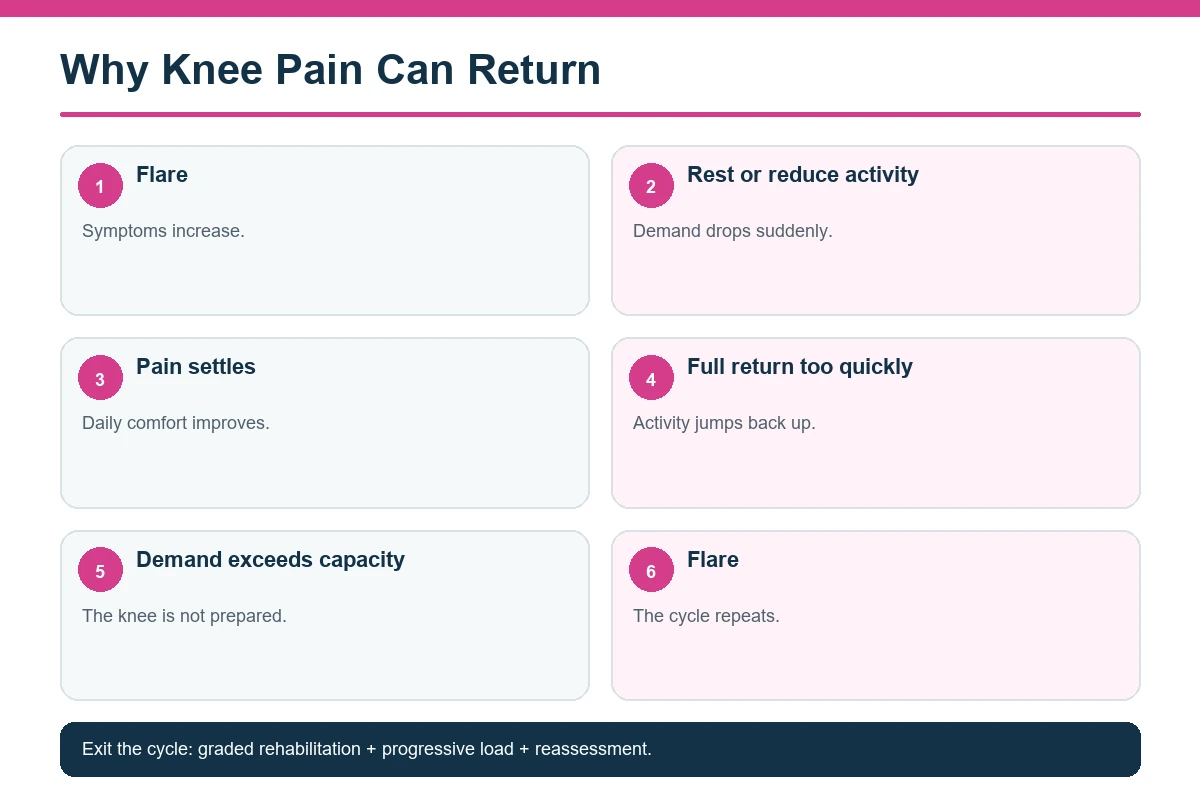
The knee feels better, so you return to normal life. A few days later the same pain is back. This cycle can be confusing because it feels as though the treatment “worked” and then suddenly stopped working.
Often, the pain improved before the knee had regained enough capacity for the activity that triggered it. In other cases, the original diagnosis was incomplete, the training load jumped too quickly, or rehabilitation stopped as soon as symptoms settled.
Knee pain can return when symptoms improve faster than strength, endurance, movement control, or load tolerance. Recurrence may also follow sudden increases in walking, sport, or gym volume; incomplete rehabilitation; inconsistent exercise; arthritis flares; unresolved swelling; or a diagnosis that needs review. The goal is not simply to make pain disappear temporarily, but to rebuild the capacity required for daily activity, prayer positions, work, exercise, or sport.
At a Glance
- Pain relief can happen before the knee is ready for full activity.
- Recurrence often reflects a mismatch between capacity and demand.
- Repeated rest without rebuilding strength can create the same flare cycle.
- A sudden jump in walking, running, sport, or gym work can trigger symptoms again.
- Arthritis and patellofemoral pain can fluctuate even with good management.
- Reassessment is useful when the pattern changes or progress repeatedly stalls.
Pain Relief and Recovery Are Not the Same Thing
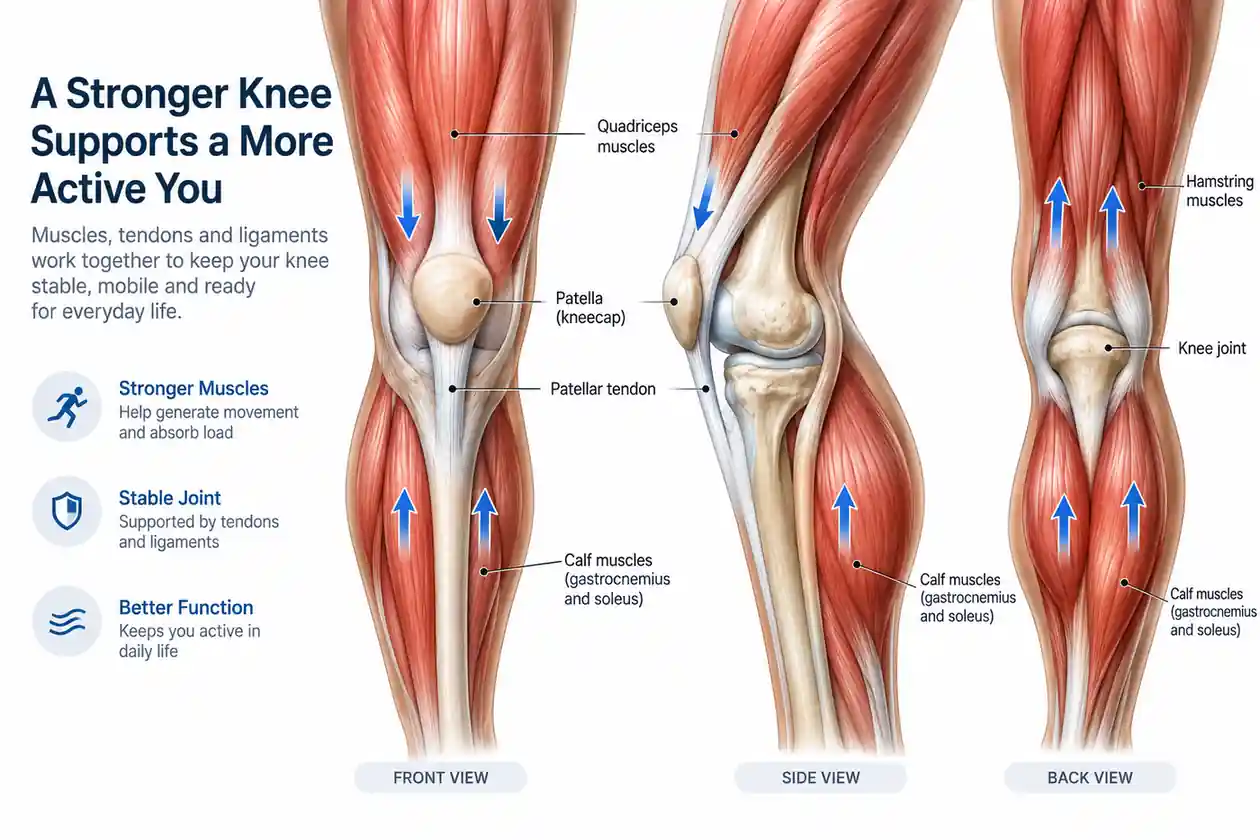
Pain is one outcome of rehabilitation, but it is not the only one. A knee can feel comfortable during ordinary walking while quadriceps strength, endurance, single-leg control, or tolerance for stairs is still below the level needed for a full workday, a football match, or heavy gym training.
This is why WHPT’s Knee Pain Physiotherapy pathway measures function as well as symptoms. Recovery is more durable when the knee can do the work the person is returning to.
Reason 1: You Returned to the Same Load Too Quickly
When pain settles, people often restore every activity at once: normal steps, full gym loads, running volume, weekend sport, and repeated stairs. The knee may tolerate each demand separately but not the total increase combined.
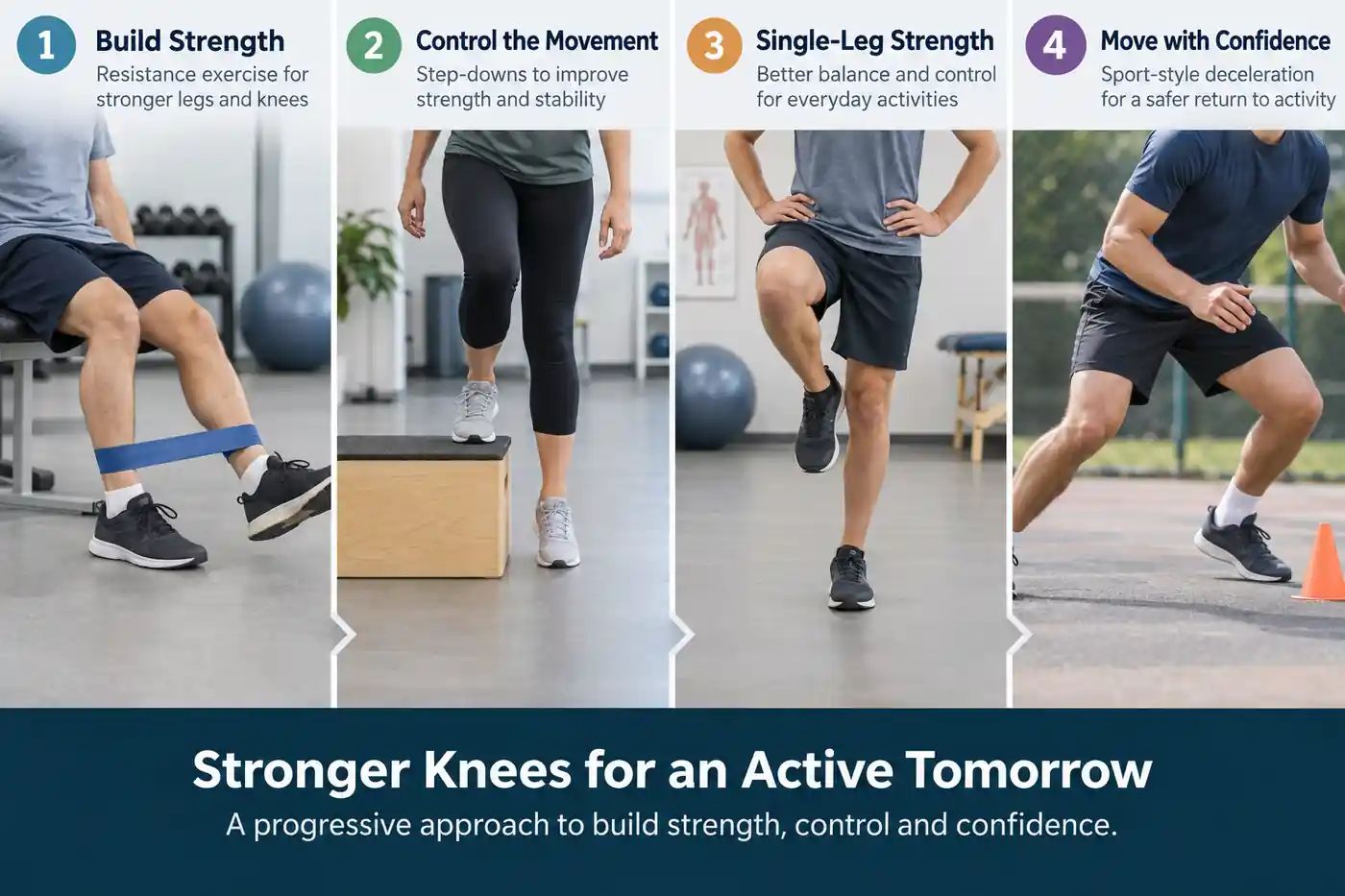
A better return separates variables. Rebuild walking distance, then resistance, then speed or impact, then sport-specific complexity where relevant. The exact order changes by diagnosis and goal.
Reason 2: Rehabilitation Stopped at “Pain-Free”
Early rehabilitation may improve pain and basic movement. Later rehabilitation should restore capacity. If strengthening stops once the knee feels better, the person may never rebuild the reserve needed for demanding tasks.
For patellofemoral pain, modern guidance emphasizes education and knee- and hip-targeted exercise. The 2024 best-practice guide supports individualized exercise rather than symptom relief alone.
WHPT’s Therapeutic Exercise page explains how exercises should progress toward measurable functional goals instead of remaining at the same beginner level.
Reason 3: The Knee Was Rested but Not Reconditioned
Rest often reduces symptoms because it removes the activity that irritates the knee. The problem is that the knee may also become less conditioned during the same period. When full activity returns, the original demand again exceeds capacity.
This does not mean rest is always wrong. Significant injuries and flares can need temporary protection. The missing piece is the transition from protection back to load.
Reason 4: Training Load Keeps Spiking
Recurring pain in runners, gym-goers, footballers, martial artists, and recreational athletes is often linked to inconsistent load: several quiet days followed by one very hard session. Weekend-only sport can create the same pattern.
For active patients, Physiotherapy for Athletes and Sports Physiotherapy can help connect symptom control with the actual speed, impact, fatigue, landing, or direction-change demands of the sport.
Reason 5: Swelling or Range Loss Never Fully Resolved
Persistent or recurrent swelling can inhibit quadriceps function and alter movement. Even small losses of knee extension can make walking and loading less efficient. If the knee repeatedly becomes puffy or stiff after ordinary activity, simply adding harder exercises may not be the right answer.
The underlying problem—arthritis flare, meniscus irritation, postoperative status, or another joint issue—may need review before progression.
Reason 6: The Original Diagnosis Was Too Narrow
A person may have been told “weak quads,” “tight IT band,” or “meniscus” from one symptom without a complete examination. If treatment is based on an incomplete explanation, it may help temporarily but miss the factor that keeps provoking symptoms.
A Comprehensive Physiotherapy Assessment can revisit the history, swelling, range, strength, movement, training load, and relevant clinical tests when recurrence does not fit the original plan.
Reason 7: Arthritis Flares Are Being Treated as Failure
Knee osteoarthritis can fluctuate. A period of increased symptoms does not automatically mean exercise has damaged the joint or that all previous progress is lost. Activity, sleep, illness, overall load, and other factors can influence a flare.
NICE osteoarthritis guidance recommends ongoing therapeutic exercise and education. WHPT’s Arthritis Physiotherapy pathway focuses on adapting load during flares while preserving long-term strength and function.
Reason 8: A Meniscus or Ligament Problem Needs a Different Pathway
Recurrent joint-line pain with swelling or catching, or repeated giving way after a traumatic injury, should not be reduced to generic overuse. A meniscus injury, ACL problem, or combined injury may need a more specific rehabilitation or orthopedic pathway.
Review WHPT’s Meniscus Tear Rehabilitation and ACL Injury Rehabilitation information when those patterns fit.
A recurrence should also be compared with the previous episode instead of being treated automatically as a completely new injury. Ask whether the trigger is similar, whether swelling or instability is different, and whether the knee is losing more function than before. A familiar mild flare after a workload spike may need load adjustment; a new traumatic episode, rapid swelling, or giving-way changes the picture. WHPT’s Sports Injuries pathway is relevant when recurring symptoms are linked to training, impact, twisting, or return to sport.
How to Break the Recurrence Cycle
| Instead of… | Try… |
|---|---|
| Resting until pain disappears, then returning fully | Use a staged return with planned increases in volume and intensity. |
| Repeating the same basic exercises | Progress strength and function toward the actual goal. |
| Tracking pain only | Track swelling, range, strength, walking, stairs, and next-day response. |
| Changing several activities at once | Adjust one or two loading variables so the response is interpretable. |
| Assuming every flare is new damage | Review whether the flare fits load, arthritis, or a new injury pattern. |
| Ignoring repeated instability or locking | Get the diagnosis/pathway reassessed. |
When Recurrence Needs Medical or Orthopedic Review
Most recurrent knee pain is not an emergency, but a changing pattern deserves attention. New major trauma, true locking, rapidly increasing swelling, inability to bear weight, a hot red swollen joint with fever, or new vascular/neurological symptoms require appropriate medical evaluation.
After surgery, recurring symptoms should also be interpreted against the operation and surgeon instructions. WHPT’s Post-Surgical Rehabilitation pathway emphasizes procedure-specific precautions rather than generic progression.
Why Can a Flare Happen After a Good Week?
Recurrence is not always caused by one dramatic mistake. Sometimes several small demands accumulate: more steps at work, poor sleep, a harder gym session, extra stairs, then a weekend sport session. Each factor may be tolerable alone, but together they raise the total demand above the knee’s current capacity.
That is why it helps to review the whole week rather than only the activity immediately before pain returned. Training volume, work demands, recovery, swelling, and changes in routine can all provide context. A flare can therefore be useful feedback about dose without automatically meaning the knee has been reinjured.
Do Not Skip the Maintenance Phase
Many people think rehabilitation ends when the original exercise program ends. In reality, some capacity often needs to be maintained—especially if the person regularly runs, plays sport, lifts heavily, or has an arthritic knee that benefits from ongoing strength work. Maintenance does not have to mean daily rehabilitation forever; it means keeping enough activity in the week to support the demands you expect from the knee.
A maintenance plan may be much shorter than early rehabilitation. It can include a few strength exercises, regular general activity, planned changes in training load, and a clear response plan for small flares. The goal is independence, not permanent dependence on treatment.
If symptoms keep returning despite a sensible progression and maintenance plan, reassessment becomes more important. The clinical picture may have changed, the original explanation may be incomplete, or the current goal may require a higher level of conditioning than the program provides. WHPT’s Comprehensive Physiotherapy Assessment is one route to review that gap.
A recurrence plan can also reduce panic when a small flare happens. Instead of immediately stopping everything, identify what changed, temporarily reduce the provoking load when appropriate, keep comfortable movement, and watch whether the knee returns toward its usual baseline. New trauma, major swelling, true locking, or instability should be treated differently because those findings can change the clinical pathway.
Frequently Asked Questions
Why does my knee hurt again after I stopped physiotherapy?
Symptoms may have improved before strength and activity tolerance were fully restored, or the independent program may not have progressed enough for your current demands.
Does recurring knee pain mean the joint is getting worse?
Not necessarily. Recurrence can reflect load changes, incomplete conditioning, arthritis flares, or other modifiable factors. A new pattern or progressive functional loss should be assessed.
Why does my knee pain return every time I run?
Running demand may still exceed the knee’s current capacity, or the program may not have rebuilt the strength and volume tolerance needed for running. Training progression should be reviewed.
Can a meniscus problem cause recurring pain?
Yes, particularly if there is joint-line pain, swelling, twisting sensitivity, catching, or locking. These symptoms need context and do not automatically mean surgery is required.
Can arthritis pain come and go?
Yes. Osteoarthritis symptoms commonly fluctuate. A flare should be managed according to symptoms and function rather than assuming all movement must stop.
Should I restart the same exercises every time pain returns?
Not automatically. The same starting exercises may be useful briefly, but repeated recurrence is a reason to review what is missing and how the program should progress.
When should I book an assessment for recurring knee pain?
When recurrence repeatedly disrupts walking, stairs, prayer positions, work, gym, or sport, or when swelling, instability, or the symptom pattern is changing. Use WHPT’s appointment page or call/WhatsApp +92 334 8205557.
Aim for Capacity, Not Just Temporary Relief
You can review WHPT Pakistan for clinic information and the broader rehabilitation services available.
The most useful question after knee pain improves is: “What does the knee need to tolerate next?” Building that capacity in stages can reduce the repeated cycle of relief, overloading, and flare.
WHPT Pakistan provides assessment-led physiotherapy and rehabilitation in Bahria Town, Lahore. Appointment times are confirmed by staff.
References
- Neal, B. S., et al. (2024). Best practice guide for patellofemoral pain. British Journal of Sports Medicine, 58(24), 1486–1495. PubMed
- Neal, B. S., et al. (2025). Prognosis of patellofemoral pain: a systematic review with evidence- and gap-map. Journal of Orthopaedic & Sports Physical Therapy, 55(10), 661–670. PubMed
- Rathleff, M. S., et al. (2019). Activity modification and load management of adolescents with patellofemoral pain. American Journal of Sports Medicine, 47(7), 1622–1630. PubMed
- National Institute for Health and Care Excellence. (2022). Osteoarthritis in over 16s: diagnosis and management (NG226). NICE guidance
- Prill, R., et al. (2025). The formal EU-US Meniscus Rehabilitation 2024 Consensus: Part II. Knee Surgery, Sports Traumatology, Arthroscopy, 33(8), 3014–3024. PubMed

About Dr Salman Sabir PT
Dr Salman Sabir PT is a consultant physiotherapist, clinical leader and co-founder of WHPT Pakistan. He holds an MS in Orthopedic Manual Therapy and is undertaking doctoral study in Exercise Physiology. His work focuses on assessment-led rehabilitation, patient education, progressive exercise and long-term recovery.
Need Help Applying This to Your Situation?
General information cannot account for your injury history, strength, movement, medical conditions or personal goals.
BOOK ASSESSMENTCall +92 334 8205557