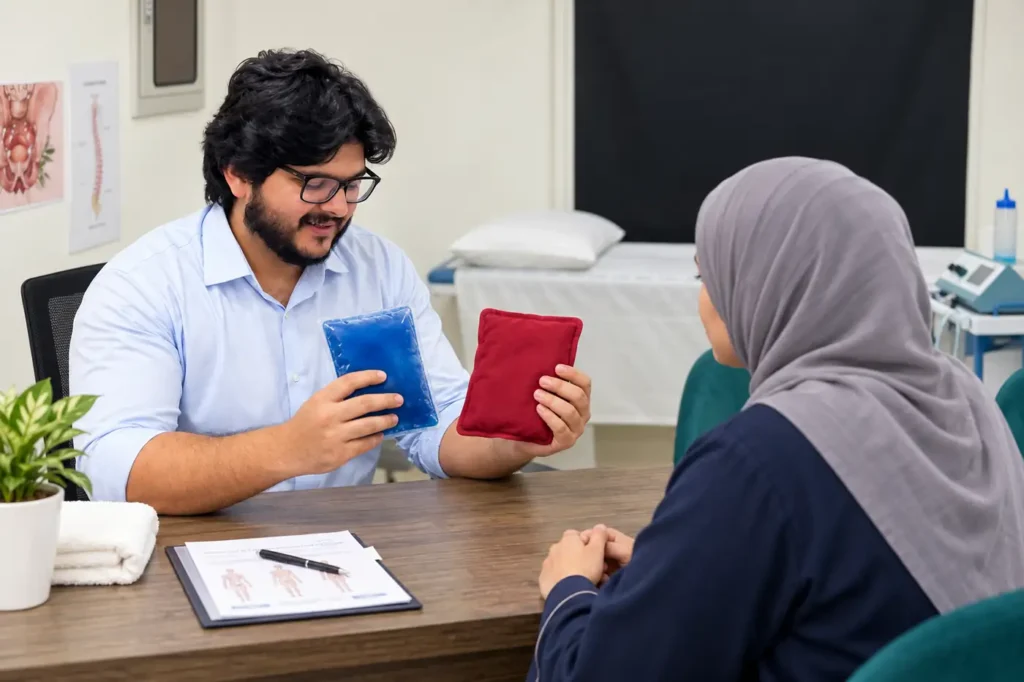
One family member tells you to ice a painful knee immediately. Another says heat is better because it “improves circulation.” Both can feel helpful in the right situation, but neither is a universal treatment for knee pain.
Heat and cold are symptom-management tools. They may change comfort, stiffness, or swelling for a short period, but they do not tell you what is causing the knee pain and they do not replace rehabilitation when strength, movement, or load tolerance needs to improve.
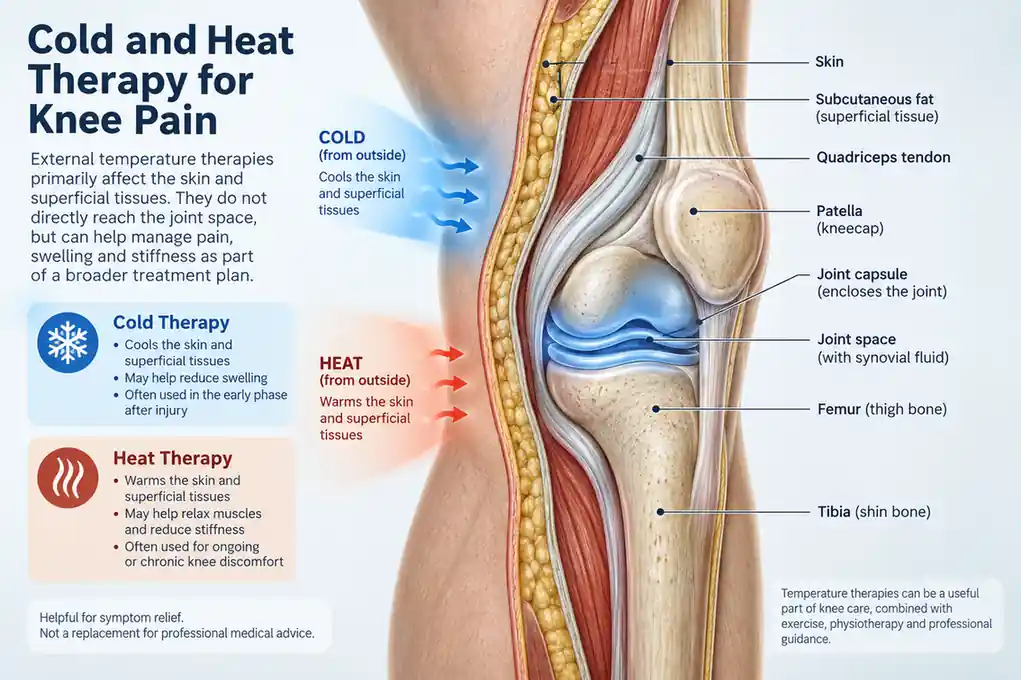
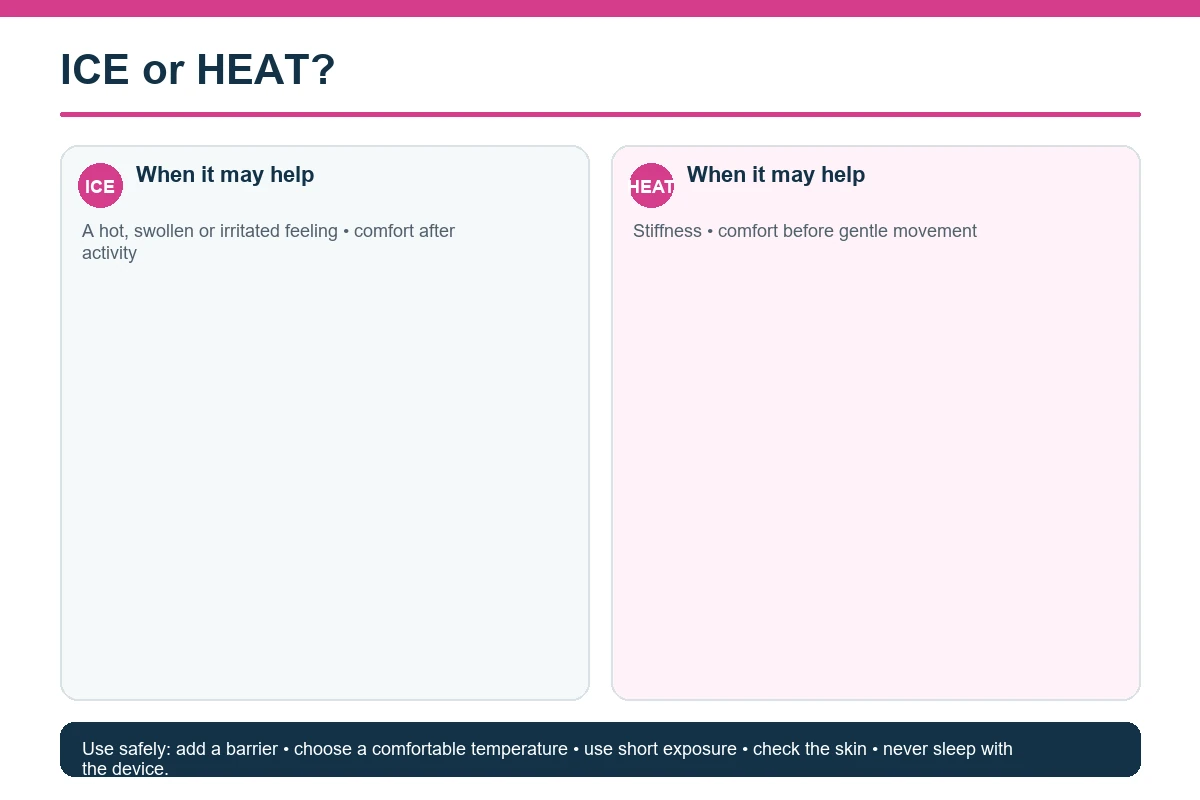
Ice may be useful for short-term comfort when a knee feels hot, swollen, or irritated, while heat may feel better for stiffness or muscle tension before gentle movement. Evidence for both varies by condition, and neither should be treated as a cure. Use a comfortable temperature, protect the skin, limit exposure, and stop if numbness, burning, or skin changes occur. Persistent swelling, trauma, locking, instability, or worsening function needs assessment rather than repeated hot or cold packs.
At a Glance
- Ice and heat are optional symptom-relief tools, not the main treatment for most knee problems.
- Cold may feel useful when swelling or post-activity irritation is prominent.
- Heat may feel useful for stiffness before movement.
- Skin sensation, circulation, and medical conditions affect safety.
- Do not sleep with a heating pad or apply ice directly to skin.
- Choose the method that improves comfort without delaying assessment or rehabilitation.
What Heat and Ice Can—and Cannot—Do
Cold lowers local tissue temperature and can change pain sensation. Heat increases local temperature and may make a stiff area feel more comfortable. These effects can be useful, but they are temporary. Neither option rebuilds quadriceps strength, restores lost balance, improves return-to-sport capacity, or identifies a meniscus or ligament injury.
That is why WHPT’s Knee Pain Physiotherapy pathway places symptom relief inside a larger plan rather than making hot or cold packs the plan itself.
When Ice May Feel More Helpful
People often prefer cold when the knee feels warm, swollen, or irritated after activity. A 2025 systematic review and meta-analysis found that cryotherapy may reduce pain in knee osteoarthritis as part of a broader treatment approach, while also noting the need for stronger evidence and that cold should not be viewed as a stand-alone solution.
The 2025 cryotherapy review is a useful reminder of how to interpret symptom-relief evidence: “may help” is different from “everyone needs it.”
Cold can also be used after a demanding rehabilitation session if it makes the knee more comfortable, provided the skin and circulation are suitable. The goal is comfort, not trying to “freeze inflammation out” of every painful knee.
When Heat May Feel More Helpful
Heat is often preferred when the main complaint is stiffness rather than obvious swelling. A warm shower or comfortable heat before gentle movement can make some people feel looser and more willing to move.
Evidence for thermotherapy in knee osteoarthritis has historically been limited and variable. Older Cochrane evidence found too few high-quality trials to make strong universal conclusions. Major osteoarthritis guidelines generally place exercise, education, and activity management above thermal modalities.
For arthritis, WHPT’s Arthritis Physiotherapy page focuses on the treatments that change function—strength, movement, balance, and activity—even when heat is used for comfort.
A Practical Heat-vs-Ice Guide
| Situation | Ice may suit | Heat may suit | What matters more |
|---|---|---|---|
| Knee feels swollen/hot after activity | Often preferred for comfort | May feel less comfortable when the joint already feels hot | Reduce provoking load and assess recurrent swelling. |
| Stiff knee before gentle movement | Optional | Often preferred for comfort | Follow with appropriate movement or exercise. |
| Recent significant injury | May help comfort if safe | Usually not the first priority when swelling is prominent | Screen severity, weight-bearing, stability, and need for medical care. |
| Chronic knee pain without swelling | Either based on preference | Either based on preference | Address strength, activity, diagnosis, and function. |
| After rehabilitation exercise | Optional if soothing | Optional if soothing | Judge whether the exercise dose was appropriate. |
How Long Should You Use Ice or Heat?
There is no single evidence-based duration that applies to every device, body size, condition, and temperature. A practical approach is short, comfortable exposure rather than prolonged extremes. Many people use roughly 10–20 minutes, but the exact safe duration depends on the method and skin response.
Always place a barrier between the skin and an ice pack. Heating pads should be warm rather than painfully hot. Do not fall asleep with heat or cold applied, and check the skin during use.
Who Needs Extra Caution With Heat or Ice?
Be cautious when sensation is reduced, circulation is poor, the person cannot reliably report temperature, or there is fragile or damaged skin. Diabetes, peripheral neuropathy, vascular disease, certain neurological conditions, and some medications can change risk. If you are unsure, ask an appropriate clinician before using strong thermal treatments.
A cold or pale foot, major color change, new numbness, or vascular concern is not a situation for experimenting with temperature—it requires medical evaluation.
Should You Ice After Every Exercise Session?
No. There is no requirement that every knee rehabilitation session end with ice. If cold provides comfort and there are no contraindications, it can be used. If the knee feels fine, there may be no reason to add it.
More importantly, repeated large post-exercise swelling can mean the exercise or total daily load is too high. The solution is not always “more ice”; the program may need adjustment. WHPT’s Therapeutic Exercise approach uses the exercise response to guide progression.
Heat and Ice After Surgery or a Significant Injury
Post-surgical knees may have specific wound, swelling, and medical considerations. Cold is commonly used for comfort after some procedures, but the rehabilitation plan still has to follow surgeon instructions and monitor wound status, calf symptoms, circulation, and function.
Heat should not be placed over a fresh surgical wound or used to override medical precautions. WHPT’s Post-Surgical Rehabilitation and Knee Replacement Physiotherapy pages explain the larger recovery priorities.
Comfort measures are most useful when they make sensible activity easier rather than becoming the activity itself. For example, a short period of cold may make an irritable knee feel more comfortable after a demanding day, while warmth may help someone begin gentle movement when stiffness is the main complaint. Neither response proves which structure is responsible. Similar to other symptom-relief approaches such as Manual Therapy, the useful question is whether the option supports movement, function, and an appropriate rehabilitation plan.
What Matters More Than Heat or Ice for Long-Term Improvement?
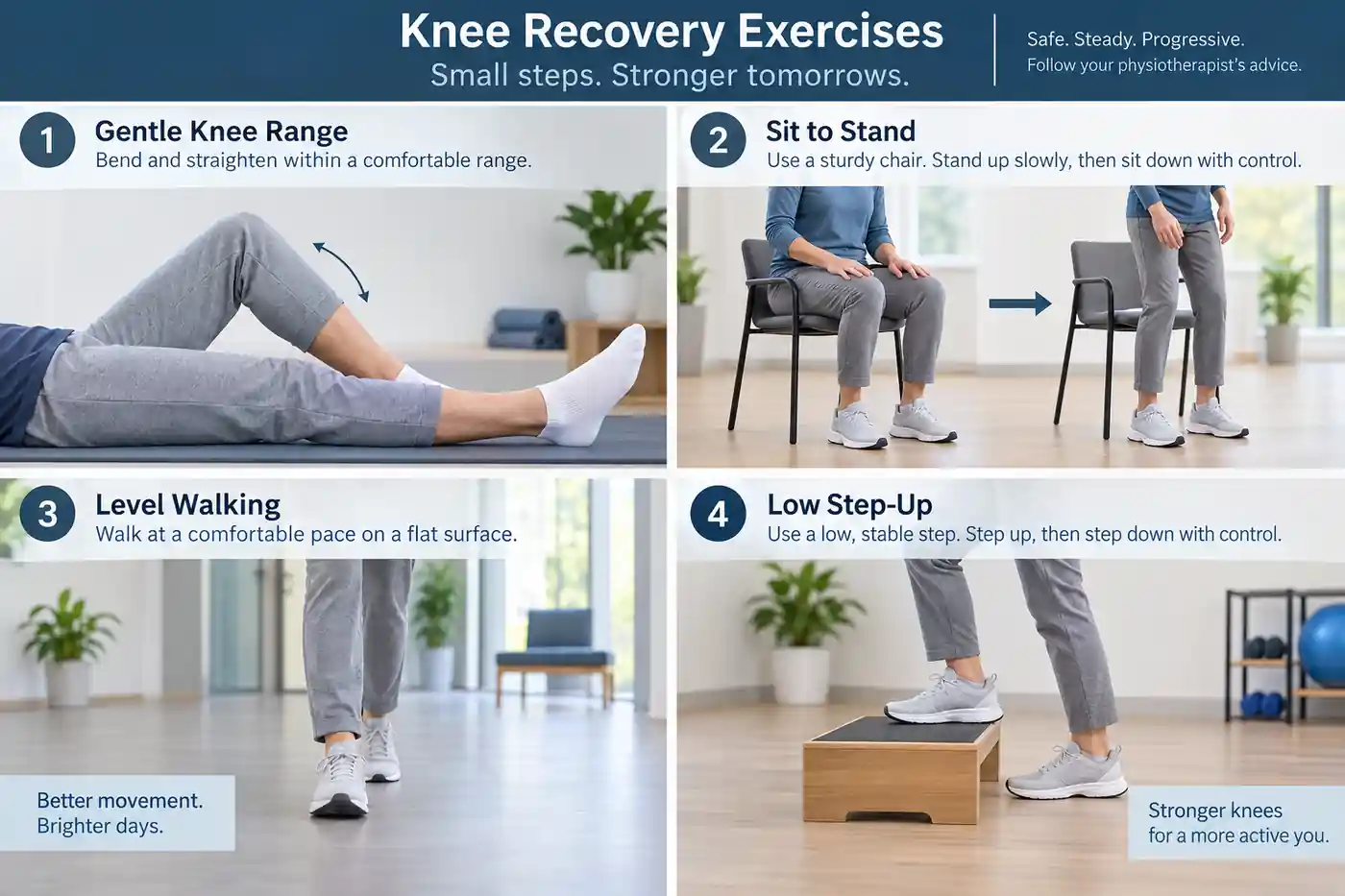
For many common knee conditions, long-term improvement depends more on appropriate activity, education, strength, mobility, and progressive function than on thermal treatments. This is especially clear in osteoarthritis and patellofemoral pain guidelines.
Exercise does not mean “push through everything.” It means choosing a load the knee can tolerate and then progressing. The NICE osteoarthritis recommendations place therapeutic exercise at the center of care, and patellofemoral guidelines similarly emphasize active rehabilitation.
When Knee Pain Needs Assessment Instead of Another Pack
Heat and cold can mask symptoms temporarily. They should not delay assessment after major trauma, true locking, repeated instability, rapidly increasing swelling, a hot red joint with fever, or progressive inability to bear weight.
For non-urgent but persistent symptoms, a Comprehensive Physiotherapy Assessment can establish whether the knee needs load modification, strengthening, mobility work, medical referral, or another pathway.
How to Use Heat or Ice More Safely
Both heat and cold can irritate skin if used carelessly. Use a cloth barrier rather than placing an extreme-temperature pack directly on the skin, check the skin regularly, and stop if you develop burning, excessive numbness, blistering, or unusual color change. Extra caution is appropriate when sensation or circulation is reduced.
| Option | Common practical use | Do not use it as… |
|---|---|---|
| Ice/cold pack | Short-term comfort after an acute flare, activity, or swelling when it feels helpful | Proof that inflammation has been “removed” or that the underlying cause is treated |
| Heat/warm pack | Short-term comfort for stiffness or before comfortable movement when it feels helpful | A reason to keep loading a hot, acutely swollen, or medically concerning knee |
If you are unsure because of diabetes-related sensation changes, vascular problems, significant swelling, recent surgery, or another medical condition, ask the relevant clinician before using strong heat or cold.
What If Neither Heat Nor Ice Helps?
That is not unusual. Heat and ice are optional symptom tools, not requirements for knee recovery. If neither changes the symptoms meaningfully, there is no need to keep applying them out of habit. Focus instead on the clinical pathway: appropriate activity modification, progressive rehabilitation when indicated, and assessment if symptoms are persistent, recurrent, or associated with swelling or instability.
For many musculoskeletal knee problems, the longer-term question is how to restore movement and load tolerance. WHPT’s Therapeutic Exercise page explains why exercise dosage and progression usually matter more than choosing the “perfect” temperature pack.
Frequently Asked Questions
Is ice better than heat for knee arthritis?
Neither is universally better. Cold may help some people with pain or swelling; heat may feel better for stiffness. Exercise and other core management strategies matter more for long-term function.
Can heat make knee swelling worse?
A very hot, swollen knee may feel worse with heat, so many people prefer cold in that situation. Recurrent or unexplained swelling should be assessed rather than managed only with temperature.
Should I ice a knee immediately after a workout?
Only if it helps comfort and is safe for you. It is not required after every workout. A large flare may mean the training dose needs to be reduced.
Can I use a hot water bottle on knee pain?
Gentle heat can be used for comfort if skin sensation and circulation are normal. Avoid excessive temperature, direct prolonged exposure, and sleeping with it in place.
How often can I use ice?
Short applications can be repeated based on comfort, but there is no reason to keep the knee continuously cold. Protect the skin and allow it to return to normal temperature between uses.
Can heat or ice heal a meniscus tear?
No. They may change symptoms but do not determine whether a meniscus tear heals or needs surgery. The Meniscus Tear Rehabilitation pathway depends on tear type, symptoms, and function.
When should I see a physiotherapist instead of using heat or ice?
When pain persists, keeps returning, swelling recurs, function is declining, or you are unsure what activity is safe. Use WHPT’s appointment information or WhatsApp/call +92 334 8205557.
Use Heat or Ice for Comfort, Not as the Diagnosis
For the broader clinical pathway, see WHPT’s Knee Pain Physiotherapy guide. Clinic information is available through WHPT Pakistan, and assessment availability can be checked on the appointment page.
If heat or ice makes your knee feel better, it can be a useful part of self-management. The bigger question is whether the knee is becoming stronger, more mobile, and more capable of the activities you need.
WHPT Pakistan provides assessment-led physiotherapy in Bahria Town, Lahore. Appointment times are confirmed by staff.
References
- Dias, R. F., et al. (2025). Cryotherapy in knee osteoarthritis: a systematic review with meta-analysis. Pain Practice, 25(6), e70055. PubMed
- Brosseau, L., et al. (2003). Thermotherapy for treatment of osteoarthritis. Cochrane Database of Systematic Reviews. PubMed
- National Institute for Health and Care Excellence. (2022). Osteoarthritis in over 16s: diagnosis and management (NG226). NICE guidance
- Kolasinski, S. L., et al. (2020). 2019 ACR/Arthritis Foundation guideline for management of osteoarthritis of the hand, hip, and knee. Arthritis Care & Research, 72(2), 149–162. PubMed
- Willy, R. W., et al. (2019). Patellofemoral pain: Clinical practice guidelines. Journal of Orthopaedic & Sports Physical Therapy, 49(9), CPG1–CPG95. PubMed

About Dr Salman Sabir PT
Dr Salman Sabir PT is a consultant physiotherapist, clinical leader and co-founder of WHPT Pakistan. He holds an MS in Orthopedic Manual Therapy and is undertaking doctoral study in Exercise Physiology. His work focuses on assessment-led rehabilitation, patient education, progressive exercise and long-term recovery.
Need Help Applying This to Your Situation?
General information cannot account for your injury history, strength, movement, medical conditions or personal goals.
BOOK ASSESSMENTCall +92 334 8205557