Upper Back Pain Causes: Muscles, Posture, Ribs, or Something Else?
Understand upper back pain causes, common movement patterns, and warning signs that should not be ignored.
Read article
Shoulder pain can make it difficult to sleep, dress, reach overhead, lift a child, drive, work at a desk, train in the gym, bowl in cricket, play badminton, or perform household tasks. Pain may begin after a fall, sudden lift, repeated overhead activity, sports training, or an increase in workload. It can also develop gradually without one obvious injury.

Shoulder pain may relate to the rotator cuff, joint stiffness, load changes, trauma or referred symptoms. WHPT Pakistan assesses the pattern and builds rehabilitation around the movements and tasks the patient needs to recover.
Shoulder pain can make it difficult to sleep, dress, reach overhead, lift a child, drive, work at a desk, train in the gym, bowl in cricket, play badminton, or perform household tasks. Pain may begin after a fall, sudden lift, repeated overhead activity, sports training, or an increase in workload. It can also develop gradually without one obvious injury.
A click without pain or loss of function is often less concerning than a painful click associated with locking, weakness, trauma, or instability. Symptoms must be interpreted in context.

Shoulder pain is a symptom rather than one diagnosis. The shoulder complex includes the ball-and-socket joint, collarbone joints, shoulder blade, rotator cuff muscles and tendons, biceps tendon, bursa, ligaments, and the muscles connecting the arm to the trunk. The neck and nerves can also refer symptoms into the shoulder and arm.
Because many tissues work together during reaching and lifting, a painful movement does not reliably identify one damaged structure. Clinical assessment looks at the entire pattern: where the pain is felt, which movements reproduce it, whether movement is limited by pain or stiffness, how much strength is lost, and whether the neck or nervous system may be involved.
Common descriptions include shoulder ache, front shoulder pain, pain on the outer arm, pain around the shoulder blade, a sore shoulder after training, or sharp pain when reaching. These phrases are useful starting points but are not diagnoses by themselves.
| Location | Possible Clinical Considerations | Important Notes |
|---|---|---|
| Front of the shoulder | Biceps tendon, rotator cuff, joint irritation, lifting or pressing overload | Pain location alone cannot confirm the tissue |
| Side of the shoulder or upper arm | Rotator cuff-related pain, bursa irritation, referred pain | Symptoms often worsen with reaching or lying on that side |
| Top of the shoulder | Acromioclavicular joint, direct impact, pressing or cross-body movements | A visible step or major trauma requires medical assessment |
| Back of the shoulder | Posterior cuff, joint structures, throwing or lifting demands | Neck and shoulder blade contributors should also be assessed |
| Around the shoulder blade | Muscle overload, neck referral, thoracic movement, scapular control | Persistent chest or breathing symptoms require medical review |
| Shoulder and neck together | Cervical referral, nerve irritation, combined neck and shoulder problem | Numbness, tingling, or weakness changes the assessment |
A click without pain or loss of function is often less concerning than a painful click associated with locking, weakness, trauma, or instability. Symptoms must be interpreted in context.
Shoulder pain can arise from sudden injury, repeated overload, stiffness, instability, or referred symptoms. More than one factor may be present at the same time.
| Clinical Pattern | Typical Features | What Assessment Clarifies |
|---|---|---|
| Rotator cuff-related shoulder pain | Pain with lifting, reaching, lying on the shoulder, or repeated overhead activity | Strength, range, workload, neck findings, and whether a major tear is likely |
| Shoulder impingement-type symptoms | Painful arc, overhead pain, or pain reaching behind the back | Which movements and loads are sensitive rather than assuming one structure is being pinched |
| Frozen shoulder | Marked pain and progressive loss of both active and passive movement | Pattern, stage, diabetes risk, and whether another diagnosis is more likely |
| Muscle or tendon strain | Pain after lifting, sports, sudden effort, or unfamiliar training | Severity, weakness, bruising, function, and safe loading |
| Shoulder instability | Feeling of slipping, apprehension, repeated dislocation, or symptoms in vulnerable positions | Trauma history, control, strength, laxity, and referral needs |
| Acromioclavicular joint pain | Pain on top of the shoulder, after a fall, or with cross-body and pressing movements | Trauma severity, joint tenderness, and possible imaging need |
| Arthritis or age-related change | Pain, stiffness, crepitus, and reduced tolerance for daily use | Movement, strength, function, and whether imaging changes management |
| Referred neck or nerve pain | Shoulder pain with neck movement, arm symptoms, numbness, tingling, or weakness | Neurological findings and whether the neck is the primary source |

Desk work and driving do not automatically damage the shoulder, but long periods with limited movement can aggravate a sensitive neck, shoulder blade, or shoulder. Laptop use, repeated mouse work, unsupported arms, long commutes, and few movement breaks may reduce tolerance for reaching and lifting later in the day.
WHPT may assess neck movement, shoulder blade endurance, arm support, workstation setup, driving posture, break frequency, and strength. Practical changes can include varying positions, supporting the forearm, taking short movement breaks, and gradually improving shoulder and upper-back capacity.
The aim is not to force one perfect posture. It is to improve movement options and the ability to tolerate work without organizing the entire day around pain.

Shoulder pain is common in pressing, pull-ups, dips, bench press, overhead lifting, cricket bowling, badminton, swimming, throwing, and martial arts. The problem may follow a sudden increase in volume, heavier loads, fatigue, poor recovery, unfamiliar range, contact, or a genuine tissue injury.
A painful shoulder does not always require stopping all upper-body training. The physiotherapist may modify range, load, tempo, grip, exercise selection, and weekly volume while preserving movements that remain tolerable. Rehabilitation then progresses toward the exact demands the patient wants to resume.
Athletes with a structured return-to-sport goal may also be directed to WHPT Sports Physiotherapy. Rotator cuff injuries have a separate condition page so detailed tear-specific guidance remains clearly separated.

Night pain can occur with several shoulder conditions, especially when lying directly on the painful side or when the arm remains unsupported. A pillow supporting the arm in front of the body or sleeping on the opposite side may improve comfort for some people.
Repeated severe night pain, unexplained symptoms at rest, fever, significant swelling, or pain that is not influenced by position requires assessment. Night pain alone does not prove a rotator cuff tear or frozen shoulder.
Most shoulder pain can begin with routine musculoskeletal assessment, but certain findings require urgent medical care rather than waiting for physiotherapy.
These symptoms do not always indicate a dangerous condition, but they should not be treated as routine shoulder strain without appropriate medical evaluation.
A shoulder assessment should identify the likely clinical pattern, the movements and loads that are limited, and whether the patient is suitable for physiotherapy or needs medical referral.
Review how the pain started, whether trauma occurred, and how symptoms have changed.
Clarify pain location, night symptoms, clicking, instability, weakness, numbness, and daily limitations.
Assess active and passive shoulder movement, including reaching overhead and behind the back when appropriate.
Test shoulder and shoulder-blade strength according to the presentation.
Screen neck movement, sensation, reflexes, and nerve-related findings when indicated.
Observe relevant tasks such as lifting, pressing, pulling, throwing, dressing, driving, or work movements.
Review gym, sport, job, household, and caregiving demands.
Establish measurable goals and explain the working clinical impression.
Imaging is not required for every episode of shoulder pain. Many common shoulder problems can begin with clinical assessment and a trial of appropriate rehabilitation. Scans may show tendon changes or age-related findings that are not necessarily the only reason a person hurts.
Imaging becomes more relevant after significant trauma, suspected fracture or dislocation, major persistent weakness, possible full-thickness tear, recurrent instability, failure to progress as expected, surgical planning, or when the result is likely to change management. WHPT refers for medical assessment when imaging or specialist review may be appropriate.
Shoulder pain treatment is based on the clinical pattern, symptom irritability, movement loss, strength, workload, and goals. A recent strain, frozen shoulder, instability, and gradual overhead pain require different plans.
The physiotherapist explains which activities can continue, which should be modified temporarily, and how to avoid both excessive loading and unnecessary complete rest. Changes may involve lifting height, sleeping position, gym volume, bowling or throwing frequency, work setup, or how household tasks are shared.
Shoulder exercises may target comfortable range of motion, assisted movement, shoulder-blade control, rotator cuff strength, pressing or pulling tolerance, and whole-arm function. The starting point depends on the diagnosis and irritability.
A stiff shoulder may need carefully dosed mobility. A weak or overloaded shoulder may need progressive resistance. An unstable shoulder may require control and strength through vulnerable positions. Generic shoulder stretches are not equally appropriate for every patient.
Strengthening may begin with isometric or low-load work and progress to resistance bands, dumbbells, cables, body-weight exercise, overhead work, throwing, or sport-specific loading. Progress is guided by symptoms, technique, recovery, and the demands of work or sport.
Joint mobilization and soft-tissue techniques may be used to reduce pain or improve movement when appropriate. They are not presented as permanent realignment or a substitute for strengthening and practice.
Dry needling, electrotherapy, or cupping may be used selectively when a clear short-term goal exists, such as improving comfort or exercise participation. WHPT reassesses whether the technique produces meaningful value rather than repeating it automatically.
Rehabilitation should eventually reproduce the tasks the shoulder must tolerate: carrying groceries, lifting a child, reaching shelves, driving, pressing, pulling, bowling, throwing, striking, swimming, or working overhead. The shoulder is progressed from controlled exercise toward real speed, load, range, and repetition.
A 2025 clinical practice guideline on rotator cuff tendinopathy was developed to guide assessment, prognosis, nonsurgical care, and rehabilitation for adults with suspected rotator cuff-related shoulder pain. This reinforces an important principle: shoulder treatment should connect examination findings to an active rehabilitation plan rather than rely on one passive procedure or scan finding.
Read the Journal of Orthopaedic & Sports Physical Therapy clinical practice guideline for the full professional recommendations.
WHPT applies the same broader logic to shoulder pain: screen for conditions requiring medical care, identify the movement and loading problem, use symptom-relieving techniques selectively, and progressively restore capacity.
The following general measures may help a stable episode. They are not a substitute for assessment after significant trauma or when weakness, neurological symptoms, or severe loss of movement is present.

Searches for shoulder exercises, rotator cuff exercises, shoulder stretches, and shoulder strengthening exercises are common. Exercise is important, but the correct movement depends on the problem and stage of recovery.
A patient with frozen shoulder may need a different dose and range from a person with instability. Someone with a recent traumatic tear should not copy a high-volume rotator cuff workout. A gym-goer with load-related pain may benefit more from modified pressing and progressive strength than from endless stretching.
WHPT selects exercises according to symptom response and function. The program is progressed toward daily activity, work, fitness, or sport rather than stopping at light band exercises.
| Presentation | Typical Clues | Dedicated WHPT Page |
|---|---|---|
| Broad shoulder pain | Pain, weakness, stiffness, or reduced function with reaching, lifting, sleep, work, or sport | Shoulder Pain |
| Frozen shoulder | Progressive pain with marked restriction of active and passive movement | Frozen Shoulder |
| Rotator cuff injury | Pain or weakness related to rotator cuff overload, strain, or tear | Rotator Cuff Injuries |
| Neck-related shoulder pain | Symptoms influenced by neck movement, with possible tingling, numbness, or arm weakness | Neck Pain / Cervical Conditions |
| Tennis or golfer’s elbow | Pain centered around the elbow and forearm rather than the shoulder | Tennis Elbow / Golfer’s Elbow |
| Post-surgical shoulder rehabilitation | Recovery after repair, stabilization, fracture surgery, or replacement | Post-Surgical Rehabilitation |
| Sports-related shoulder injury | Shoulder symptoms linked to throwing, bowling, contact, lifting, or sport performance | Sports Injuries / Sports Physiotherapy |
These patterns can overlap. The purpose of assessment is to identify which page and treatment pathway best match the patient rather than assigning every painful shoulder the same label.
| Treatment Component | Potential Benefit | Important Limitation |
|---|---|---|
| Education and load management | Reduces unnecessary fear and guides safe activity | Advice must reflect the patient’s actual demands |
| Mobility exercises | Improve movement and confidence when stiffness is present | Aggressive stretching can flare an irritable shoulder |
| Strengthening | Builds capacity for lifting, work, fitness, and sport | Requires appropriate dose and progressive loading |
| Manual therapy | May reduce pain or improve movement temporarily | Does not replace active rehabilitation |
| Dry needling, cupping, or electrotherapy | May support short-term symptom relief for selected patients | Does not treat every cause of shoulder pain |
| Task and sport rehabilitation | Prepares the shoulder for real demands | May require time, consistency, and staged exposure |

Recovery depends on the diagnosis, severity, duration, trauma, strength loss, stiffness, sleep, diabetes or other health conditions, work demands, sport, and adherence. A recent mild overload may improve over weeks, while frozen shoulder, major tendon injury, instability, or post-surgical rehabilitation can require much longer.
Pain may fluctuate as activity increases. Progress is judged through movement, strength, sleep, daily function, workload tolerance, and confidence rather than expecting a perfectly straight recovery line.
WHPT discusses likely milestones after assessment and does not promise a fixed cure date before understanding the condition.
| WHPT Pakistan Approach | Why It Matters |
|---|---|
| Assessment before treatment | Shoulder pain is not automatically labeled as impingement, frozen shoulder, or rotator cuff tear |
| Neck and neurological screening | Referred pain and nerve symptoms are not overlooked |
| Individualized shoulder exercises | Movement and strength work match the presentation and goals |
| Active rehabilitation | Treatment rebuilds lifting, reaching, work, sleep, fitness, and sport capacity |
| Selective manual and adjunct care | Hands-on care, dry needling, cupping, and electrotherapy are used only when useful |
| Clear referral pathways | Trauma, suspected fracture, dislocation, major tear, or medical warning signs are referred appropriately |
| Same-gender care | Female patients are treated by female physiotherapists and male patients by male physiotherapists |
| Local relevance | Plans can reflect Lahore commuting, desk work, household lifting, cricket, badminton, martial arts, and gym training |
| Recovery beyond rehabilitation | Suitable patients may progress to supervised strength and fitness through Alpha Fitness & Martial Arts Club |
There is no universal instant treatment. Temporary activity modification, comfortable movement, heat or cold, sleep support, and appropriate exercise may help. Trauma, severe weakness, or persistent pain requires assessment.
Yes. Physiotherapy can identify the clinical pattern, screen the neck and nerves, guide activity, restore movement and strength, and prepare the shoulder for daily tasks, work, fitness, or sport.
The best exercise depends on whether the shoulder is stiff, weak, unstable, overloaded, injured, or affected by the neck. A personalized plan is safer than copying one generic routine.
Gentle movement may help, but aggressive stretching can aggravate an irritable shoulder. Frozen shoulder, instability, recent trauma, and rotator cuff-related pain require different approaches.
They may help when rotator cuff strength and loading are relevant, but they should be selected and progressed according to the diagnosis, symptoms, and activity demands.
Neck-related symptoms may change with neck movement or include numbness, tingling, burning, or weakness in the arm. A clinical assessment can compare neck and shoulder findings.
Night pain can occur when lying on the shoulder or keeping the arm unsupported. It can also occur with rotator cuff-related pain, frozen shoulder, or other conditions. Persistent severe night pain should be assessed.
Not always. Imaging is considered when trauma, major weakness, suspected fracture, dislocation, significant tear, recurrent instability, or failure to progress may change management.
Many people can continue modified training. Range, load, grip, volume, and exercise choice may need adjustment. Avoid repeatedly testing the shoulder at maximum effort while symptoms are unresolved.
The terms can overlap, but shoulder pain with overhead movement does not identify one structure by itself. Assessment is needed to determine the most useful clinical pattern and treatment plan.
Seek urgent care after major trauma, visible deformity, suspected dislocation, a cold or numb arm, severe sudden weakness, chest symptoms, fever with a hot swollen joint, or rapidly worsening neurological symptoms.
Recovery can range from weeks to months depending on the diagnosis, duration, strength loss, stiffness, workload, health conditions, and whether surgery or major trauma is involved.
Many common shoulder problems improve with education, exercise, strengthening, load modification, and appropriate rehabilitation. Surgery may be considered for selected traumatic, structural, unstable, or persistent cases.
The number depends on diagnosis, severity, duration, goals, progress, and adherence. WHPT reviews whether skilled care is adding value instead of continuing treatment automatically.
WHPT Pakistan provides shoulder pain assessment and physiotherapy at 1st Floor, Plaza 82, Block AA Commercial, Bahria Town, Lahore. Contact the clinic on WhatsApp to book.
Shoulder rehabilitation should not end when light daily movements become comfortable. Patients may still need to rebuild overhead strength, pulling and pressing capacity, endurance, lifting confidence, or sport-specific skill.
Where appropriate, WHPT patients can transition to supervised strength, mobility, personal training, or fitness programs through Alpha Fitness & Martial Arts Club after the clinical rehabilitation stage.
Scan findings can be useful, but they do not always explain the amount of pain or the activities a person can perform. Clinical findings and symptom behaviour remain essential.
Rehabilitation may combine load modification, mobility work and progressive strengthening according to irritability and goals.
The aim is to rebuild useful capacity, not to make the shoulder dependent on passive treatment.
If you are searching for shoulder pain treatment, shoulder pain relief, shoulder exercises, or physical therapy for shoulder pain in Lahore, begin with an assessment rather than assuming the diagnosis from symptoms alone.
Please share:
WHPT Resources

Understand upper back pain causes, common movement patterns, and warning signs that should not be ignored.
Read article →
Explore common causes of lower back pain, what symptoms may reveal, and when an assessment can help.
Read article →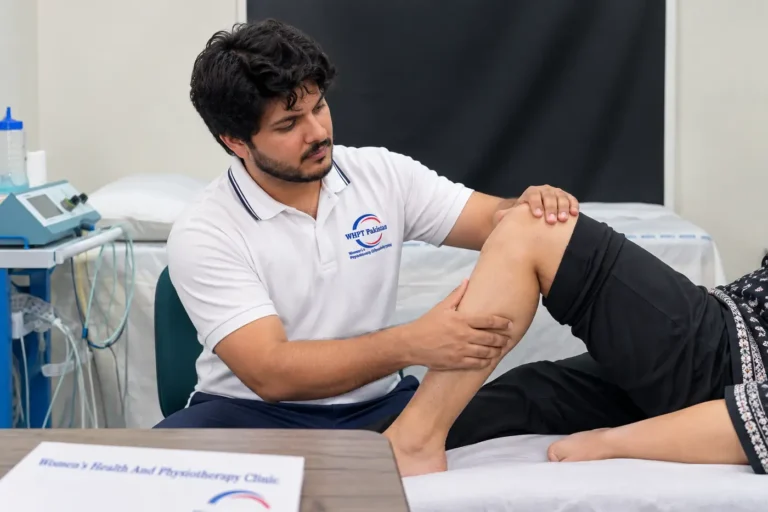
A knee assessment looks beyond pain alone. Learn how movement, strength, function, history, and symptoms guide rehabilitation.
Read article →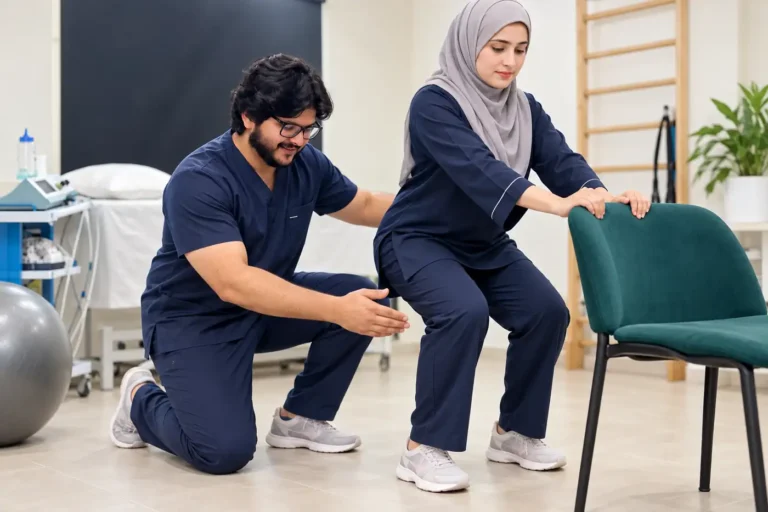
Some exercises may temporarily aggravate an irritated knee. Learn how to modify loading without giving up movement completely.
Read article →
Knee pain can return even after symptoms improve. Learn why recurrence happens and which factors may need more attention.
Read article →
Heat and ice can both help knee symptoms in certain situations. Learn when each option may be useful and what…
Read article →EXCELLENT Based on 19 reviews
 Posted on Google

 MUHAMMAD USMAN SALEEM MUHAMMAD SALEEMIt’s actually the place where Doctors have a right knowledge to treat. Strongly recommend best clinic in LahorePosted on Google
 Nasira ShaheenVery satisfied with the services and care given to my daughter from Dr. Rabail. She wasn't able to speak sentences and many words before and has improved more then that now in her behavior and speech. I am very grateful for Dr. Rabail and WHPT and had no concerns through our sessions with them.Posted on Google
 Mahnoor MughalMy father-in-law experienced severe low back spasms, and WHPT Pakistan's at-home physiotherapy service was a lifesaver. The therapist arrived fully equipped and provided highly effective, personalized care right in the comfort of our home. The treatment not only eased his pain but also gave him exercises to help prevent future episodes. The convenience and quality of care were superb, and we’re very grateful for their compassionate and professional service!Posted on Google
 Noaman Younasgood doctor team coprative doctorPosted on Google
 Ali AghadeerStaff is very professional and humble Great experiencePosted on Google
 Fatima ZahraI was tired of writing “physiotherapy near me” for my neck pain. Luckily, i ended up in WHPT Pakistan, arguably the most trusted physiotherapy clinic in Bahria Town Lahore. Highly recommendedVerified by TrustindexTrustindex verified badge is the Universal Symbol of Trust. Only the greatest companies can get the verified badge who has a review score above 4.5, based on customer reviews over the past 12 months. Read more
WHPT Pakistan
1st Floor, Plaza 82, Block AA Commercial,
Bahria Town, Lahore