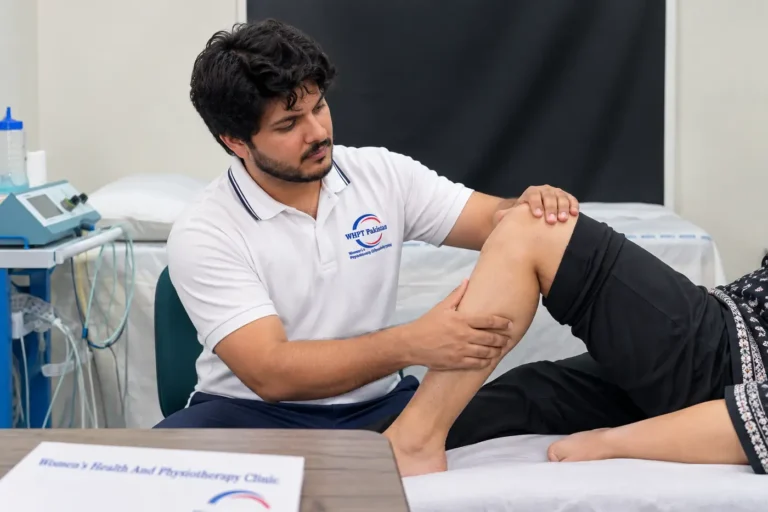
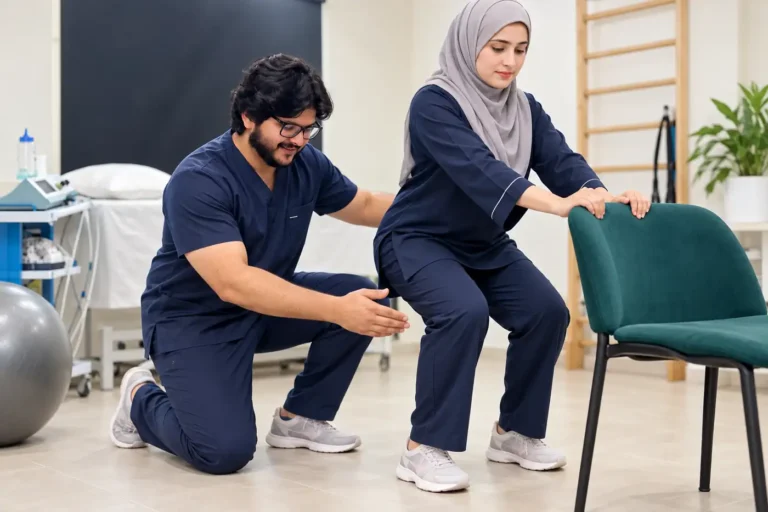
“How long will this take?” is one of the first questions people ask after knee pain starts. It is also one of the hardest to answer responsibly without knowing what the problem is.
A mild overload episode may settle relatively quickly. Patellofemoral pain can persist or recur. A meniscus repair and an ACL reconstruction follow very different healing and return-to-sport pathways. Even two people with the same diagnosis may recover at different speeds because their starting strength, swelling, daily demands, and goals are different.
Knee pain recovery can range from days or a few weeks for a mild, improving overload episode to several months for persistent patellofemoral pain, significant ligament injury, meniscus surgery, or post-surgical rehabilitation. There is no reliable universal timeline. Recovery depends on the diagnosis, symptom duration, swelling, tissue healing, strength, activity demands, medical factors, and rehabilitation consistency. Functional milestones are usually more useful than a calendar date alone.
At a Glance
- The diagnosis and severity are the biggest starting points for timeline estimates.
- Pain may improve before strength and activity tolerance are fully restored.
- Longer symptom duration can be associated with slower outcomes in some knee conditions.
- Surgery adds tissue-healing restrictions that cannot be rushed.
- Returning to sport usually takes longer than returning to basic daily activity.
- Milestones such as range, strength, walking, stairs, and task tolerance make timelines more meaningful.
Why There Is No Single Knee Pain Recovery Time
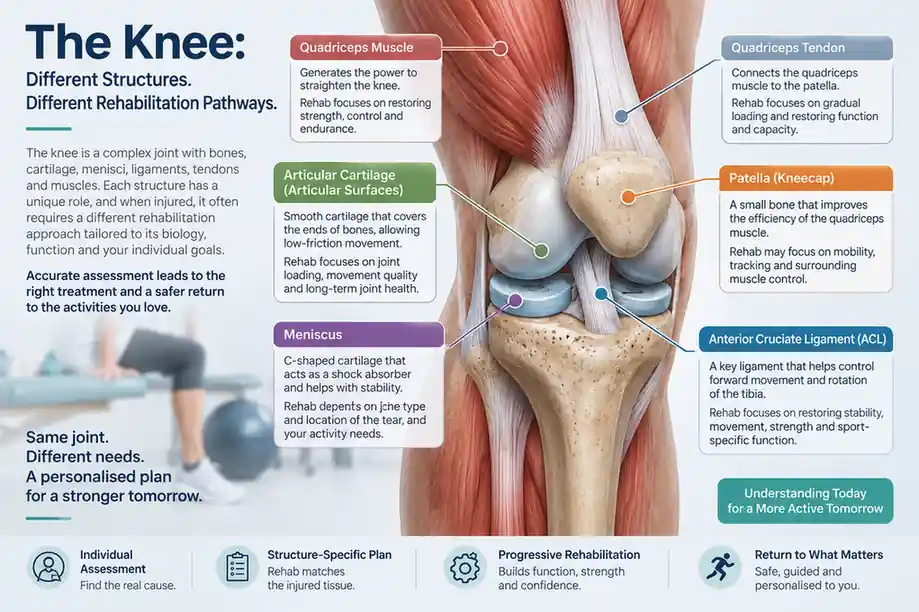
“Knee pain” includes everything from temporary overload to arthritis flares, patellofemoral pain, meniscus injury, ligament rupture, tendon problems, and recovery after surgery. Giving all of those conditions the same four- or six-week promise would be clinically misleading.
WHPT’s Knee Pain Physiotherapy page is deliberately broad because the first job is to identify the pattern. A timeline becomes more useful only after the likely diagnosis, irritability, and functional goal are clearer.
Mild Activity-Related Knee Pain May Settle Relatively Quickly
A mild episode that begins after an unusual increase in walking, stairs, or gym volume, with no meaningful swelling, instability, trauma, or loss of movement, may begin improving over days and continue settling over the following weeks. The important feature is a consistent improving trend.
If the same pain returns every time normal activity resumes, however, the problem has not necessarily recovered just because symptoms temporarily faded. The knee may still need a more gradual rebuild of strength or load tolerance.
Patellofemoral Pain Can Be More Persistent Than People Expect
Front-of-knee pain during stairs, squatting, running, or prolonged sitting is often described as something that should disappear quickly with a few exercises. Research shows the prognosis can be more variable.
A 2025 systematic review on patellofemoral pain prognosis found that symptoms and function are important prognostic areas and highlighted gaps in our ability to precisely predict individual recovery. Earlier research also found that longer symptom duration was repeatedly associated with poorer outcomes.
That is why the goal is not to promise “six weeks.” It is to create a program that addresses education, knee and hip capacity, activity load, and the patient’s specific functional goals.

Knee Osteoarthritis Is Usually Managed, Not Timed Like a Sprain
Osteoarthritis is a long-term joint condition, so “recovery time” means something different. The goal may be to reduce a flare, improve strength and mobility, increase walking or stair tolerance, and build confidence in activity rather than to make the underlying condition disappear by a certain date.
NICE guidance recommends tailored therapeutic exercise as a core treatment and notes that regular exercise can improve pain and function over time. WHPT’s Arthritis Physiotherapy page explains this longer-term function-focused approach.
Meniscus Recovery Depends on the Pathway
A meniscus problem can be treated nonoperatively, by partial meniscectomy, by repair, or as part of a combined procedure. These pathways do not share one timeline.
The 2024 EU-US meniscus rehabilitation consensus recommends criterion-based progression and emphasizes that return to sport after meniscus surgery should consider both time and functional criteria. A repaired meniscus generally requires more protection than tissue removed during partial meniscectomy.
WHPT’s Meniscus Tear Rehabilitation page separates these pathways so that patients are not given one generic “meniscus recovery” schedule.
ACL Recovery Is a Long Rehabilitation Process
An ACL injury can affect stability, strength, confidence, and the ability to run, jump, land, and change direction. After reconstruction, biological healing matters, but return to sport should also consider range, strength, functional testing, training exposure, and psychological readiness.
The AAOS ACL guideline supports a structured evidence-based approach to ACL management. WHPT’s ACL Injury Rehabilitation page focuses on milestones rather than using a calendar date as proof of readiness.
Post-Surgical Knee Recovery Depends on the Operation
Knee replacement, ACL reconstruction, meniscus repair, cartilage surgery, and fracture fixation each place different restrictions on the knee. Healing stage, wound status, weight-bearing instructions, range limits, and surgeon-specific precautions have to be respected.
WHPT’s Post-Surgical Rehabilitation and Knee Replacement Physiotherapy pages explain why post-operative progress is measured through function and milestones while still respecting tissue-healing timelines.
What Factors Can Make Recovery Slower or Faster?
| Factor | Why it affects the timeline |
|---|---|
| Diagnosis and injury severity | Different tissues and procedures have different healing and loading requirements. |
| How long symptoms existed before care | Long-standing pain may be associated with more deconditioning and persistent sensitivity. |
| Swelling and range loss | These can inhibit strength and make walking or exercise harder. |
| Starting strength and fitness | Higher baseline capacity can make progression easier, but does not remove healing constraints. |
| Work/sport demands | Returning to desk work is different from returning to martial arts or football. |
| Medical conditions and recovery factors | Sleep, general health, medication, and other conditions can influence progress. |
| Consistency and load management | Large gaps or repeated overload can interrupt progression. |
Milestones That Matter More Than the Calendar
Useful milestones depend on the condition, but common examples include swelling that remains controlled, full or improving knee movement, stronger quadriceps, comfortable walking, improved stair control, better balance, and greater tolerance of the activity that originally caused symptoms.
For an athlete, the later milestones may include running volume, hopping, landing, deceleration, cutting, fatigue tolerance, and full training exposure through Physiotherapy for Athletes. For an older adult, the meaningful outcome may be independent walking, chair rise, stairs, and prayer positions.
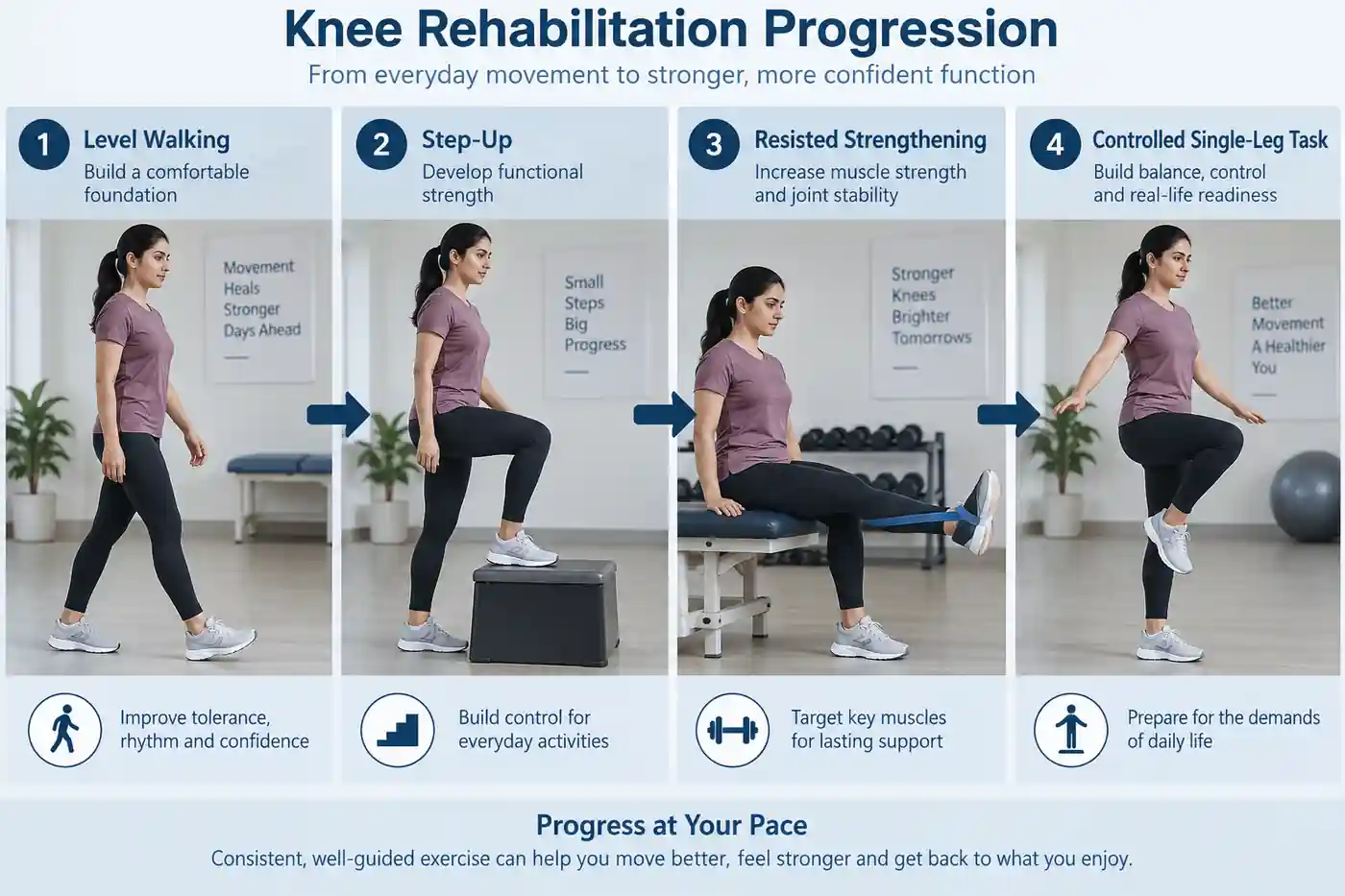
Recovery is also rarely perfectly linear. A longer walk, a busy workday, travel, a harder gym session, or an unusually demanding week can temporarily increase symptoms without resetting rehabilitation to day one. What matters is whether the flare settles and whether overall capacity continues to improve across several weeks. A structured Therapeutic Exercise plan can progress load around measurable milestones, while Home Physiotherapy may be useful for selected patients whose mobility or postoperative situation makes clinic attendance difficult.
What If Recovery Has Stalled?
A plateau does not always mean the knee cannot improve. Sometimes the exercise dose has not progressed, the original diagnosis needs review, swelling remains uncontrolled, another joint is contributing, or the patient has returned to demanding activity faster than capacity has rebuilt.
A Comprehensive Physiotherapy Assessment can reassess the working diagnosis, objective measures, and progression plan. If surgery or another medical issue is involved, the physiotherapist may coordinate referral rather than simply continuing the same routine.
Think in Recovery Goals, Not One Finish Date
“Recovered” can mean different things. For one person it means walking around the house without pain. For another it means kneeling comfortably, using stairs throughout a workday, returning to a full gym session, or changing direction at speed during sport. Those endpoints require different levels of strength, endurance, confidence, and tissue tolerance.
| Recovery goal | What may need to return |
|---|---|
| Daily independence | Comfortable walking, transfers, basic stairs, usable range of movement |
| Work and family demands | Longer standing/walking, repeated stairs, carrying, kneeling or floor transfers when required |
| Gym and recreational exercise | Progressive resistance, deeper knee flexion, repeated loading, confidence under fatigue |
| Running and field/court sport | Impact tolerance, speed, braking, hopping, landing, direction change and sport-specific conditioning |
This is why a calendar estimate should be paired with milestones. Someone can be “six weeks from injury” and still lack important function, while another person at the same point may be ready for a higher level. For athletic goals, Sports Physiotherapy uses the demands of the activity—not the date alone—to guide progression.
Early Improvement Is Not the Same as Full Capacity
Pain and swelling can improve before strength and endurance return. That gap is especially important after injury or surgery, when daily walking may feel normal well before running, jumping, heavy lifting, or repeated stair use is ready. Finishing rehabilitation at the first sign of symptom relief can therefore create a misleading sense that recovery is complete.
A useful review asks: What can you do now that you could not do two weeks ago? What still provokes symptoms? What objective measure has improved? What is the next functional target? Those questions are more informative than counting days alone.
Frequently Asked Questions
Can knee pain go away in a few days?
Mild activity-related irritation can improve quickly, but a few pain-free days do not always mean full capacity has returned. Resume demanding activity progressively.
How long does patellofemoral knee pain last?
It varies considerably. Some improve within weeks, while others have persistent or recurrent symptoms. Longer symptom duration can be associated with a poorer prognosis, which is one reason to use structured management rather than endless waiting.
How long does a meniscus tear take to recover?
It depends on whether treatment is nonoperative, partial meniscectomy, repair, or a combined procedure. Repair generally requires more protection and a longer staged return.
How long after ACL surgery can I return to sport?
There is no safe universal date. Time is one component, but strength, function, running, change-of-direction capacity, training exposure, and confidence also matter.
How long does knee arthritis take to improve with exercise?
Arthritis is managed over the long term. Exercise benefits build with regular participation, and progress is better judged by pain, function, strength, and activity tolerance than by expecting the condition to “heal” on a fixed date.
Why is my knee still weak after the pain is gone?
Pain can settle before strength and endurance are restored. That is why rehabilitation often continues beyond symptom relief.
When should I get a stalled recovery assessed?
If pain is not improving, keeps recurring, swelling persists, function is not returning, or the diagnosis remains uncertain, a physiotherapy assessment can help redefine the next step. Use WHPT’s appointment page to ask about availability.
Use the Timeline to Guide Progress, Not Promise It
For exercise progression outside a diagnosis-specific pathway, see WHPT’s Therapeutic Exercise information. Clinic details are available through WHPT Pakistan.
Recovery should become more predictable as the diagnosis and milestones become clearer, but responsible physiotherapy avoids guaranteeing an exact date. The aim is to help the knee regain the function required for your real life.
WHPT Pakistan provides assessment-led knee physiotherapy and rehabilitation in Bahria Town, Lahore. WhatsApp or call +92 334 8205557; appointment times are confirmed by staff.
References
- Neal, B. S., et al. (2025). Prognosis of patellofemoral pain: a systematic review with evidence- and gap-map. Journal of Orthopaedic & Sports Physical Therapy, 55(10), 661–670. PubMed
- Matthews, M., et al. (2017). Can we predict the outcome for people with patellofemoral pain? A systematic review on prognostic factors and treatment effect modifiers. British Journal of Sports Medicine, 51(23), 1650–1660. PubMed
- Prill, R., et al. (2025). The formal EU-US Meniscus Rehabilitation 2024 Consensus: Part II—prevention, non-operative treatment and return to sport. Knee Surgery, Sports Traumatology, Arthroscopy, 33(8), 3014–3024. PubMed
- American Academy of Orthopaedic Surgeons. (2022). Management of anterior cruciate ligament injuries: clinical practice guideline. AAOS guideline
- National Institute for Health and Care Excellence. (2022). Osteoarthritis in over 16s: diagnosis and management (NG226). NICE guidance

About Dr Salman Sabir PT
Dr Salman Sabir PT is a consultant physiotherapist, clinical leader and co-founder of WHPT Pakistan. He holds an MS in Orthopedic Manual Therapy and is undertaking doctoral study in Exercise Physiology. His work focuses on assessment-led rehabilitation, patient education, progressive exercise and long-term recovery.
Need Help Applying This to Your Situation?
General information cannot account for your injury history, strength, movement, medical conditions or personal goals.
BOOK ASSESSMENTCall +92 334 8205557