
Back and leg pain can be unsettling when an ache begins near the spine and then travels into the buttock, thigh, calf or foot. The first assumption is often sciatica, especially after reading about trapped nerves online. Yet pain that extends into the leg does not always mean a nerve is compressed. How far it travels, what it feels like and whether there is numbness or weakness all matter.
Back and leg pain may reflect lumbar nerve-root irritation, referred musculoskeletal pain, hip disorders, or other conditions. Burning or shooting pain with tingling, numbness or weakness can raise suspicion of sciatica, particularly when symptoms travel below the knee. Still, a clinician must interpret the complete history and neurological examination; no single symptom can reliably confirm the diagnosis.
At a Glance
- Radiating pain is not automatically sciatica.
- Burning, tingling and numbness can suggest nerve involvement.
- Muscle and hip referral can imitate nerve pain.
- Symptoms below the knee warrant closer neurological attention.
- Sitting and walking responses provide useful context.
- New weakness or bladder changes need urgent evaluation.
What Makes Pain From the Back Travel Into the Leg?
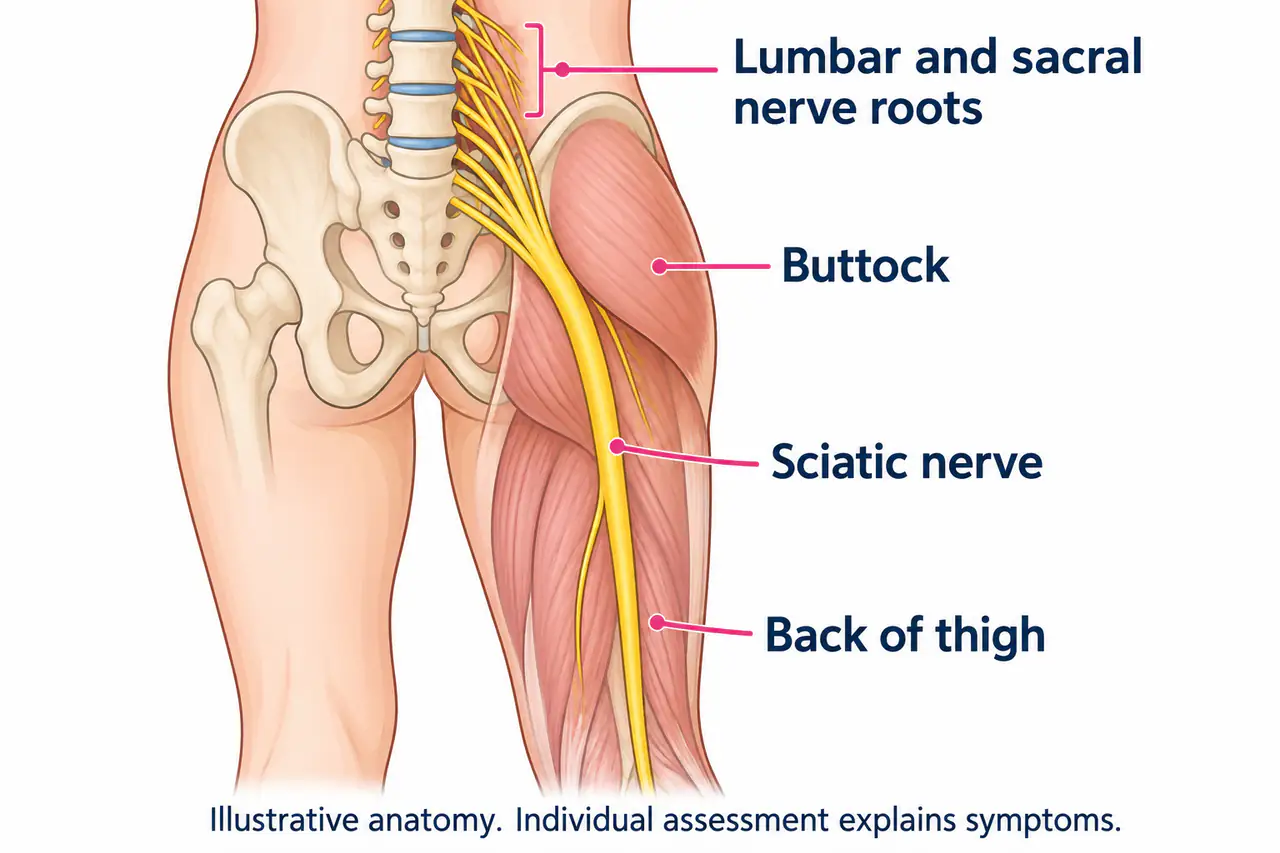
Nerves leaving the lumbar spine carry signals to the lower limbs, while muscles and joints can also refer pain away from their own location. As a result, a sore buttock or thigh does not automatically identify a trapped nerve. The direction, distribution and associated sensory features give more information than distance alone.
A runner feels a dull ache in the back of the thigh after a heavy training week without tingling or numbness.
Assess the workload, muscle function and neurological features instead of assuming every traveling ache is sciatic nerve pain.
The phrase back and leg pain can describe several mechanisms. A lumbar nerve root may be irritated and produce radiating symptoms, or the back and hip may refer pain without a major neurological problem. The location matters but does not tell the whole story. Ask whether the leg pain is sharper than the back pain, whether it travels below the knee, and whether tingling, altered sensation or weakness is present. A precise history helps decide whether neurological examination is a priority instead of assuming every posterior-thigh ache is sciatica.
What Does Sciatica Usually Feel Like?
Sciatica often describes nerve-related pain through the buttock into the leg, which may feel sharp, burning, electric or shooting. Pins and needles, numbness or weakness can accompany it. The leg may be more troublesome than the back. Symptoms can change with sitting, coughing or certain movements, but none of those features is individually diagnostic.
A person cannot sit through a journey because burning pain reaches the calf and foot.
Map the sensation, its extent and strength changes, and seek evaluation if neurological symptoms progress.
For an assessment-led explanation of related symptoms, see WHPT Pakistan’s back pain physiotherapy resource. It explains what an individualized assessment and rehabilitation pathway may involve.
Sciatica is typically used for leg pain associated with irritation of the sciatic pathway, commonly involving lumbar nerve roots. People may describe shooting, burning or electric pain; others have aching with pins and needles. Symptoms can change with sitting, bending, coughing or walking, depending on the underlying problem. No single word or movement confirms the cause. Clinical evaluation is especially important when pain spreads farther down the leg, numbness increases or strength changes. Severe pain can occur without progressive nerve injury, but new loss of function requires careful examination.
Can Muscles or the Hip Refer Pain Into the Leg?
Gluteal muscles, deep hip structures and other musculoskeletal tissues may produce a dull ache that extends from the buttock into the thigh. Hip movement and weight-bearing tasks can provide clues. Piriformis-related symptoms are discussed often online, but definitive diagnosis is less straightforward than performing one stretch.
Someone has buttock discomfort when climbing stairs but no tingling and a normal-feeling foot.
Include the hip and local tissues in assessment when the presentation does not match a typical nerve-related pattern.
The gluteal muscles, hamstrings, hip joint and deep buttock structures can all cause discomfort that seems to travel from the back or pelvis into the thigh. A hamstring overload after sprinting differs from numbness toward the foot after prolonged sitting. Deep gluteal syndrome is one differential diagnosis, not a routine label for everyone with buttock pain. Assess hip motion, local tenderness, sporting loads and relevant neurological findings together. Treating every leg ache with aggressive sciatic nerve stretching can aggravate symptoms and delay recognition of a different source.
A practical comparison
| What you notice | Why it may matter |
|---|---|
| Aching in thigh after sport | Check local muscle and hip loading as well as spine. |
| Burning to calf with tingling | Nerve-related symptoms need screening. |
| Sudden cold/discolored leg or major swelling | Urgent medical evaluation for non-spinal causes. |
Why Is Pain Below the Knee an Important Clue?
Leg pain that travels below the knee can raise suspicion of nerve-related symptoms, particularly when it follows a recognizable neurological distribution. However, other conditions can still produce lower-leg pain. Sensory loss and specific muscle weakness strengthen the case for neurological assessment.
A person notices numbness along the outside of the foot, while another describes an ache that stops above the knee.
Do not rely on a pain map as proof; compare sensation, movement, strength and reflexes where appropriate.
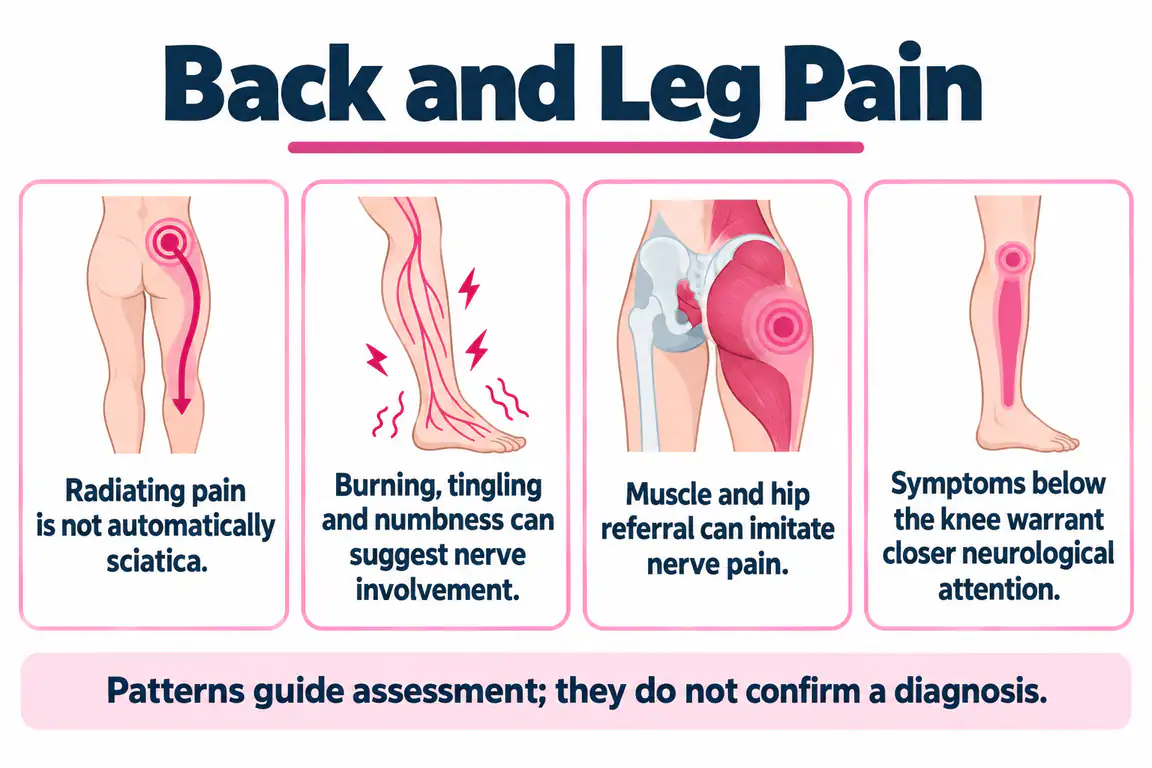
Pain extending below the knee is a clue that deserves neurological attention, but it is not a guarantee of radiculopathy. A clinician checks the pattern of sensation, specific muscle strength, reflexes where useful, and symptom response to selected movements. Loss of ankle or toe lifting strength is more important than the person simply reporting that the calf feels tight. Conversely, isolated thigh pain with normal neurological examination may still be bothersome but can follow a different management pathway. A single pain diagram should never replace full clinical reasoning.
The pattern of weakness, altered sensation and reflexes is described in MSD Manual: Symptoms of common radiculopathies. The distribution of pain by itself is not a reliable home diagnosis.
What Do Sitting, Coughing and Walking Tell You?
Position and activity responses help explain irritability. Some disc-related nerve symptoms increase with sustained sitting or coughing; other conditions become more noticeable while walking or standing. The meaning depends on whether symptoms spread, settle, or change alongside strength and sensation.
One person feels relief during short walks; another finds walking distance increasingly restricted.
Record the direction and duration of changes instead of repeatedly provoking the leg to see whether it still hurts.
If sitting reproduces pain through the calf, note how long it takes and whether standing changes it. If coughing sharply increases familiar radiating pain, report that observation; it may influence the examination but is not diagnostic by itself. Walking-related leg discomfort also requires differentiation from hip problems or circulation-related conditions, particularly in older adults. Calf pain associated with a cold, pale or discolored foot or sudden swelling has a different urgency from stable muscular tightness and requires medical evaluation.
Deep buttock symptoms can sometimes resemble lumbar nerve pain; the piriformis syndrome page discusses this differential without treating any one test as definitive.
Could There Be Something More Urgent?
Major new or worsening weakness, new bilateral leg symptoms, groin or saddle numbness, or changes in bladder and bowel function can indicate serious neurological compromise. Severe symptoms after trauma or systemic illness also need timely medical assessment. These problems are uncommon but should not be managed with online stretching routines.
Someone who suddenly cannot lift the foot normally requires a different response from someone with improving leg soreness.
Seek urgent assessment for red flags and progressive deficits; otherwise choose a clinical pathway based on function and symptom change.
Certain symptom clusters change the level of concern. New urinary retention, saddle numbness, rapidly worsening weakness or new problems in both legs may indicate serious neurological involvement and need emergency care. Leg pain with fever, severe illness, significant trauma or unexplained systemic concerns also warrants medical review. Most people with stable back and leg symptoms will not have these findings, but the questions must be asked before advising a routine exercise program. Worsening foot function is not something to watch for weeks while repeatedly stretching the hamstring.
Should You Stretch or Walk With Back and Leg Pain?
For stable symptoms, gentle activity is often helpful, but highly irritable nerve symptoms can respond badly to aggressive stretching. Choose a manageable range that does not steadily spread symptoms farther down the leg.
Shorter walks or adjusted sitting periods may be a better starting point than a difficult hamstring stretch or repeated straight-leg raises found online.

For a stable presentation, activity modification should be based on symptom response. A short walk may feel better than prolonged sitting for one person, while another can only tolerate brief bouts before leg pain increases. Start below the level that provokes a strong flare, use position changes and maintain suitable daily tasks where possible. Avoid forcing nerve tension with long-held hamstring stretches when it reproduces familiar tingling. The goal is to find a starting dose that does not progressively increase leg symptoms or compromise sleep and walking.
When symptoms are accompanied by disc findings on imaging, the disc herniation pathway explains why imaging still needs clinical interpretation.
What Will a Physiotherapy Assessment Compare?
Clinical assessment includes lumbar and hip movement, sensory testing, strength, reflexes where appropriate, functional tasks and the history of radiating symptoms. Not every positive tension test confirms a disc herniation.
The clinician then explains whether the pattern appears nerve-related, referred, or unclear, and whether imaging or specialist review could change management.
A physiotherapist compares spinal movements, hip function, strength, sensation and reflexes when indicated, together with the person's medical and activity history. Straight-leg raise or slump maneuvers may add information, but positive provocation alone does not confirm a herniated disc. If the pattern suggests a significant progressive nerve deficit or another serious cause, referral is more appropriate than routine treatment. A useful assessment explains why symptoms are believed to arise from a particular pathway and what change would prompt reassessment.
When Is Back and Leg Pain More Concerning?
New foot weakness, escalating numbness, bilateral symptoms or bowel and bladder changes are not routine soreness. Severe or progressing neurological symptoms require prompt medical evaluation.
Seek urgent medical assessment for new difficulty passing urine, loss of bowel or bladder control, numbness around the groin or saddle area, rapidly worsening or significant weakness in one or both legs, or new symptoms affecting both legs. These can signal serious nerve involvement. Back pain after significant trauma, pain with fever or marked illness, or unexplained symptoms alongside a serious medical history also requires prompt medical attention rather than trial-and-error stretching.
Pain that keeps interrupting sleep, work or walking also deserves assessment when it does not improve over time, even without an emergency feature.
Not every painful leg requires urgent investigation, but worsening weakness, new numbness in the saddle region or changes in bladder and bowel control should be treated as emergencies. Persistent symptoms that interfere with work, walking or sleep need evaluation even without red flags. The important distinction is between stability and deterioration rather than how impressive a pain score sounds. A person who can walk a little farther each week may be progressing despite discomfort; someone losing strength requires a different decision.
Frequently Asked Questions
Can I have sciatica without back pain?
Yes. Some people feel mainly buttock and leg symptoms, with little lower back discomfort. A neurological examination helps clarify the pattern.
Does shooting pain always mean nerve damage?
No. Pain quality alone cannot prove nerve damage. Changes in strength, sensation and other examination findings are important.
Why does sitting make my leg pain worse?
Prolonged sitting can increase some lumbar and neural symptoms, but the response depends on the underlying presentation and should not be taken as a diagnosis.
Is it safe to stretch the hamstring when pain shoots down the leg?
Use caution. What feels like tightness may be nerve sensitivity, and forceful stretching can aggravate symptoms in some people. Individual guidance is preferable.
Is every pain below the knee sciatica?
No. Below-knee pain is an important clue but can have several causes. Neurological examination, symptom behavior and consideration of circulation or other medical problems determine which pathway fits.
Does tingling mean a nerve is permanently damaged?
Not necessarily. Tingling can occur with irritation and may improve, but spreading numbness or new weakness deserves prompt assessment. The trend in neurological function is more informative than one sensation.
Does new leg weakness change how quickly I should seek care?
Yes. New or progressive difficulty lifting the foot, pushing off, or controlling the leg merits prompt medical assessment. Weakness is different from temporarily avoiding a movement because it hurts. Sudden bladder or bowel changes or numbness around the saddle region require emergency care.
Let the Pattern Guide the Next Step
When leg pain accompanies back pain, assessing strength, sensation and the symptom pattern can guide a safer next step than copying an online diagnosis.
For relevant assessment and rehabilitation options, explore WHPT Pakistan’s sciatica physiotherapy. Contact the clinic by WhatsApp or phone if you need help choosing the appropriate appointment.
The useful question is not simply whether the pain reaches the leg. It is whether the combined history, movement response and neurological findings suggest a particular cause and a safe route toward recovery.
The real milestone is not simply that a leg stretch feels looser. It is being able to sit for a journey, walk at a normal pace, negotiate steps or resume training without worsening radiating symptoms. Where nerve involvement is suspected, follow neurological stability as well as function. If progress stalls, reconsider whether the hip, hamstring, lumbar spine or another system has been adequately assessed. A structured assessment can help distinguish these causes before an individual rehabilitation plan is selected.
References
- NICE. Low back pain and sciatica in over 16s: assessment and management (NG59).
- NHS. Sciatica: symptoms and when to seek help.
- MSD Manual Professional. Symptoms of common radiculopathies by nerve-root level.
- Kizaki K, et al. Deep gluteal syndrome: systematic review of definition and diagnosis.
- AOPT/APTA. Interventions for acute and chronic low back pain: clinical practice guideline. JOSPT. 2021.

About Dr Salman Sabir PT
Dr Salman Sabir PT is a consultant physiotherapist, clinical leader and co-founder of WHPT Pakistan. He holds an MS in Orthopedic Manual Therapy and is undertaking doctoral study in Exercise Physiology. His work focuses on assessment-led rehabilitation, patient education, progressive exercise and long-term recovery.
Need Help Applying This to Your Situation?
General information cannot account for your injury history, strength, movement, medical conditions or personal goals.
BOOK ASSESSMENTCall +92 334 8205557