
Sciatica exercises can seem like an endless list of stretches, nerve glides and strengthening routines, each promising to stop pain down the leg. Yet the same movement can feel relieving to one person and sharply aggravating to another. If your symptoms burn, tingle or travel toward the foot, the question is not which exercise is famous online. It is which movement your current nervous system and daily activities can tolerate.
Sciatica exercises should be individualized because symptoms may involve irritated lumbar nerve roots and different levels of sensitivity. Comfortable walking, selected movements and gradual strengthening can help some people; aggressive stretching or repeated end-range testing may worsen others. Choose activity using the response during exercise and afterward, and seek prompt assessment for increasing weakness, numbness or other neurological warning signs.
At a Glance
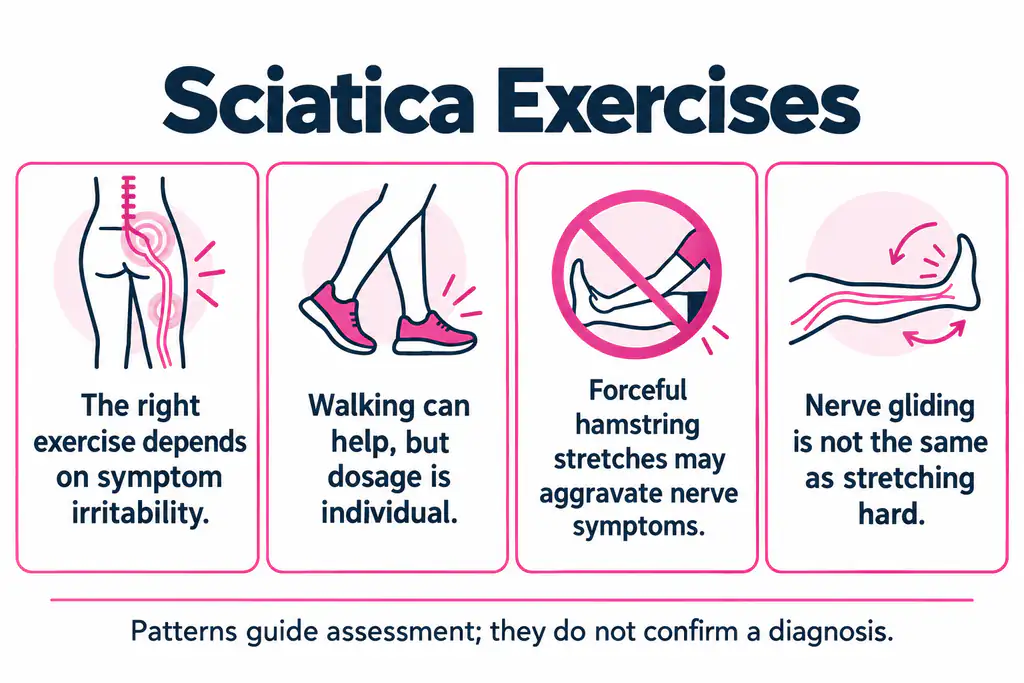
- The right exercise depends on symptom irritability.
- Walking can help, but dosage is individual.
- Forceful hamstring stretches may aggravate nerve symptoms.
- Nerve gliding is not the same as stretching hard.
- Strength work should ultimately restore daily function.
- Worsening weakness or numbness needs reassessment.
Why Is One Exercise Routine Not Right for Everyone?
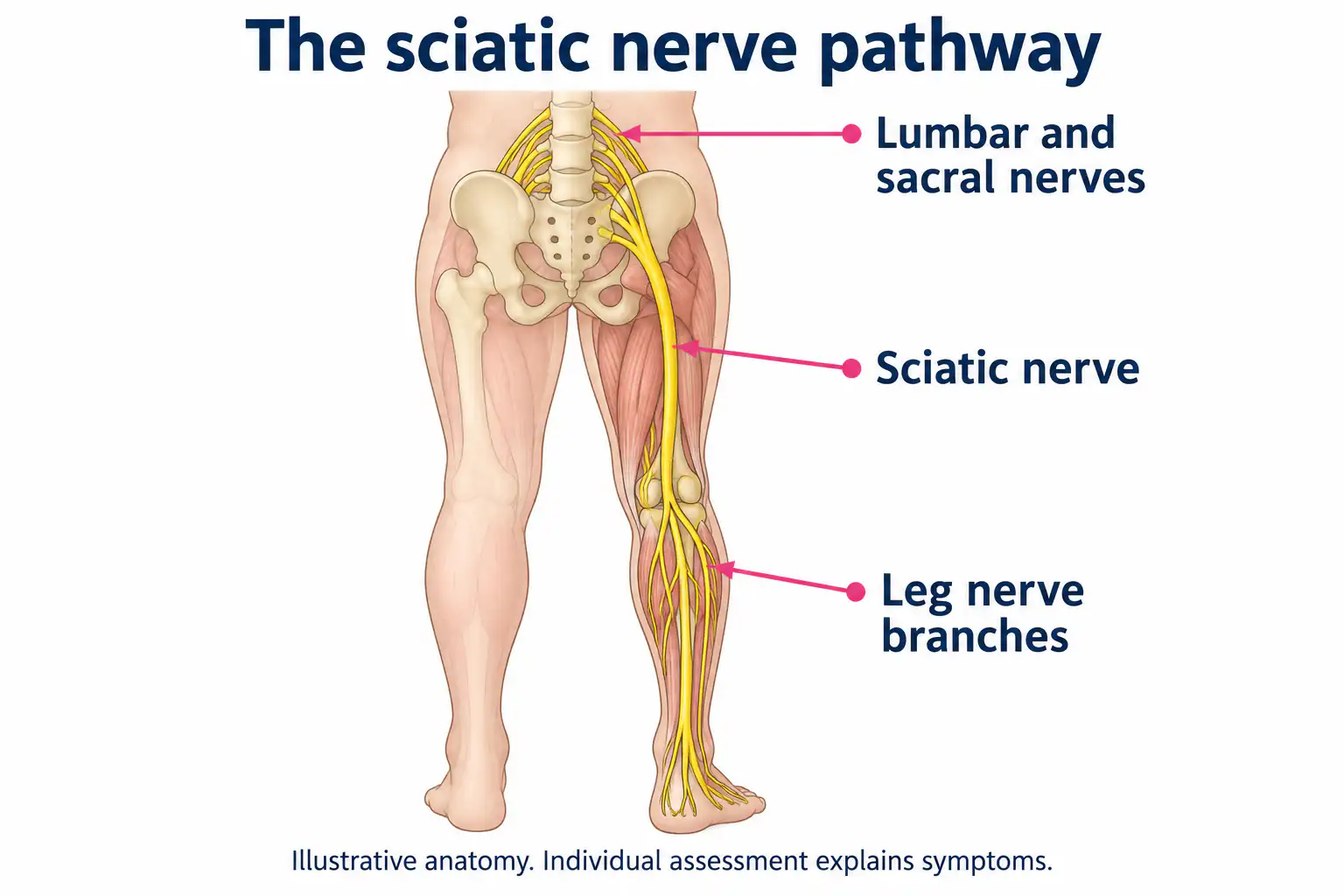
Sciatica describes a symptom pattern rather than a single cause or severity level. Nerve-related symptoms can be influenced by disc changes, narrowing around a nerve, inflammation and positions that increase sensitivity. Someone with improving mild symptoms may tolerate more load than a person with severe radiating pain. A universal plan ignores those differences.
A person finds short walks easing calf pain, while another has increasing leg symptoms after a long walk.
Begin with symptom behavior and functional goals; assess improvement over several days rather than copying a fixed number of repetitions.
Sciatica is not one uniform exercise problem. A person with primarily back pain and mild leg referral may tolerate movement differently from someone with constant pain to the foot and a changing neurological examination. The first decision is whether there are medical red flags or progressive weakness. After those are addressed, the aim is to choose movement that does not worsen radiating symptoms and that supports ordinary walking, sitting and strength. The type, range, frequency and recovery between sessions often matter as much as the name of the exercise.
Can Walking Be Useful for Sciatica?
Walking is a simple way to maintain everyday activity when it is tolerable, but distance and speed matter. A short walk may help someone avoid long periods of sitting, whereas prolonged walking can aggravate symptoms in others. The amount that is appropriate is determined by the pattern and whether symptoms settle after the activity.
A patient tolerates five-minute walks several times daily but not one thirty-minute walk.
Use shorter bouts if needed, then increase gradually as function improves rather than treating pain as a challenge to overcome by force.
For an assessment-led explanation of related symptoms, see WHPT Pakistan’s slipped-disc and disc-herniation rehabilitation resource. It explains what an individualized assessment and rehabilitation pathway may involve.
Walking is often a practical starting option because it requires no equipment and is easy to modify. Some people can walk comfortably for five minutes several times a day but flare after one long walk; others need shorter bouts or more rest between them. Choose a duration based on the response during walking and later that day. Gradually lengthen sessions when leg symptoms remain stable and recovery is reliable. If walking quickly provokes spreading numbness, marked weakness or a progressive inability to bear weight, this is a reason to seek assessment rather than forcing a daily step target.
Should You Stretch Your Hamstrings or Piriformis?
Stretching may feel helpful for ordinary muscle tightness, but neural symptoms can be mistaken for tight hamstrings. Forceful straight-leg stretches may increase nerve tension and provoke tingling or shooting pain. Deep buttock stretching can also be irritating for some presentations. These movements are not universally forbidden, but they require appropriate selection and response monitoring.
A person feels an electric sensation into the foot during a stretch and assumes the muscle must be extremely tight.
Stop forcing the stretch and have the source of the sensation assessed before continuing with aggressive flexibility work.
Strong hamstring stretching can tension the sciatic nerve as well as the muscle. If a stretch reproduces electric pain or tingling down the leg, it may be testing an irritable nerve rather than lengthening a short hamstring. Deep buttock stretches may similarly aggravate some presentations. Instead of insisting that every painful pull represents necessary release, ask whether the movement helps function afterward. Gentle hip motion or comfortable walking may be preferable initially. A clinician can determine whether a specific muscle is genuinely restricted and whether stretching belongs in the plan.
A practical comparison
| What you notice | Why it may matter |
|---|---|
| Mild muscular effort that settles | May be acceptable in an individualized program. |
| Leg symptoms spread farther or remain worse | Reduce or stop that movement and reassess. |
| New weakness or saddle/bladder symptoms | Urgent medical assessment; do not keep exercising. |
What About Nerve Gliding Exercises?
Neural mobilization uses carefully selected movements that change tension and sliding of neural tissues. The techniques require attention to range, dosage and symptom irritability. They are not identical to holding a nerve in an uncomfortable stretched position. Evidence and recommendations vary according to the clinical presentation, so these movements should not be given as automatic home treatment.
Repeated leg raises that progressively increase tingling are a poor way to judge whether a nerve glide is helping.
If a clinician selects neural movement, the response should remain manageable and settle rather than spreading symptoms or causing new weakness.
A nerve glide uses controlled movement intended to change neural excursion without holding the nerve at an extreme stretch. For example, coordinated knee extension and ankle movement may be considered by a clinician when the examination supports it. A nerve glide is not supposed to produce a long-lasting surge of pins and needles. Start conservatively and stop when symptoms spread or remain worse. Evidence and patient responses vary, so it should be one possible component of a broader program, not an internet 'sciatica cure' repeated mechanically regardless of diagnosis.
For exercise selection and progression in lower-back presentations, the professional review in APTA/JOSPT: Clinical practice guideline for low-back pain interventions. Exercise still needs to match neurological findings, symptom irritability and functional goals.
When Does Strengthening Become Important?
A return to normal life usually requires more than pain relief. Hip, trunk and leg capacity matter for walking, climbing stairs, lifting and sport. Early strengthening may use easy positions and small loads, later progressing toward standing and real-life tasks. There is no single 'core exercise' that cures sciatic nerve pain.
A warehouse worker needs to regain controlled lifting, while a desk worker needs longer comfortable sitting and commuting.
Choose goals and load progressions that relate to the person’s activities rather than chasing an internet sequence of abdominal exercises.
Strength becomes particularly relevant when pain has reduced enough to permit more functional loading. A clinician may progress sit-to-stand control, hip strength, trunk endurance, step-ups or carrying work according to the person's deficits. The purpose is not to prove that weak core muscles caused the original sciatica. It is to improve tolerance for the tasks that matter: holding a child, sitting at work, returning to the gym or walking farther. Resistance, range and repetitions need adjustment based on symptoms and recovery rather than an arbitrary standard for everyone.
How Can You Tell if an Exercise Is Too Aggressive?
Increasing pain alone is not the only signal. Note whether tingling spreads farther down the leg, numbness becomes more persistent, strength changes, or symptoms remain markedly worse the following day. A brief tolerable ache can be different from escalating neurological symptoms. These responses help determine whether an exercise requires modification or reassessment.
After a routine, calf burning lasts for several hours and walking becomes harder than before.
Reduce the provoking dose and seek professional review if the pattern repeats or neurological signs progress.
Distinguish an expected muscular effort from a concerning response. Mild local soreness that settles and does not alter neurological signs can occur during graded exercise. Leg pain that travels farther toward the foot, spreading numbness, weakness or a flare that substantially worsens the following day means the current dose may be excessive or the diagnosis needs review. Do not use the idea of 'no pain, no gain' for nerve symptoms. The goal is repeated successful exposures that build function, not a single impressive session followed by lost sleep.
WHPT’s therapeutic exercise service explains how movement dose and progression can be adjusted across different symptoms.
How Do You Start a Sciatica Movement Plan?
A sensible start may include manageable walking, comfortable lumbar positions and simple daily tasks. Avoid a single routine that combines every stretch you find online.
Use a symptom diary for duration, spread into the leg, and next-day function. A smaller exercise dose that allows consistent practice may be more productive than an ambitious session followed by a flare.
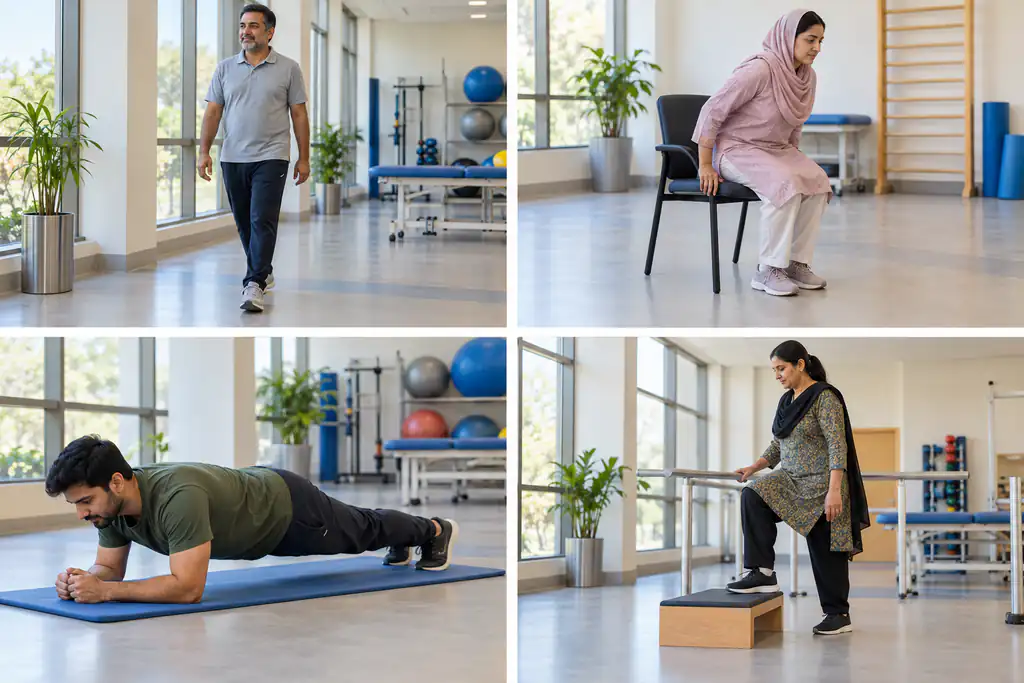
A sample starting plan might include a short comfortable walk, a gentle position change after sitting and one low-load strength task selected from assessment. This is a framework, not a prescription for someone with acute neurological deficits. For a person whose symptoms rise during prolonged sitting, changes in work-break frequency might matter more initially than adding ten stretches. Progress one variable at a time—duration, repetitions or resistance—so you can understand the response. If the original task remains painful after several weeks, reassess rather than endlessly increasing volume.
How Does a Physiotherapist Select Sciatica Exercises?
The examination reviews leg symptom distribution, strength, sensation, reflexes when indicated, movement responses and which activities matter to the person. Some cases require medical review or imaging based on neurological findings.
An individualized plan tests tolerance and gradually adds mobility, strength and functional loading instead of assigning an identical stretch sequence to everyone.
Physiotherapy exercise selection starts with symptom distribution, irritability, neurological stability and personal goals. Lumbar movement preferences can sometimes guide a trial, but no direction is universally correct for sciatica. Hip and lower-limb function also matters, particularly when the person wants to return to running, lifting or martial arts. A useful exercise plan includes an exit strategy: what to do if symptoms spread, when to reduce the dose, and when to return for assessment. It also gives realistic functional milestones rather than guaranteeing recovery after a fixed number of sessions.
For returning to sport after nerve-related pain has settled, the athlete rehabilitation pathway emphasizes measured capacity before unrestricted training.
When Should You Stop Exercising and Seek Care?
Stop self-directed exercise and seek urgent medical attention if new bladder or bowel problems, saddle numbness, major or worsening leg weakness or symptoms affecting both legs appear.
Seek urgent medical assessment for new difficulty passing urine, loss of bowel or bladder control, numbness around the groin or saddle area, rapidly worsening or significant weakness in one or both legs, or new symptoms affecting both legs. These can signal serious nerve involvement. Back pain after significant trauma, pain with fever or marked illness, or unexplained symptoms alongside a serious medical history also requires prompt medical attention rather than trial-and-error stretching.
If exercises repeatedly increase radiating pain or impair walking, speak with a clinician before increasing intensity or adding more nerve stretches.
Stop self-directed exercise and obtain medical evaluation with new loss of bladder control, urinary retention, saddle numbness or rapidly progressive leg weakness. Severe unexplained systemic symptoms or major trauma also changes the pathway. Non-emergency review is sensible when persistent pain prevents walking, working or sleeping despite graded activity. Simply replacing one online routine with another is not a substitute for testing strength and sensation when nerve-root involvement is suspected. Safe movement begins with the right clinical context.
Frequently Asked Questions
Is walking better than stretching for sciatica?
It depends on the symptom pattern. Walking is accessible and often tolerable, while some stretches may aggravate irritable nerve symptoms.
Are squats bad for sciatica?
Not automatically. The appropriate depth, load and timing depend on symptoms and function. A modified squat may be useful during later progression.
Should sciatica exercises cause leg pain?
A mild temporary response is not always harmful, but progressively spreading leg symptoms, numbness or weakness warrant modification and assessment.
Can exercises cure a herniated disc?
Exercise may improve pain and function, but it cannot promise to erase MRI findings. Clinical improvement and imaging change are not equivalent goals.
Are nerve glides the same as hamstring stretches?
No. A nerve glide is a controlled movement intended to mobilize a neural pathway, not a prolonged maximal stretch. It may be unsuitable when symptoms are highly irritable or the diagnosis is unclear.
Should I exercise through pain into the foot?
Do not force movements that cause spreading radiating pain, worsening tingling or weakness. Adjust the exercise and seek assessment if neurological symptoms deteriorate.
When can I add resistance exercises?
When the clinical picture is stable and low-load activities are tolerable, strengthening may be progressed according to goals and symptom response. The timing is individualized rather than determined by an MRI label.
Progress, Not One Miracle Stretch
An individual sciatica exercise plan can be progressed around your nerve symptoms, current tolerance and the activities you need to recover.
For relevant assessment and rehabilitation options, explore WHPT Pakistan’s sciatica physiotherapy. Contact the clinic by WhatsApp or phone if you need help choosing the appropriate appointment.
Good sciatica exercise selection aims to keep you moving while respecting sensitivity and steadily rebuilding function. A consistent individualized progression is more useful than a viral routine that promises an instant cure.
Successful exercise progression may be visible before all tingling has disappeared. A person can walk farther with less need to sit, get through the workday with fewer breaks or perform controlled lifting again. Those gains are more informative than the number of stretches saved on a phone. When symptoms begin to centralize or reduce in intensity, keep monitoring strength and function rather than interpreting one good day as full recovery. The point of the sciatica exercise article is practical load management; detailed service options remain on the WHPT Sciatica page.
References
- NICE. Low back pain and sciatica in over 16s: assessment and management (NG59).
- AOPT/APTA. Interventions for acute and chronic low back pain: clinical practice guideline. JOSPT. 2021.
- NHS. Sciatica: symptoms and when to seek help.
- MSD Manual Professional. Symptoms of common radiculopathies by nerve-root level.
- MedlinePlus. Herniated disk: patient overview, diagnosis, and management.

About Dr Salman Sabir PT
Dr Salman Sabir PT is a consultant physiotherapist, clinical leader and co-founder of WHPT Pakistan. He holds an MS in Orthopedic Manual Therapy and is undertaking doctoral study in Exercise Physiology. His work focuses on assessment-led rehabilitation, patient education, progressive exercise and long-term recovery.
Need Help Applying This to Your Situation?
General information cannot account for your injury history, strength, movement, medical conditions or personal goals.
BOOK ASSESSMENTCall +92 334 8205557